Every excavation job starts with knowing what is already underground. Here is how utility locates work through Dig Safely New York in the Rochester area, what 811 does not mark, and how to get your property ready for equipment.
Spring is when a lot of Rochester-area property owners start planning projects. The snow is gone, the ground is thawing, and everybody wants to get started on the fence, the addition, the pond, or the new water line. It is also when a lot of underground lines get hit.
Before any excavation starts, someone needs to find out what is already in the ground. Gas, electric, phone, cable, fiber, and water lines run under yards, road frontage, and fields all over Monroe County, and many of them are shallower than people expect. Here is how utility locates work in our area, what they do and do not cover, and what you can do to get your property ready before equipment arrives.
Call 811 Before You Dig
In New York, anyone planning to dig is required to notify the one-call center before excavation begins. The number is 811. In Rochester and across upstate New York, that call goes to Dig Safely New York. (New York City and Long Island are served by a separate center, New York 811.)
When a locate request is filed, the center notifies the member utilities that may have lines in the area. Those utilities then send someone out to mark their facilities, usually with colored paint on the ground, small flags, or both.
The rules require notice ahead of time, generally at least two full working days before digging, not counting weekends and holidays. Requirements can change, so check with Dig Safely New York for the current rules when you plan your project. Locate requests can also expire after a set period, so if your job gets pushed back, ask whether the request needs to be renewed.
Who Should Make the Call?
If you hire a contractor, ask who is filing the request. On most excavation jobs, the contractor handles it, since they are the ones digging and they know exactly where the work will happen. But it is worth confirming so nobody assumes the other person did it.
If you are digging yourself, even for something small like fence posts or a garden bed, you should file the request yourself. A shovel can cut a shallow cable just as easily as a machine can.
What the Paint Colors Mean
Utility marks follow a standard color code, so you can tell at a glance what is in the ground:
- Red: Electric power lines, cables, and conduit
- Yellow: Gas, oil, steam, or other petroleum lines
- Orange: Communication lines, such as phone, cable TV, and fiber
- Blue: Potable water
- Green: Sewer and drain lines
- Purple: Reclaimed water, irrigation, and slurry lines
- White: The proposed excavation area, marked by the person digging
- Pink: Temporary survey markings
Marks show the approximate location of a line, not an exact position. The rules set a tolerance zone on either side of the mark where hand digging or other careful methods are expected. Your local one-call rules set the exact requirement, so if you are not sure, ask before you dig near a mark.
What 811 Does Not Mark
This is the part that catches a lot of people. The utility companies mark the lines they own. They usually do not mark private lines on your side of the meter. On a typical Rochester-area property, that can include:
- A water line from a private well to the house
- The water service from the meter or curb stop to the house, depending on who owns that section
- Power run to a garage, barn, pole building, or outbuilding
- Septic tanks, distribution boxes, lines, and leach fields
- Sump pump and downspout discharge lines
- Old clay tile farm drains
- Irrigation lines, invisible dog fences, or landscape lighting
- Propane lines to a tank or a standby generator
- Lines to a pool, hot tub, or detached shop
If you know about any of these, tell your contractor and mark them yourself if you can. Old drawings, a home inspection report, a septic permit on file with the county or town, or a previous owner can all be useful sources. For private lines nobody can find, a private locating service can sometimes help.
Rochester-Area Things to Know
A few local factors make locates and site prep especially important here.
Water Service Varies by Location
Most of Monroe County is served by the Monroe County Water Authority. The City of Rochester has its own water bureau. Many rural properties in towns like Riga, Wheatland, Clarkson, and Mendon, and in neighboring counties, run on private wells. Who owns the line between the main and the house, and who marks it, depends on your provider. If you are planning a new or replacement service, our article on water service lines, depth, and trenching covers what to expect.
Frost Depth Pushes Lines Deeper
Rochester winters are long, with repeated freeze-thaw cycles. Water lines need to be buried below the frost line set by local code, roughly four feet in much of the area. That means trenches for utilities here are deeper than people from milder climates might expect, and there is more ground to disturb near existing lines.
Spring Ground Is Soft
The spring thaw and wet springs leave a lot of Rochester-area yards soft and muddy, especially on heavy clay closer to the lake in Greece, Parma, Hamlin, and Webster. That affects access and can mean waiting a bit longer for the ground to firm up.
Old Farmland Hides Surprises
Many lots around Rochester were farms not long ago. Old tile drains, buried foundations, and abandoned wells are not unusual. If you know the history of your property, share it.
Getting the Site Ready
A little preparation on your end helps the job go faster and keeps your property in better shape:
- Clear the path. Move vehicles, trailers, firewood, kids' toys, and anything else between the road and the work area.
- Think about the lawn. Tracked machines are gentler than wheels, but soft ground still takes a beating. If the yard is very wet, ask whether the work should wait.
- Point out the septic. Driving equipment over a tank or leach field can crack it or compact the soil. Mark it clearly.
- Mark sprinkler heads and buried fixtures. A few flags save a lot of frustration.
- Protect what matters. If there is a tree, garden, or patio you care about near the work, say so up front.
- Leave the marks alone. Do not mow over flags or power wash paint until the job is done.
- Talk to the neighbors. If trucks will be coming and going or the job is near a property line, a heads up goes a long way.
- Check permits. Some work needs a permit from your town. Check with your town building department before the job starts.
Directional Drilling and Locates
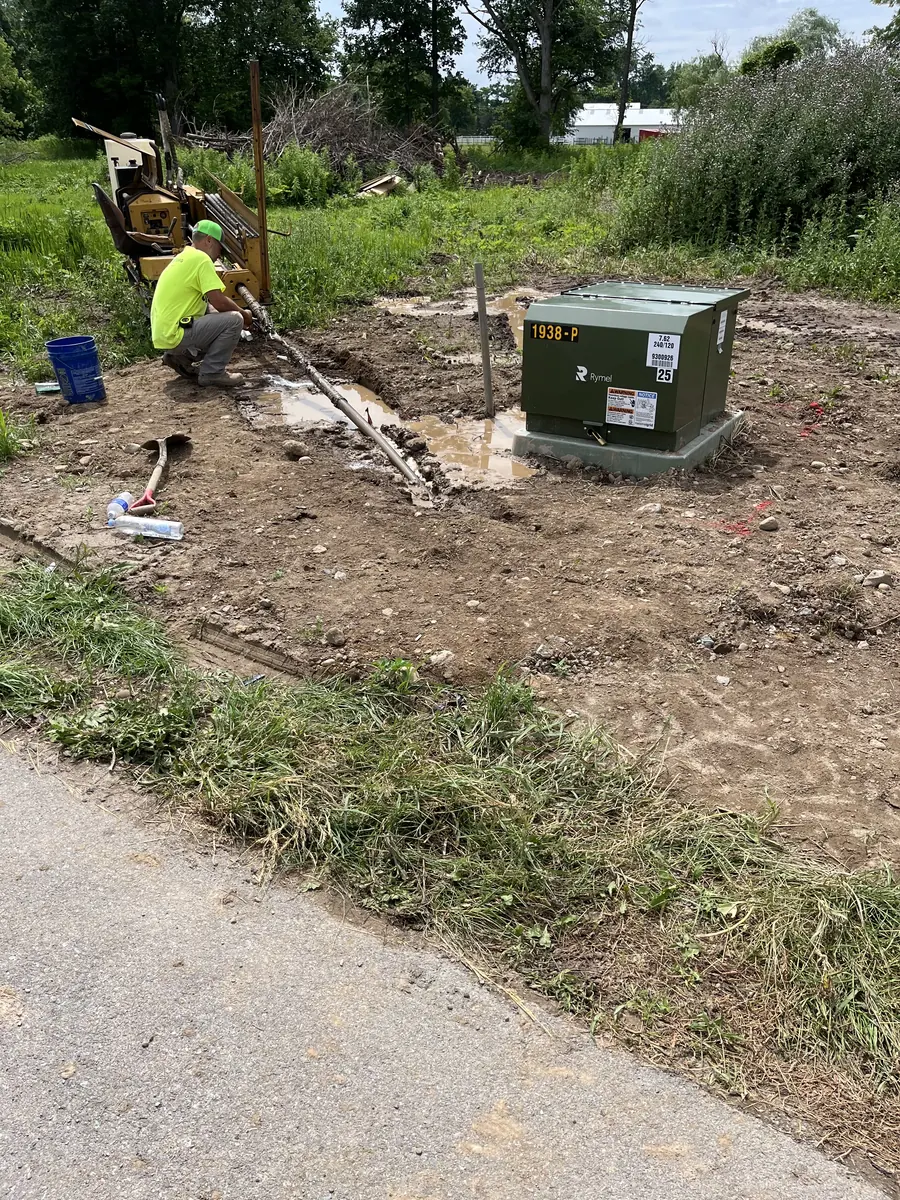
Locates matter even more for trenchless work, where nobody can see the bore path. Directional drilling lets us run a line under a driveway, road, or landscaped yard without digging a trench across it, but it depends on knowing exactly where existing lines are.
Our drilling work starts with confirmed marks, and we track the drill head along the way. You can see one example on our directional drilling project page, including a bore on a steep wooded lakeside lot where open trenching would have done a lot of damage. For a deeper comparison, see directional drilling vs. open trenching.
Frequently Asked Questions
Does It Cost Anything to Call 811?
Filing a locate request through Dig Safely New York is free. The member utilities mark their own lines at no charge to you.
Do I Need to Call 811 for Small Digging Jobs?
New York's rules apply to excavation generally, and even shallow digging can hit a line. Checking with Dig Safely New York before any digging is the safe approach.
What if My Lines Were Marked but Something Still Gets Hit?
Stop work, keep people away, and call the utility. If it is a gas line, leave the area and call 911 and the gas company from a safe distance.
Questions About Your Project?
If you are planning work that involves digging on your property in Rochester or the surrounding towns, send us the location, what you want done, and a few photos. We will walk you through what the job needs, including the locate, before anything gets dug.