
Under It, Not Through It
Sometimes the best trench is no trench at all. Directional drilling runs pipe and conduit underground without opening up the surface, so driveways, roads, lawns, and landscaping stay intact.
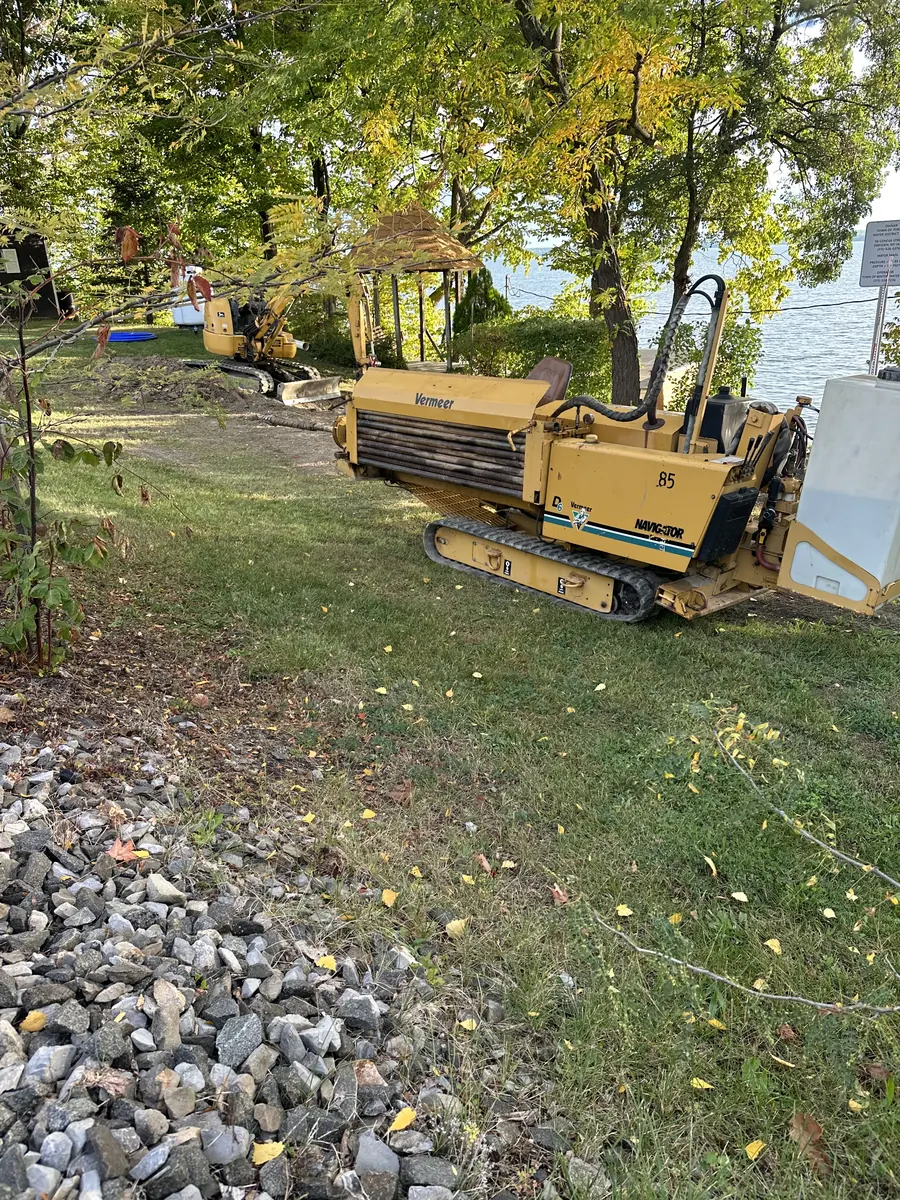
Grove sets up the drill at one end of the run, steers the bore along a planned path while tracking the head from the surface, and pulls the line back through. It is the clean way across obstacles that would be costly or impossible to dig through.
Directional Drilling Services
Hire us for one piece of the job or all of it. Pick what your project needs.
Driveway Crossings
Lines run under paved or gravel driveways without cutting and patching the surface.
Road Crossings
Bores under roads and shoulders where an open cut is not practical.
Lawns and Landscaping
Finished yards, gardens, and trees left undisturbed along the route.
Tight and Steep Sites
Runs on slopes, wooded lots, and spots where an excavator cannot easily work.
Water and Conduit
Water lines and conduit pulled back through the bore after drilling.
Tracked Bore Path
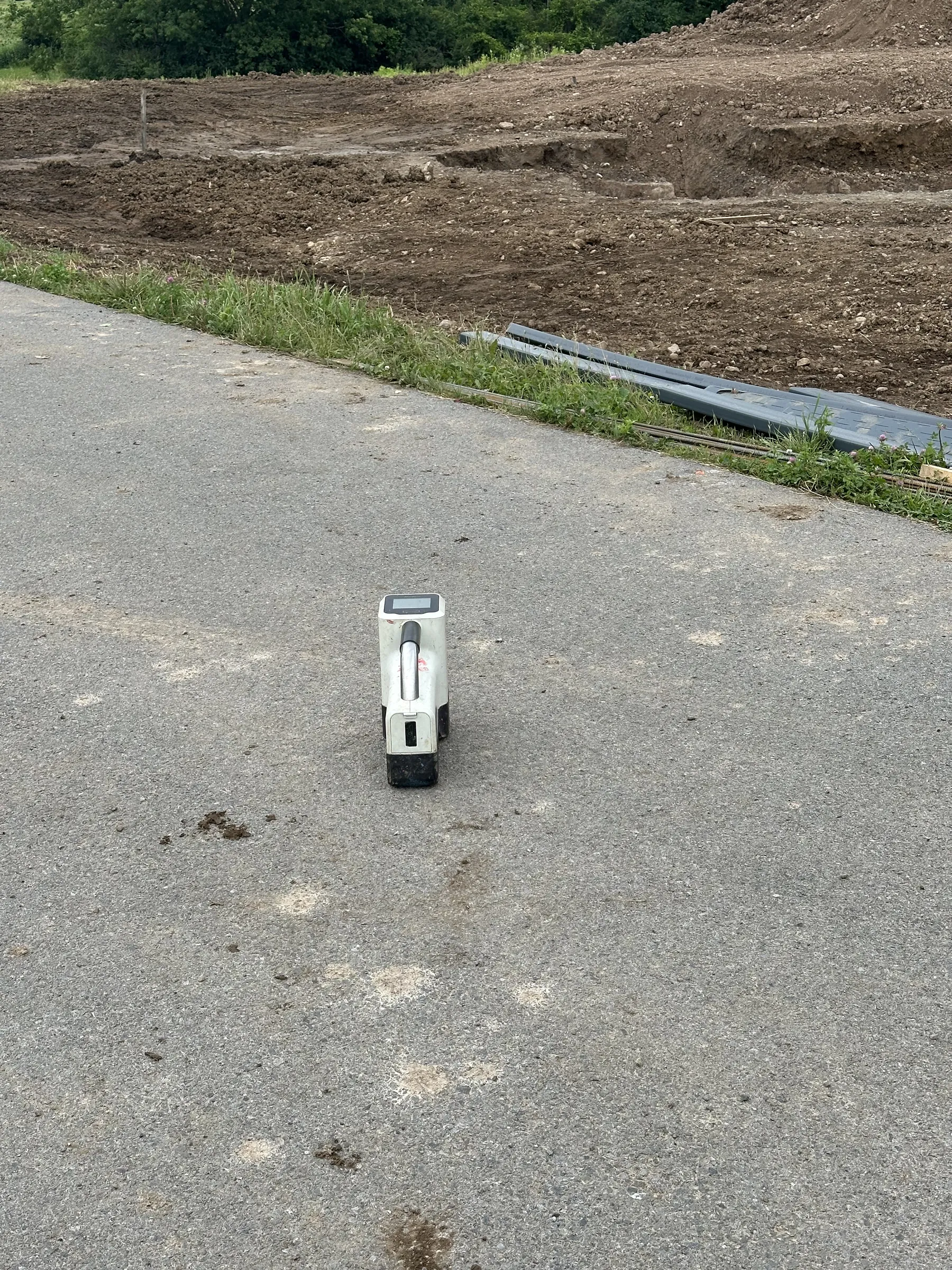
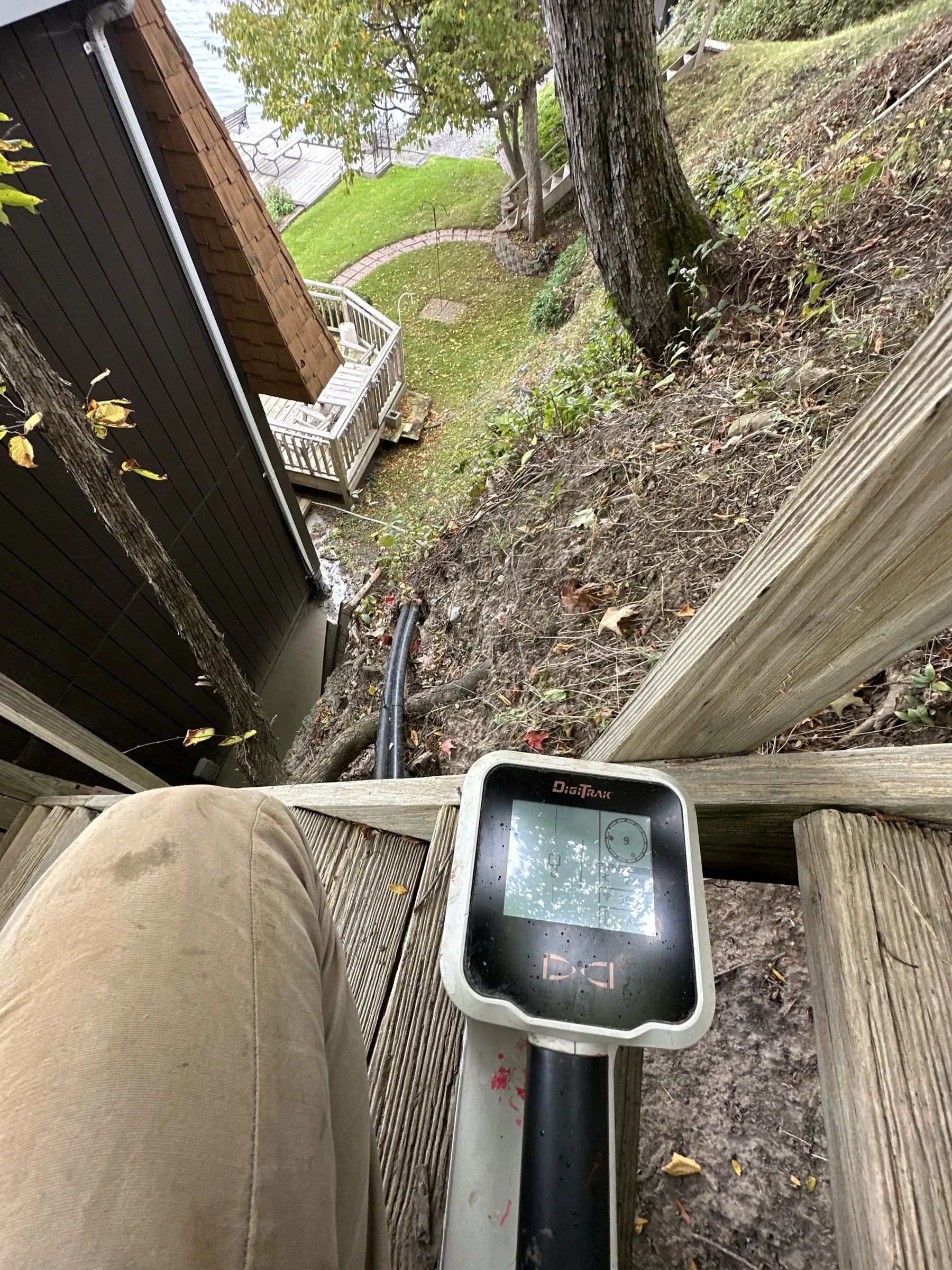
The drill head is located and tracked from the surface along the planned route and depth.
Directional Drilling in Rochester, NY
Around Rochester, a lot of underground work has to get past something that should not be torn up: a paved driveway, a town road, a finished lawn, mature trees, or a steep slope down to the water. Directional drilling runs pipe and conduit underground along a steered path, so only the entry and exit points are disturbed.
We plan bores around local ground conditions and what is already buried, then pull the line back through, often a fused HDPE line in one continuous piece.
Who Needs Directional Drilling Locally
- Homeowners with established yards in towns like Brighton, Pittsford, Penfield, and Irondequoit, where trenching would mean tearing up landscaping and pavement.
- Rural property owners who need a water line or conduit under a driveway or road.
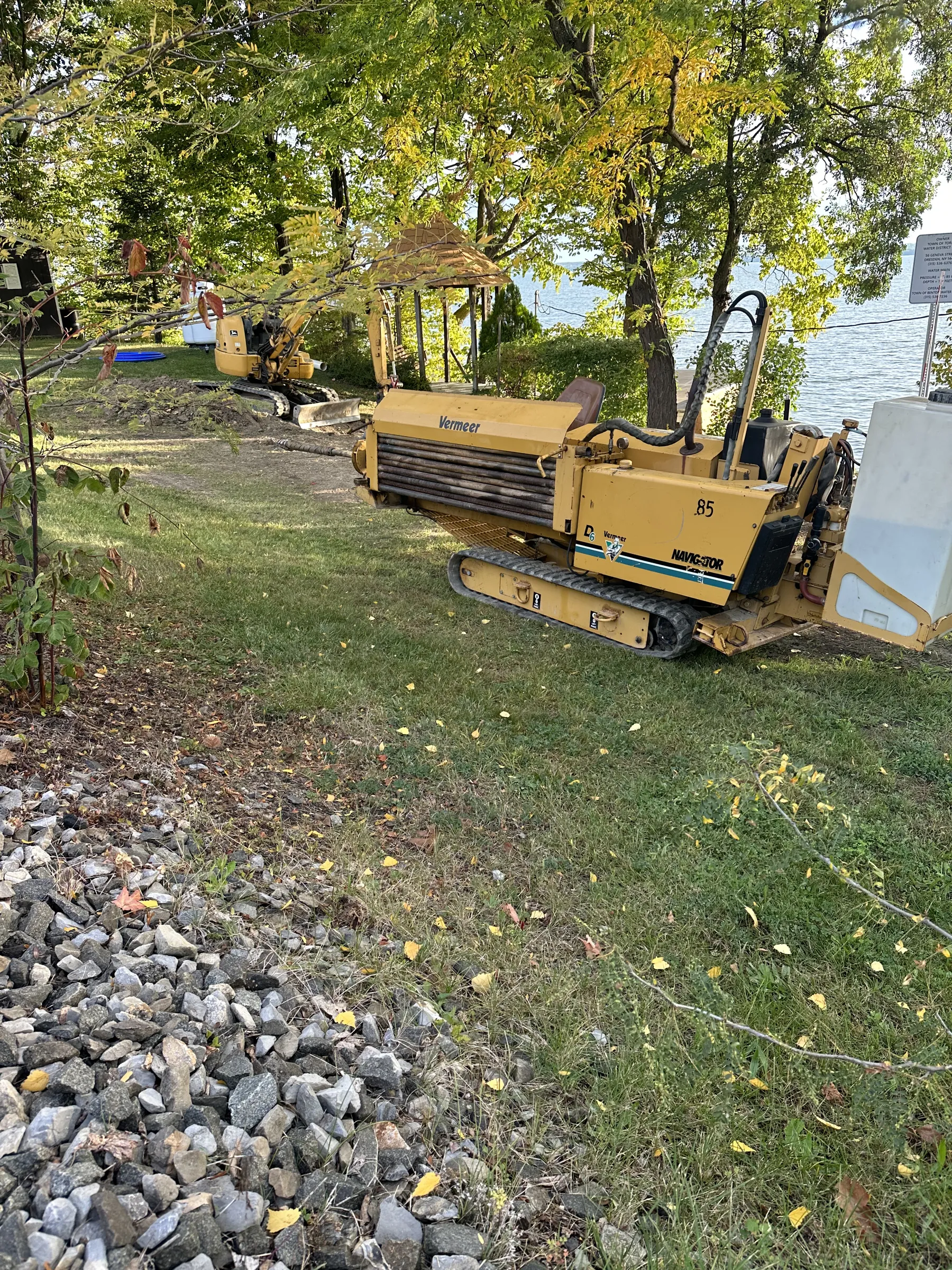
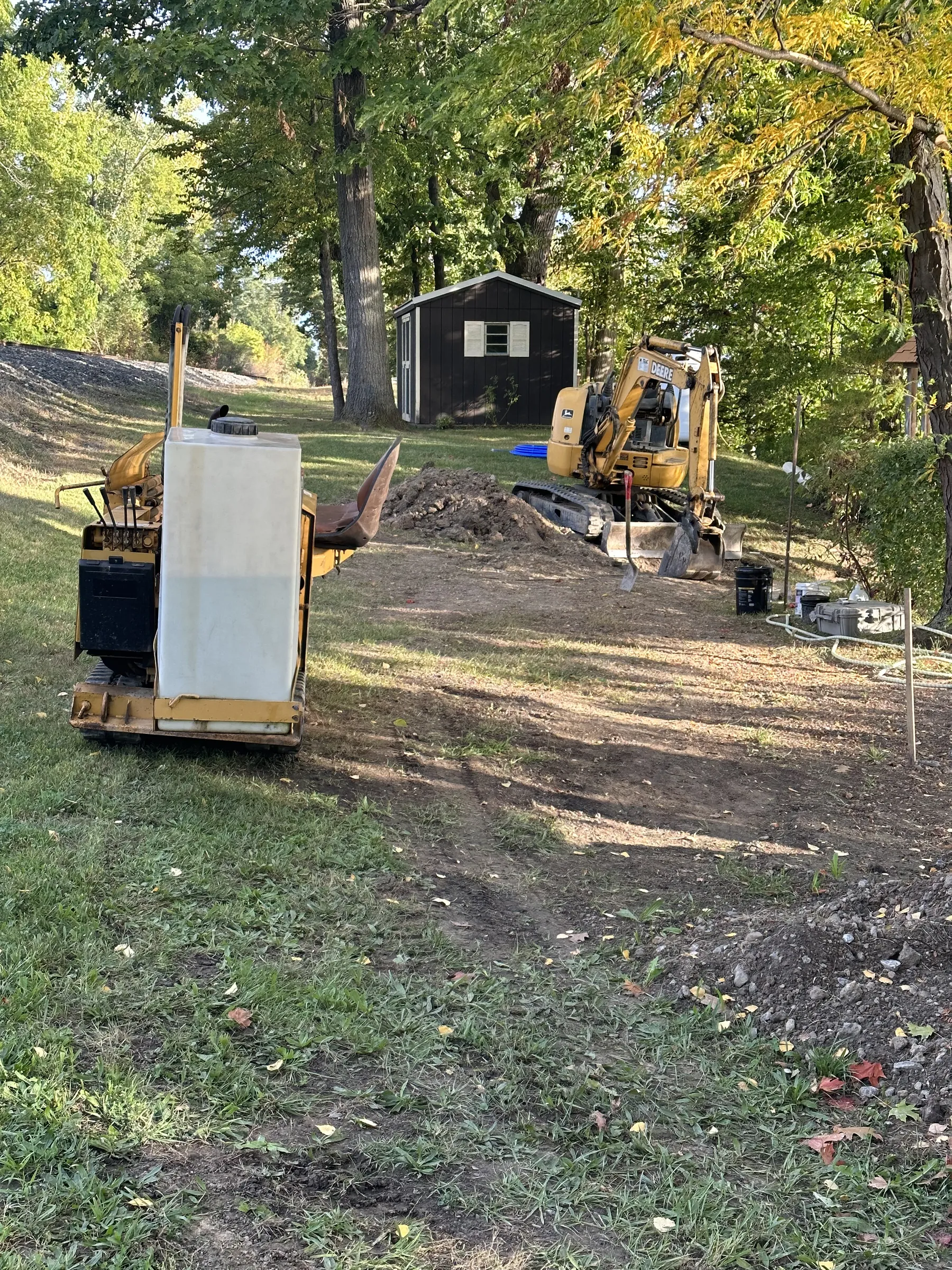
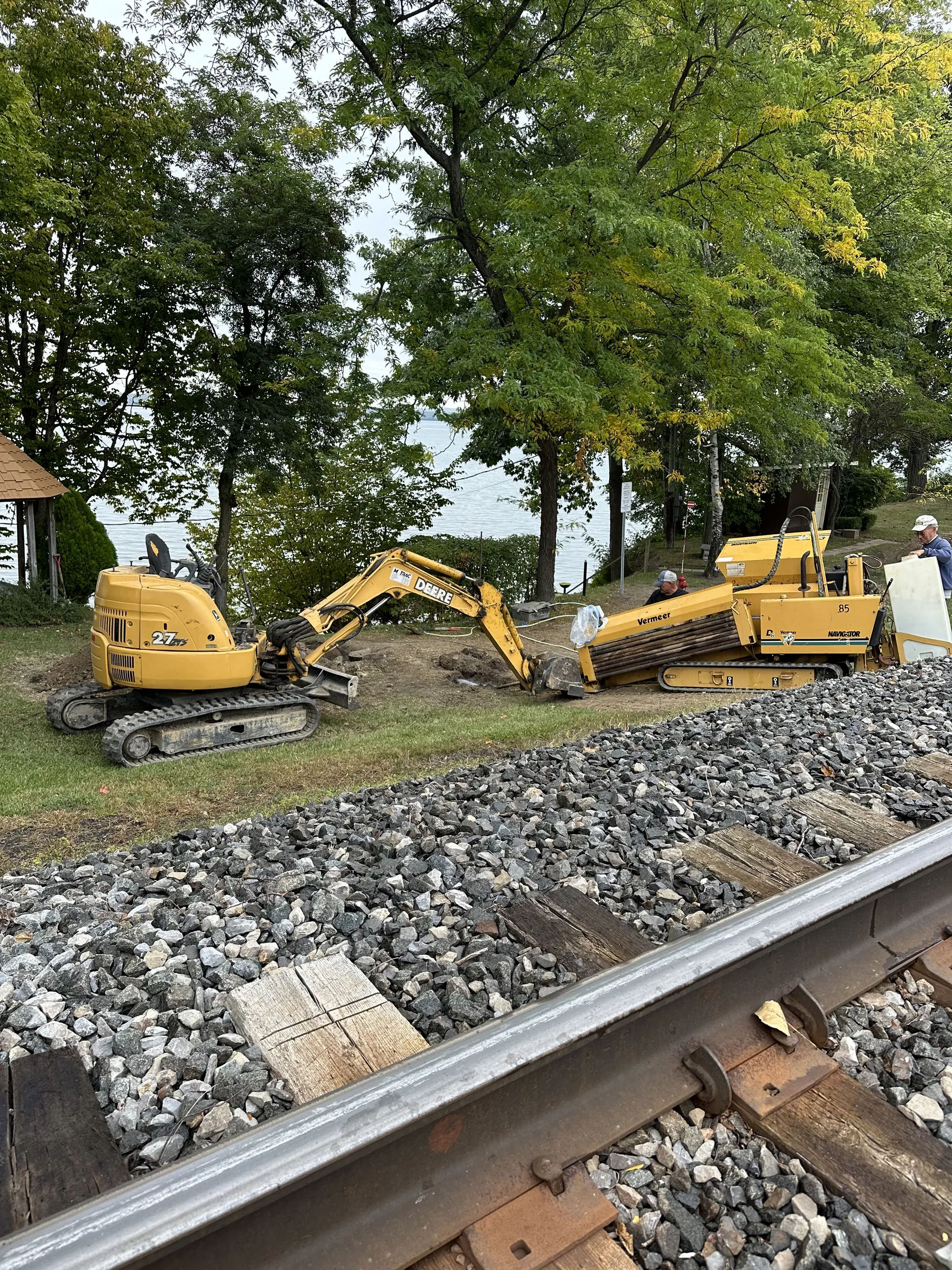
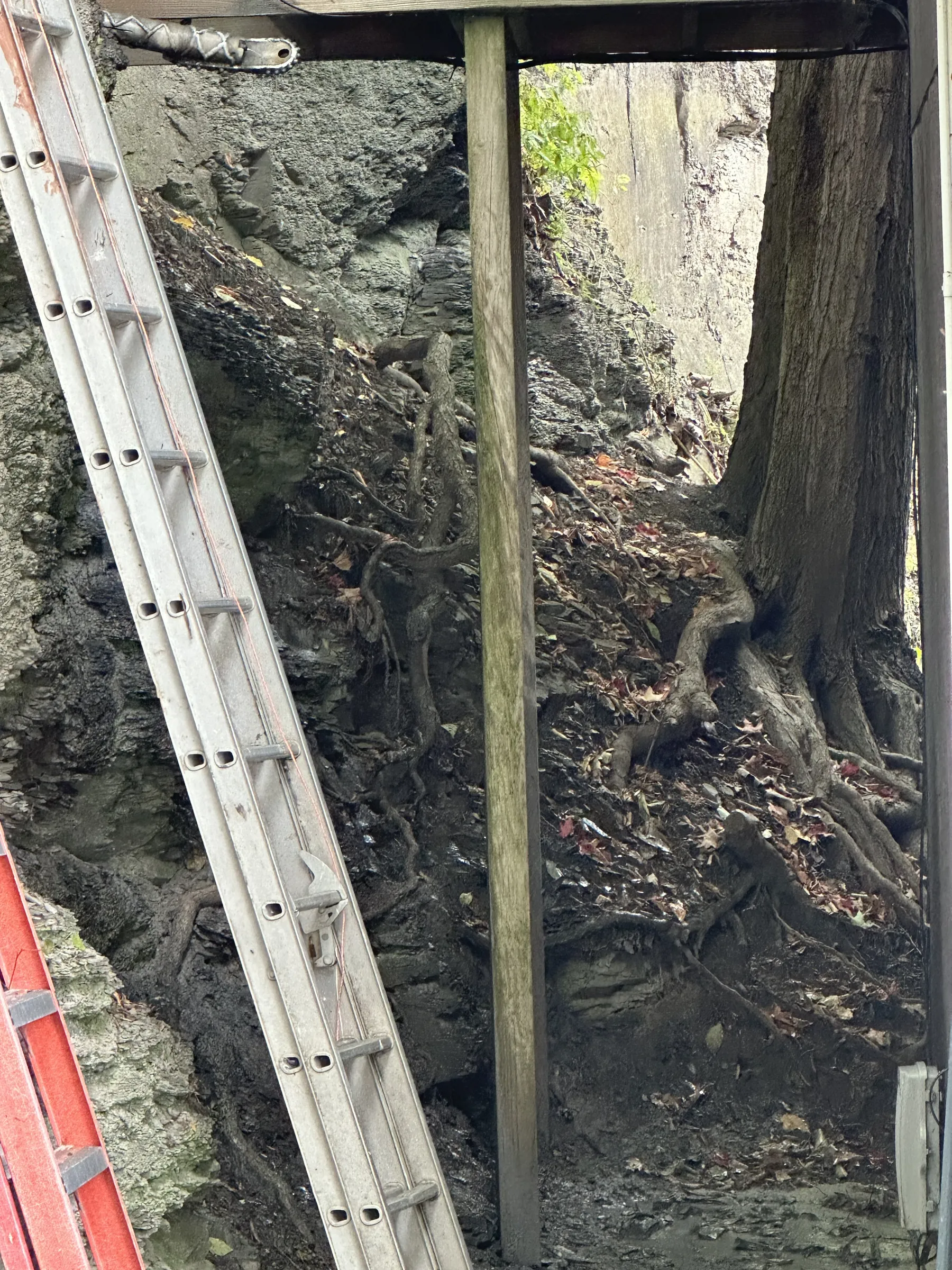
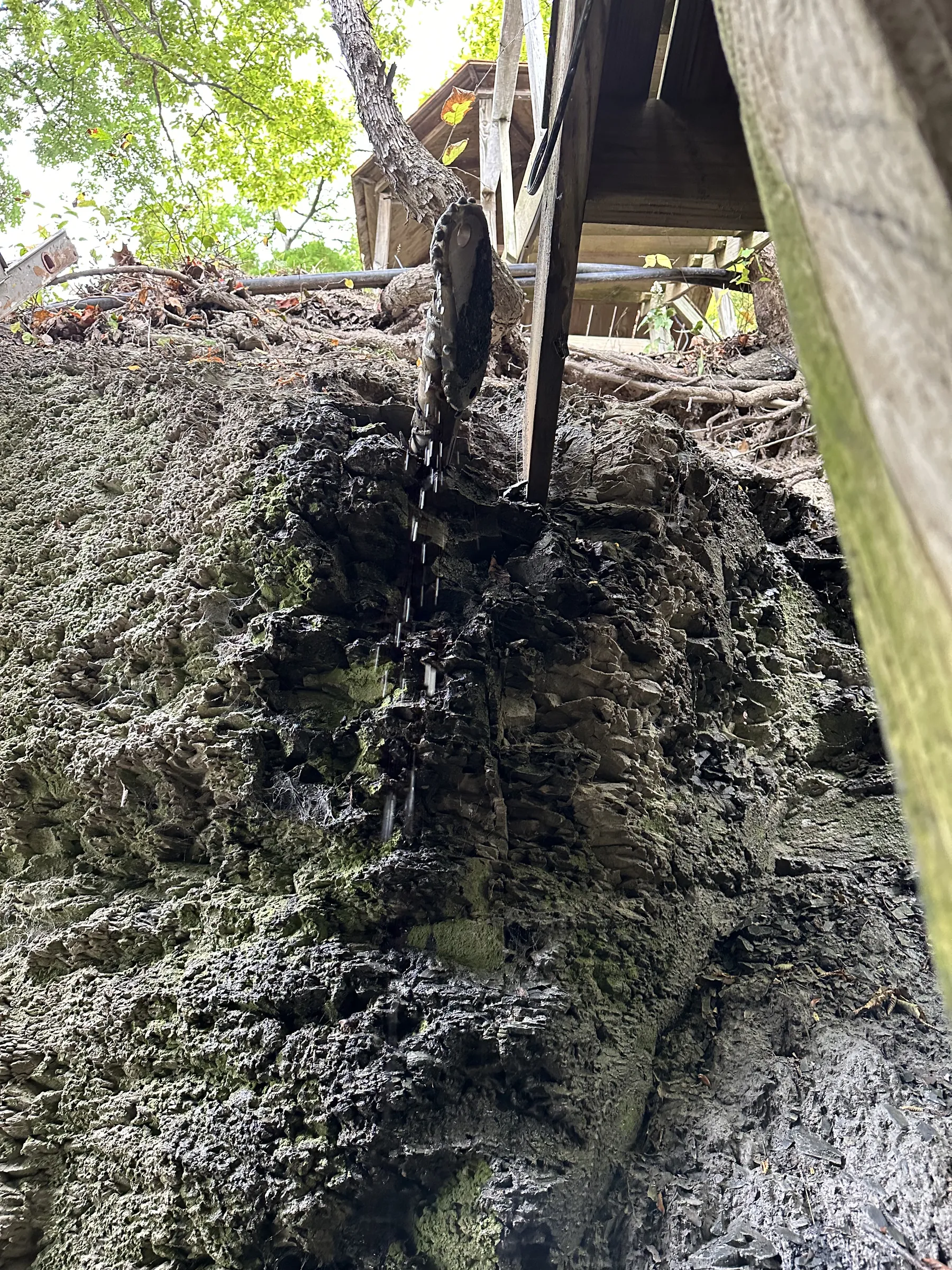
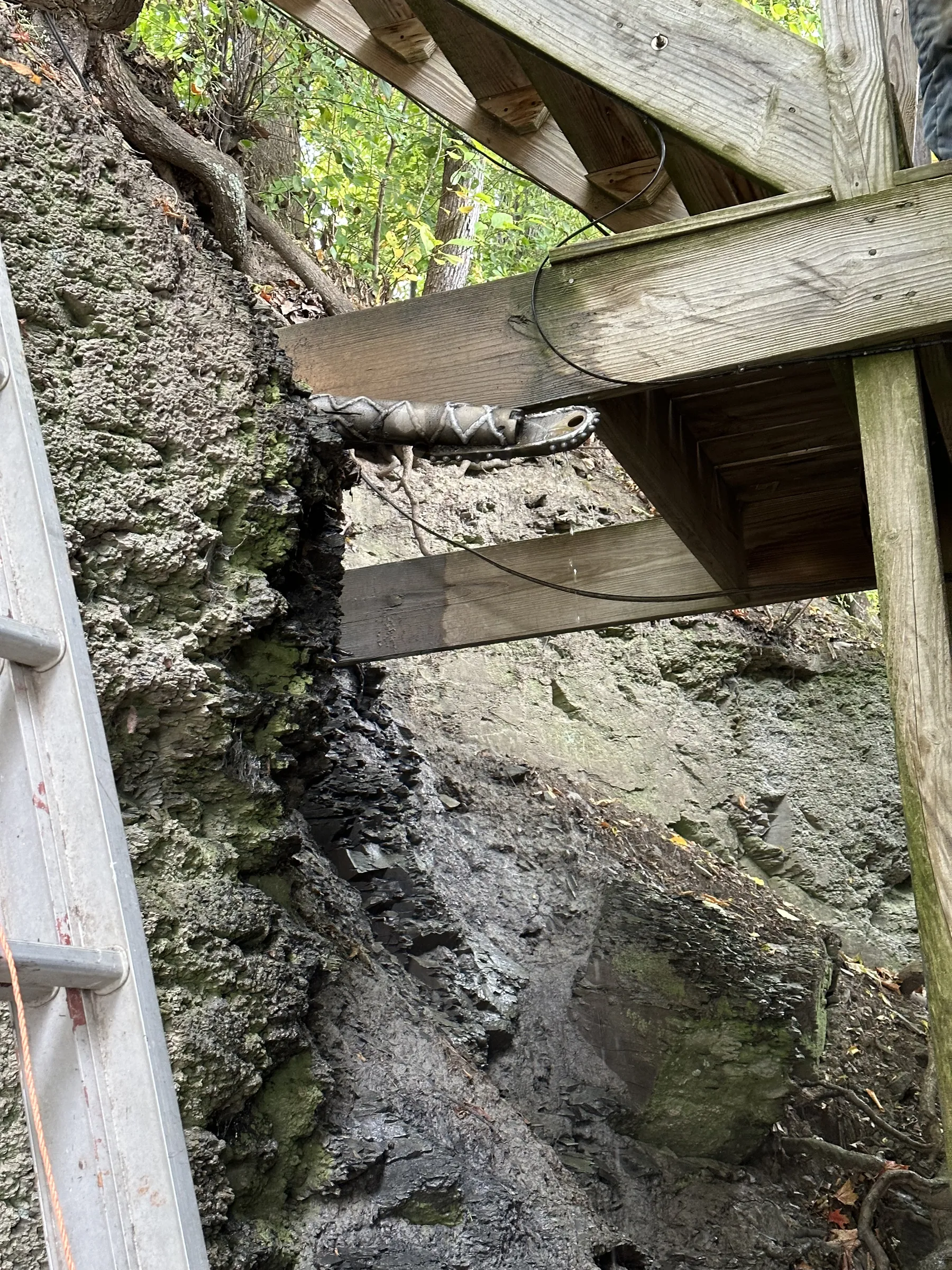
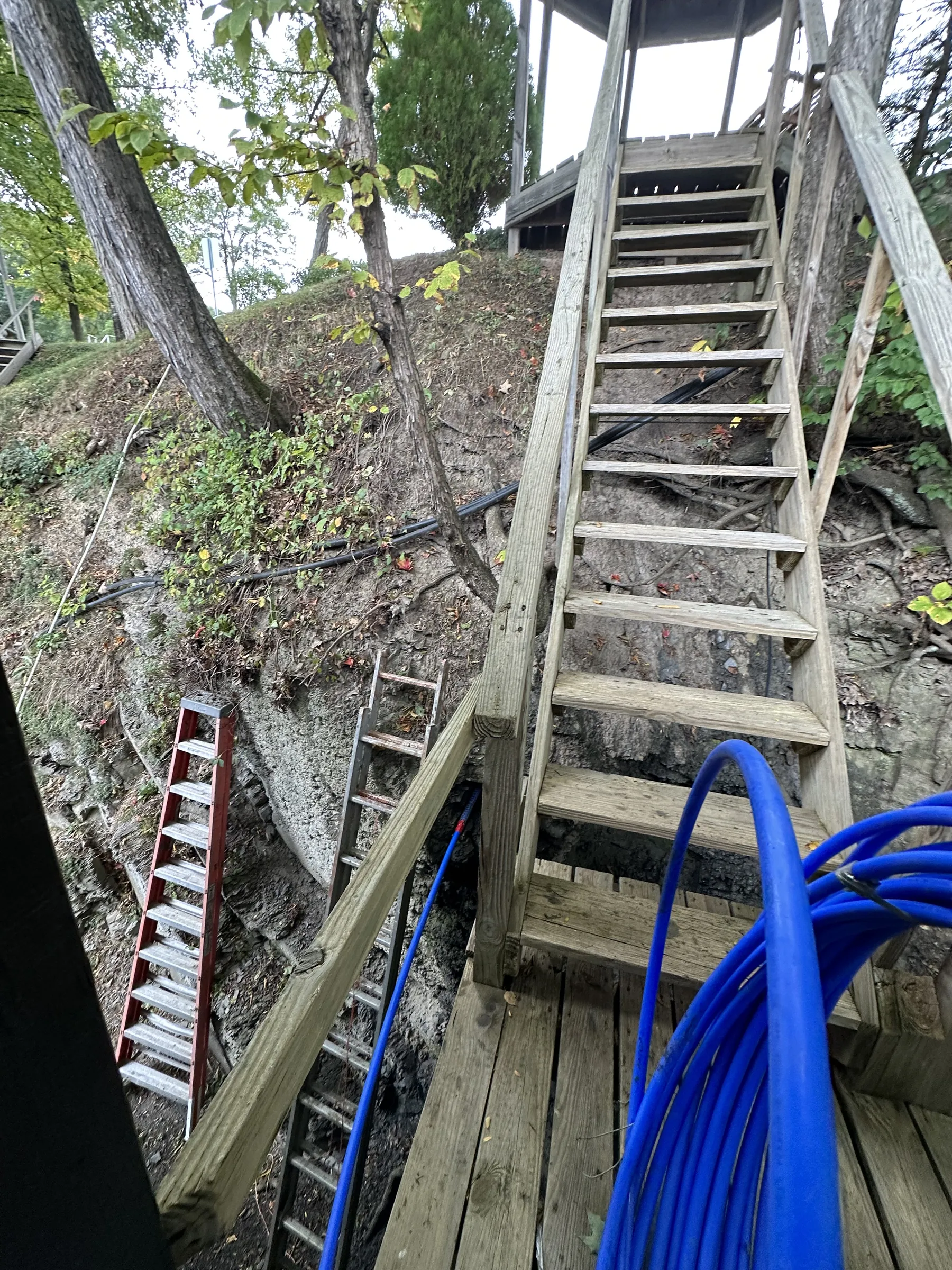
- Lakeside and hillside lots where slopes and trees make trenching difficult. One of our directional drilling projects included a steep wooded lakeside lot.
- Farms and builders crossing roads, ditches, or finished areas with water lines.
Local Ground Conditions That Affect a Bore
Clay. Lake-plain clay near Lake Ontario, in towns like Greece, Webster, and Hamlin, is usually workable for drilling. It is sticky, though, and the bore needs to be managed so the hole stays open for pullback.
Stony till and cobbles. Much of the region is glacial till full of cobbles and boulders. Rock can deflect a drill head or slow progress, and some bores need a path adjustment along the way.
Gravel deposits. Kames and eskers left sand and gravel in places. Loose material can be harder to hold open and takes careful handling.
Shallow bedrock. Where limestone or dolostone is close to the surface, the planned bore depth and route may need to work around it.
Frost depth. A water line pulled through a bore still needs to sit below frost, which around here is roughly four feet or more. Your water provider or building department sets the exact requirement, and the bore path is planned to keep the line at depth.
Seasonal Timing
Drilling can often happen in more seasons than open trenching because so little ground is disturbed. Still:
- Spring thaw can make entry and exit pits muddy and the ground soft for equipment.
- Summer and fall are usually the easiest working conditions.
- Winter bores are possible on some jobs, but frozen ground at the pits and snow on the surface add effort, and tracking from the surface is harder in deep snow.
Permits and Approvals to Check
- Road crossings in a public right of way need permission from whoever owns the road. That could be your town, Monroe County or a neighboring county, or New York State.
- Your water provider for any new water service, such as the Monroe County Water Authority or the City of Rochester water bureau.
- Your town for any local permits tied to the work.
- Wetlands and streams, including bores under a stream or near a lake shore, can involve NYS DEC Region 8.
- Dig Safely New York (811) at least two full working days before digging, not counting weekends and holidays. Because the bore path cannot be seen, confirmed marks matter even more.
Local rules and the road owner set the actual requirements, so check early.
What to Expect
- Locate and plan. Utilities are marked, and we lay out the entry point, exit point, depth, and path.
- Set up the rig. The drill sets up at one end, with room to work and access for equipment.
- Drill the pilot bore. The head is steered along the planned path and tracked from the surface.
- Pull back the line. The pipe or conduit is attached at the exit and pulled back through the bore.
- Connect and clean up. Ends are connected and the entry and exit areas are restored.
Our post on directional drilling vs. open trenching helps you decide which method suits your job.
How to Prepare
- Mark private lines, such as irrigation, invisible pet fences, power to outbuildings, and septic components. 811 does not locate those.
- Know your start and end points and where the line connects at each end.
- Clear space at the entry and exit for the rig and pipe layout.
- Contact the road owner early if the bore crosses a public road.
See calling 811 and preparing your property for more on locates.
How Grove Approaches Directional Drilling
Grove's founder spent years doing site work and land moving for other contractors before starting Grove. On drilling jobs we:
- Plan the bore around what is in the ground, from marked utilities to rock and soil.
- Track the head from the surface and steer it along the planned path and depth.
- Pair bores with HDPE pipe fusion so the line goes through as one continuous piece.
- Combine methods where it makes sense, such as trenching across open ground and drilling under the driveway as part of a water line.
Serving Rochester and Surrounding Towns
We provide directional drilling in Rochester and across Monroe County, including Brighton, Pittsford, Penfield, Perinton, Irondequoit, Webster, Greece, Gates, Henrietta, and Chili. We also drill in nearby towns such as Victor, Canandaigua, Walworth, Ontario, Avon, and Geneseo. See our service area, browse our projects, or contact us to talk through a crossing.
The Process
-
Step 1
Locate and Plan
Existing utilities are marked and the bore path, entry, and exit are planned.
-
Step 2
Drill the Pilot
The rig steers the drill head along the planned path while it is tracked from above.
-
Step 3
Pull Back
The line is attached at the exit and pulled back through the bore.
-
Step 4
Connect and Restore
The ends are connected and the entry and exit points are cleaned up.
On the Job
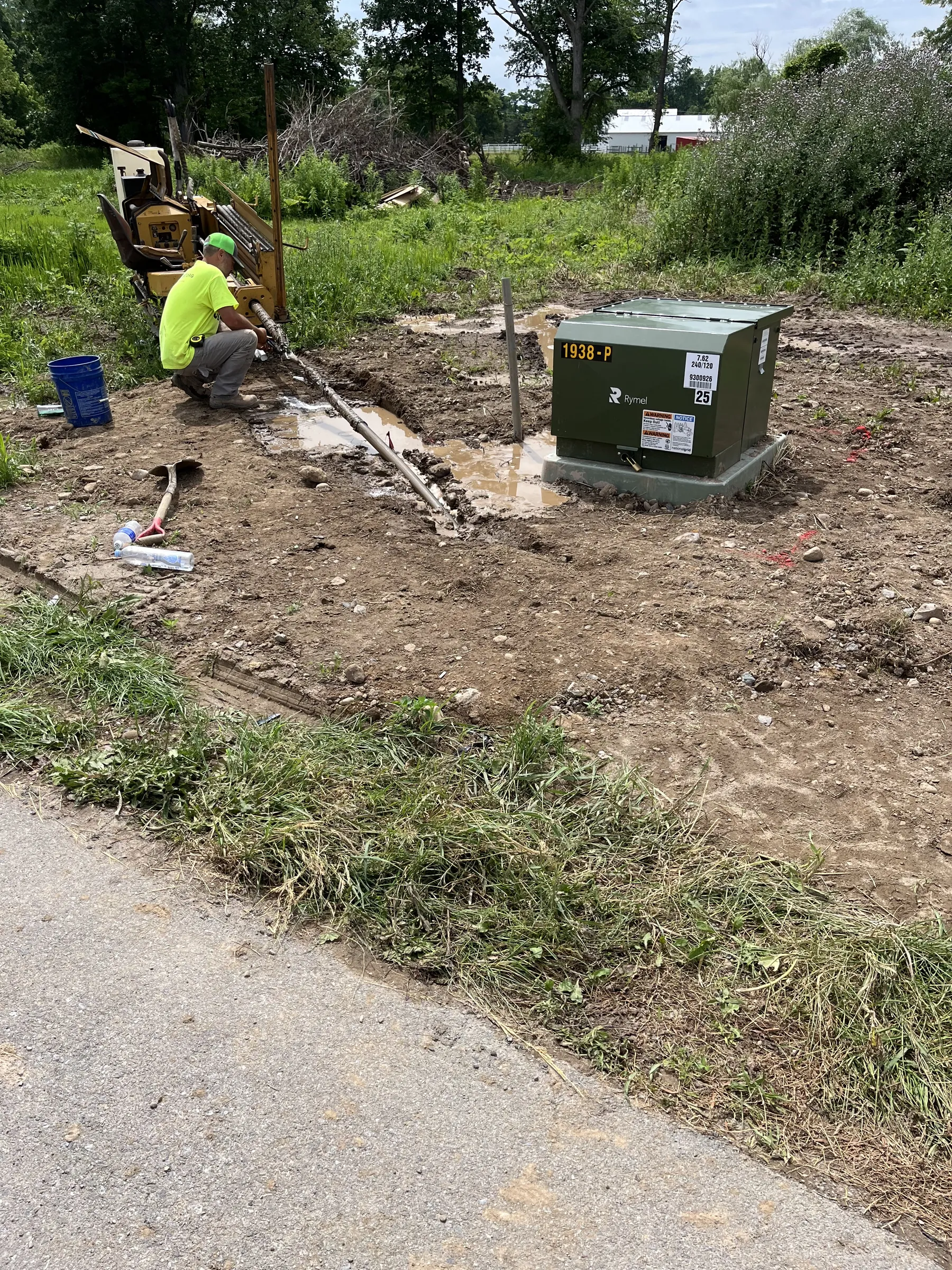
Trenchless bores to run new lines with minimal disturbance, including work on a steep, wooded lot.
Need Directional Drilling?
Send the location and a few photos of the site and we will get back to you.
Common Questions
Do not see your question here? Ask us directly when you send your project details.
Ask a Question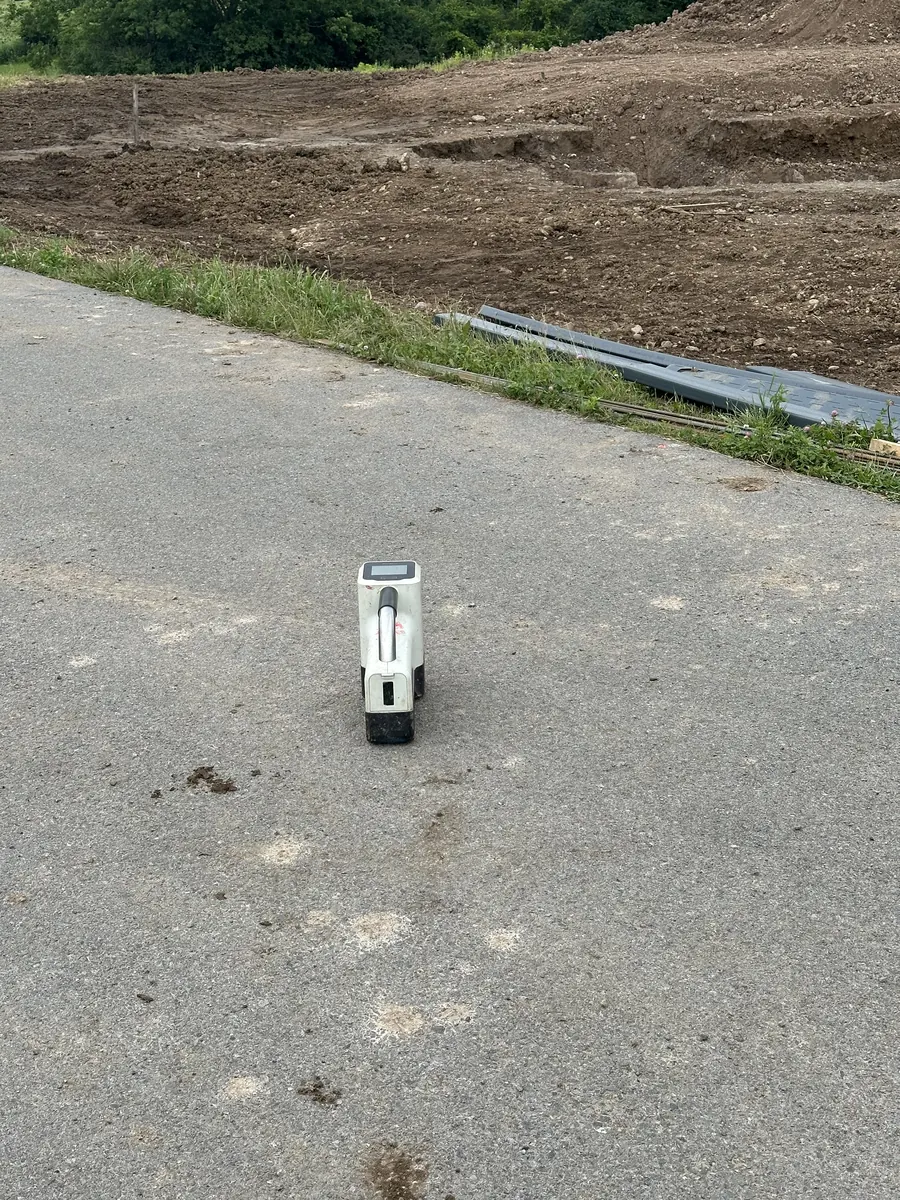
When is drilling better than trenching?
When the route crosses a driveway, road, walkway, finished lawn, or other obstacle you do not want to disturb. Across open ground, a trench is often simpler.
How do you know where the drill is?
The drill head is located and tracked from the surface during the bore, so the crew can steer it along the planned path and depth.
Do utilities still need to be marked?
Absolutely. Because the bore path cannot be seen, confirmed utility marks are even more important for drilling than for trenching.
What gets pulled through the bore?
Water lines and conduit are common. Fused HDPE pipe is especially well suited because it goes through as one continuous piece.
Can you drill under a county or state road near Rochester?
Road crossings are a common use for drilling, but they need permission from whoever owns the road, whether that is the town, the county, or New York State. We plan the bore with those requirements in mind.
Does rocky ground stop a directional bore?
Not usually, but it can slow it down. Cobbles and boulders in glacial till can deflect the drill head, and shallow bedrock may change the route or depth. We look at the ground and plan around it.
Can you drill on a steep or wooded lakeside lot?
Often, yes. Drilling avoids cutting a trench down a slope and through tree roots, which is why it suits steep and wooded sites. Shoreline areas may also have DEC or town rules to check.
Will a water line in a bore still be below frost?
Yes. The bore is planned at a depth that keeps the line below frost, roughly four feet or more around here, with the exact requirement set by your water provider or building department.
Helpful Reading
Directional Drilling vs. Open Trenching in Rochester, NY: Which Fits Your Project?
There are two ways to get a water line or conduit underground. Here is how directional drilling and open trenching compare on Rochester-area properties, and how to tell which one fits your job.
September 16, 2026 · 6 Min Read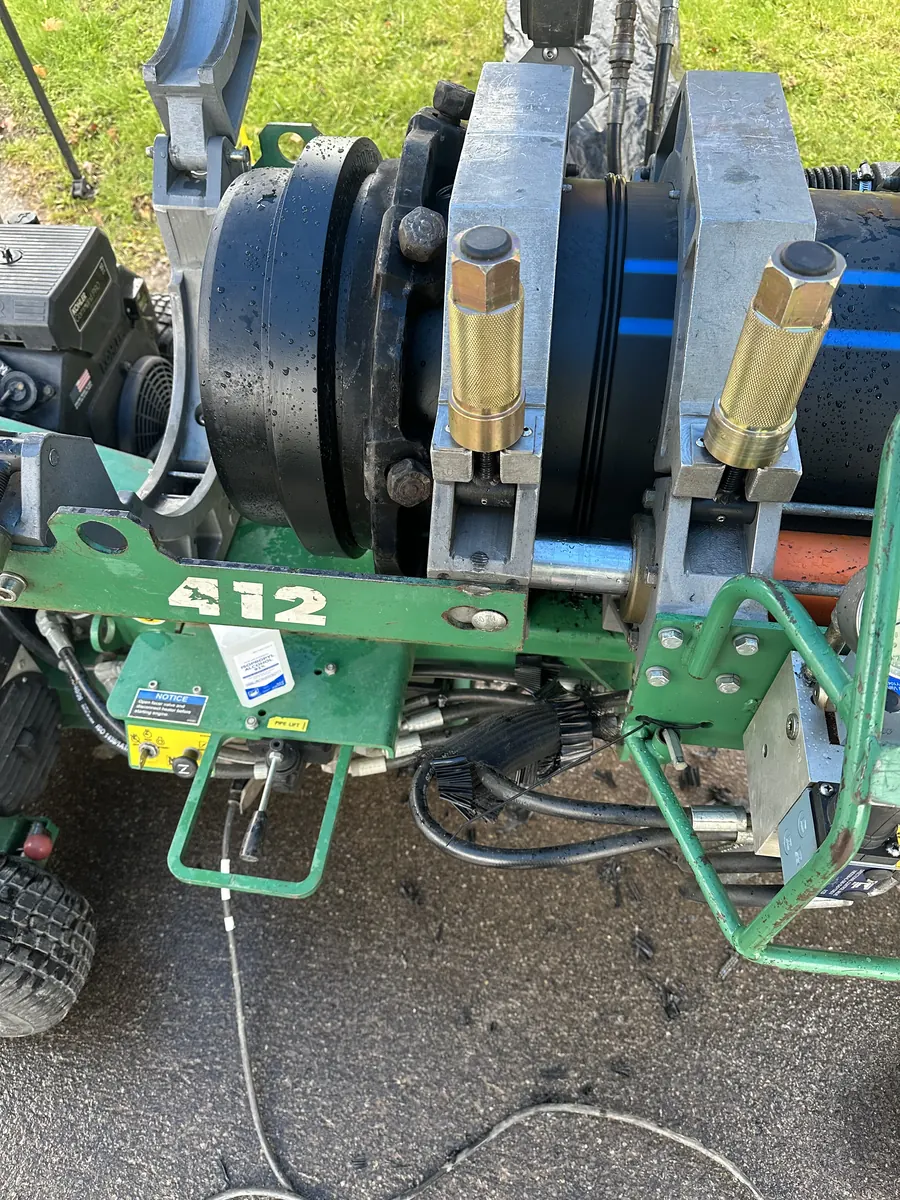
What Is HDPE Butt Fusion? A Guide for Rochester, NY Water Lines
HDPE pipe joined by butt fusion becomes one continuous line with no couplings to leak. Here is how the process works, why it suits Rochester-area frost and farm water lines, and when it makes sense for your project.
August 12, 2026 · 6 Min Read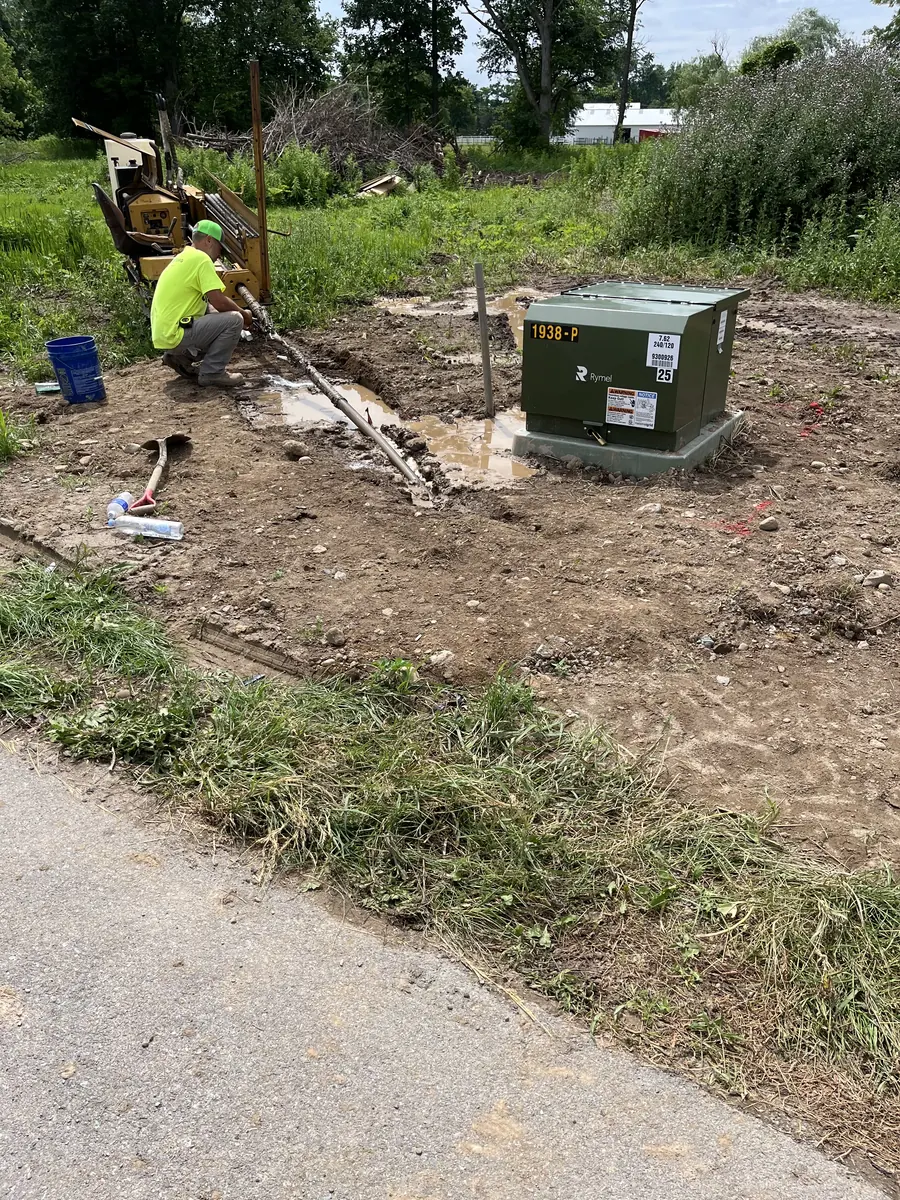
Before You Dig in Rochester, NY: Calling 811 and Preparing Your Property
Every excavation job starts with knowing what is already underground. Here is how utility locates work through Dig Safely New York in the Rochester area, what 811 does not mark, and how to get your property ready for equipment.
March 18, 2026 · 6 Min ReadOften Done Together
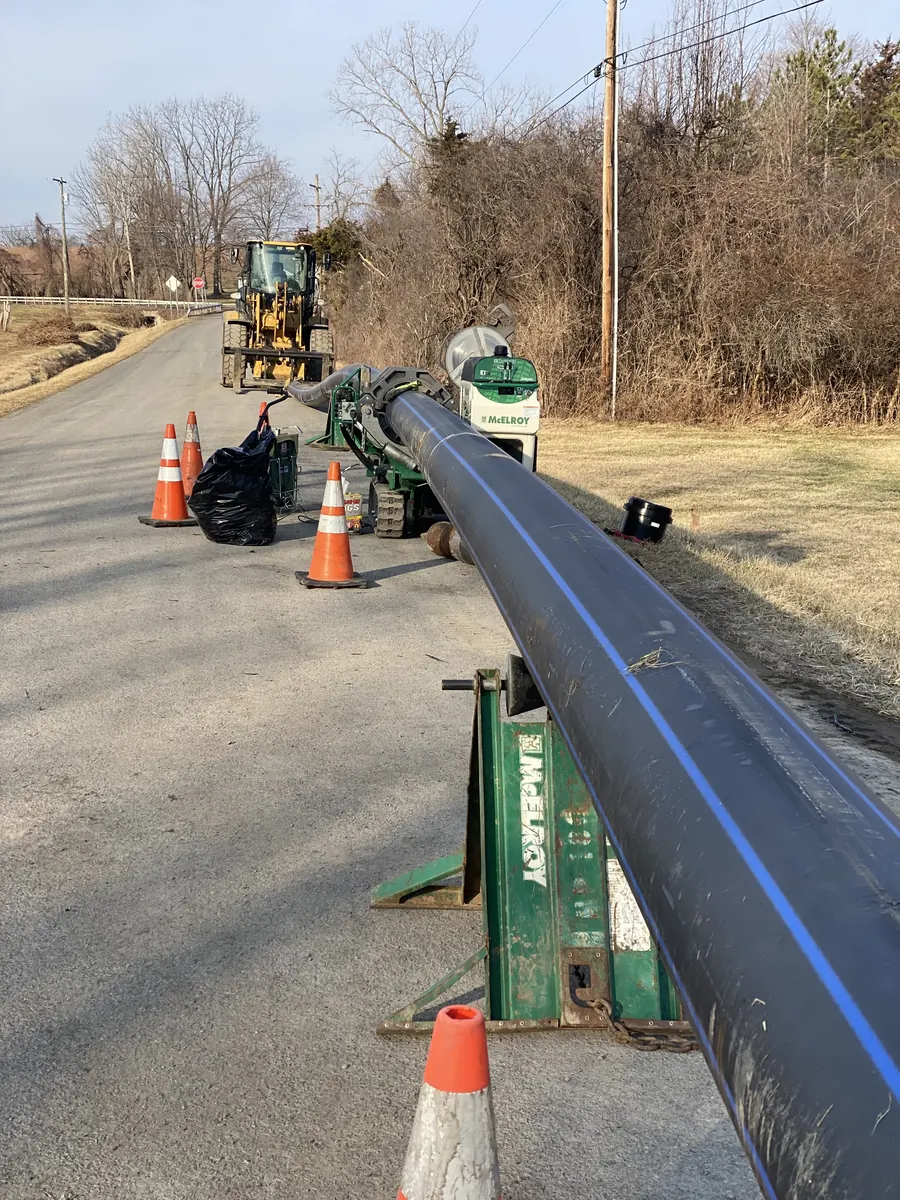
HDPE Pipe Fusion
On-site butt fusion and installation of HDPE pipe for water and utility runs.
Learn More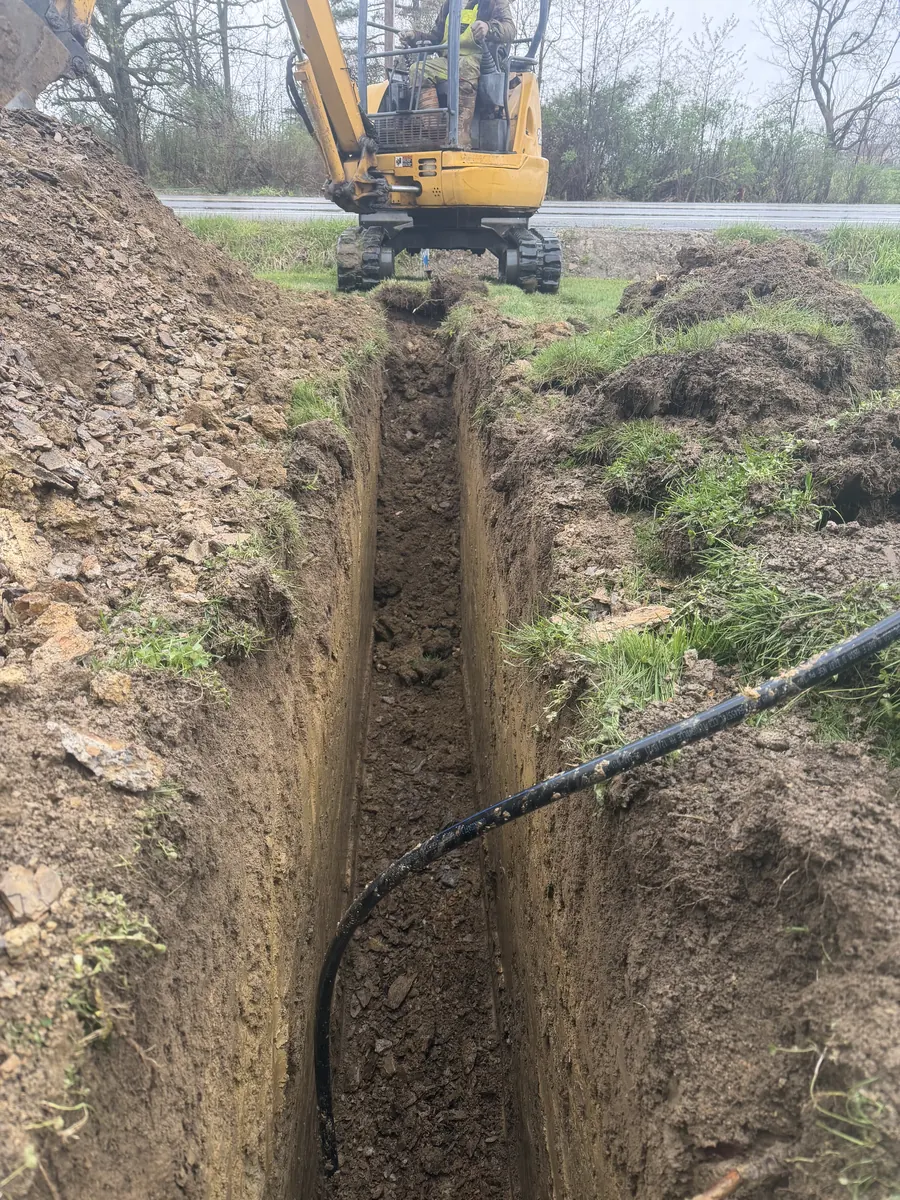
Water and Utility Lines
Water service lines trenched to depth and installed from the source to the building.
Learn More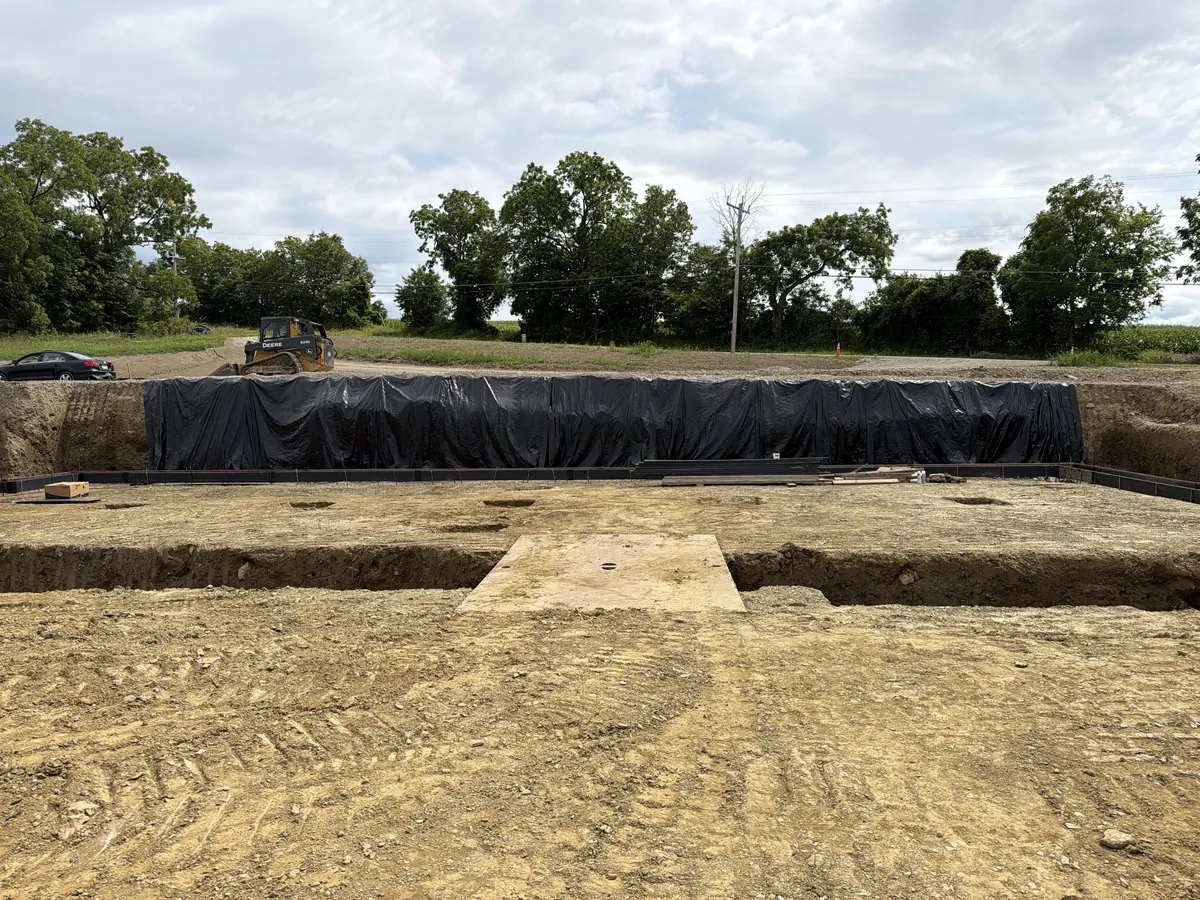
Site Work and Excavation
Site prep, foundation digs, trenching, and grading to get a build started on solid ground.
Learn More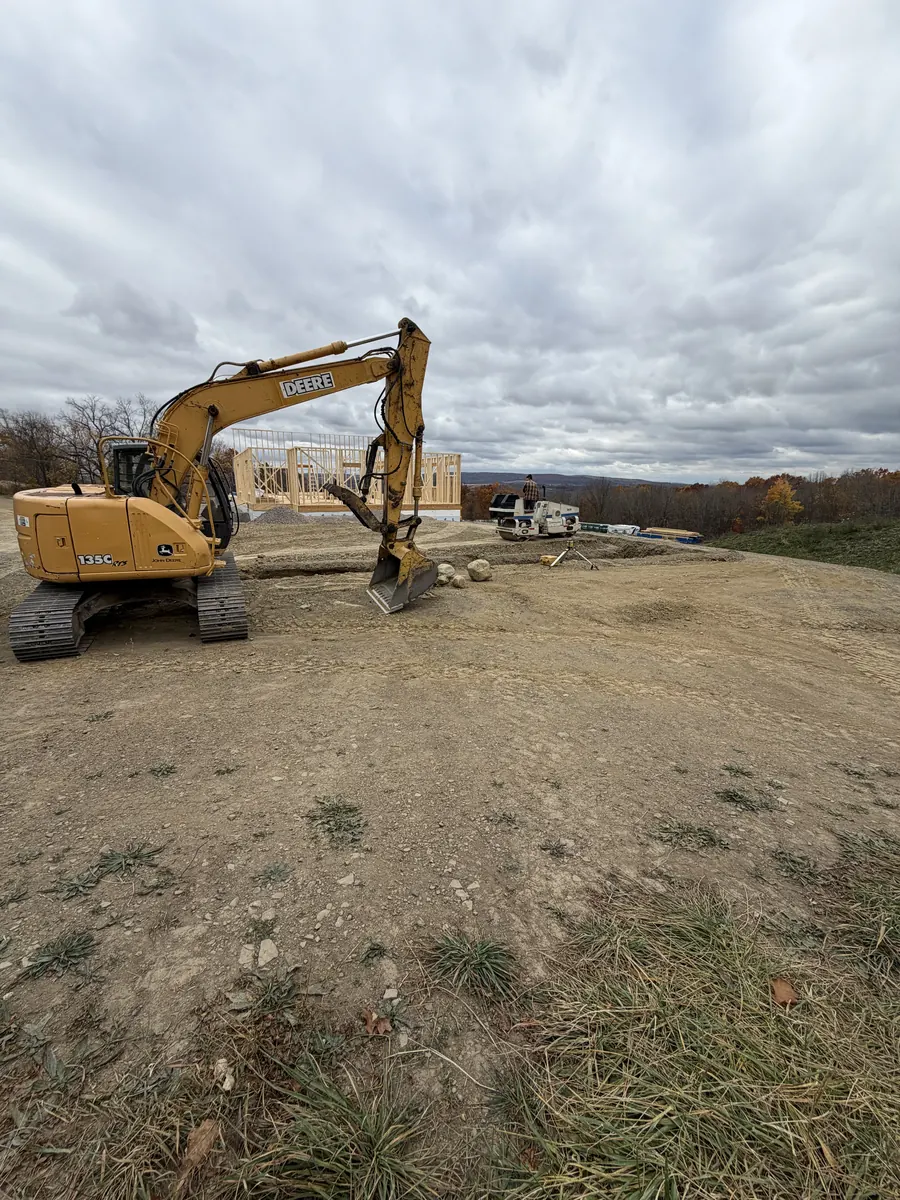
Got Ground That Needs Work?
Send us the location, what you need done, and a few photos. We will get back to you to talk it through.
Request a Quote