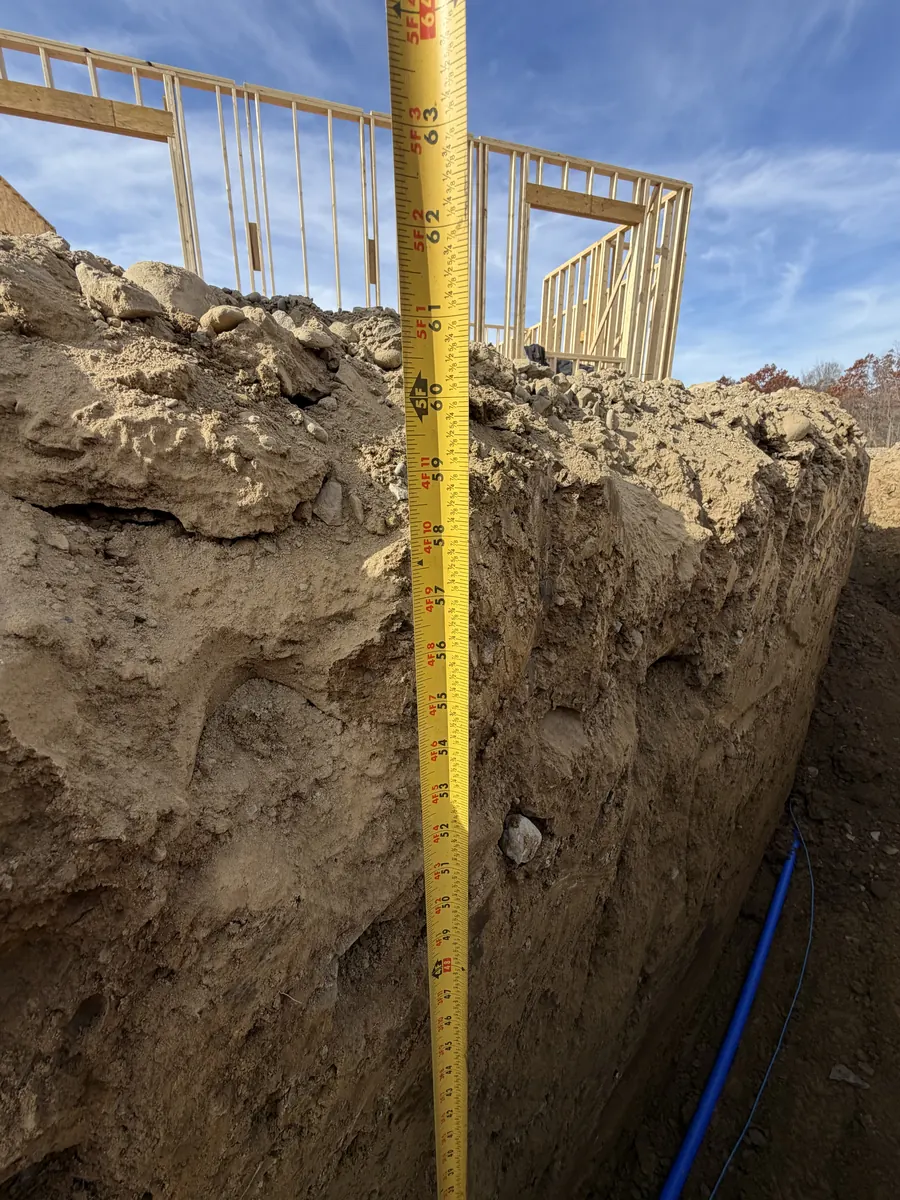
A new water service line is buried, connected, and then forgotten for decades. Here is how the work is done around Rochester, NY, why depth below frost matters so much, and what to expect from locates through backfill.
A water service line is the pipe that carries water from the main or your well into the house, barn, or outbuilding. When it is done right, you never think about it again. When it is not, you find out in January with no water and a frozen line somewhere under the lawn. This is what goes into a proper installation in the Rochester area, and what you should expect from start to finish.
Who Is Responsible for What
Before any digging, it helps to know where your part of the line starts. On public water, the line is typically split between the utility side and the property owner side, often at a curb stop or meter near the road. Around Rochester:
- Monroe County Water Authority serves most of the county outside the city.
- The City of Rochester has its own water bureau for city properties.
- Private wells are common on rural properties in western Monroe County and the surrounding counties, where the line runs from the well to the house.
Each water provider has its own rules on tapping the main, curb stop location, meter placement, inspections, and what pipe and fittings are allowed. Some work on the main or the utility side may have to be done or approved by the water provider. Check with your provider and your town before the job starts, and we can help you sort out who handles what.
Why Depth Matters
Water lines have to be buried below the frost line so they do not freeze in winter. Around Rochester that generally means roughly four feet of cover or more, and some providers or locations call for more. Your water provider or local code sets the exact requirement, and it is worth confirming before the trench is dug.
Depth is not just about the deepest point. The line needs proper cover along the entire run, including:
- Where the ground dips through a low spot or swale
- Under driveways, where plowed areas can freeze deeper because snow cover gets scraped away
- Near the house, where final grading can change the cover after the line is in
- At the entry point, where the line comes up to pass through or under the foundation
That is why we measure as the trench is dug instead of eyeballing it. A line that is deep enough in most places and shallow in one is still a line that can freeze.
Planning the Route
The best route is usually the shortest practical one, but not always. When we look at a water line job, we think about:
- Existing utilities. Gas, electric, cable, septic lines, and drainage pipe all need to be avoided and given proper separation. Separation from sewer and septic lines is something your local code and health department care about.
- Obstacles. Trees, retaining walls, patios, and finished landscaping.
- Crossings. Driveways, sidewalks, and roads.
- Ground conditions. Wet areas, rock, and heavy clay.
- Future plans. If you might add a garage, barn, or hydrant later, running an extra line or sleeve now is easier than trenching twice.
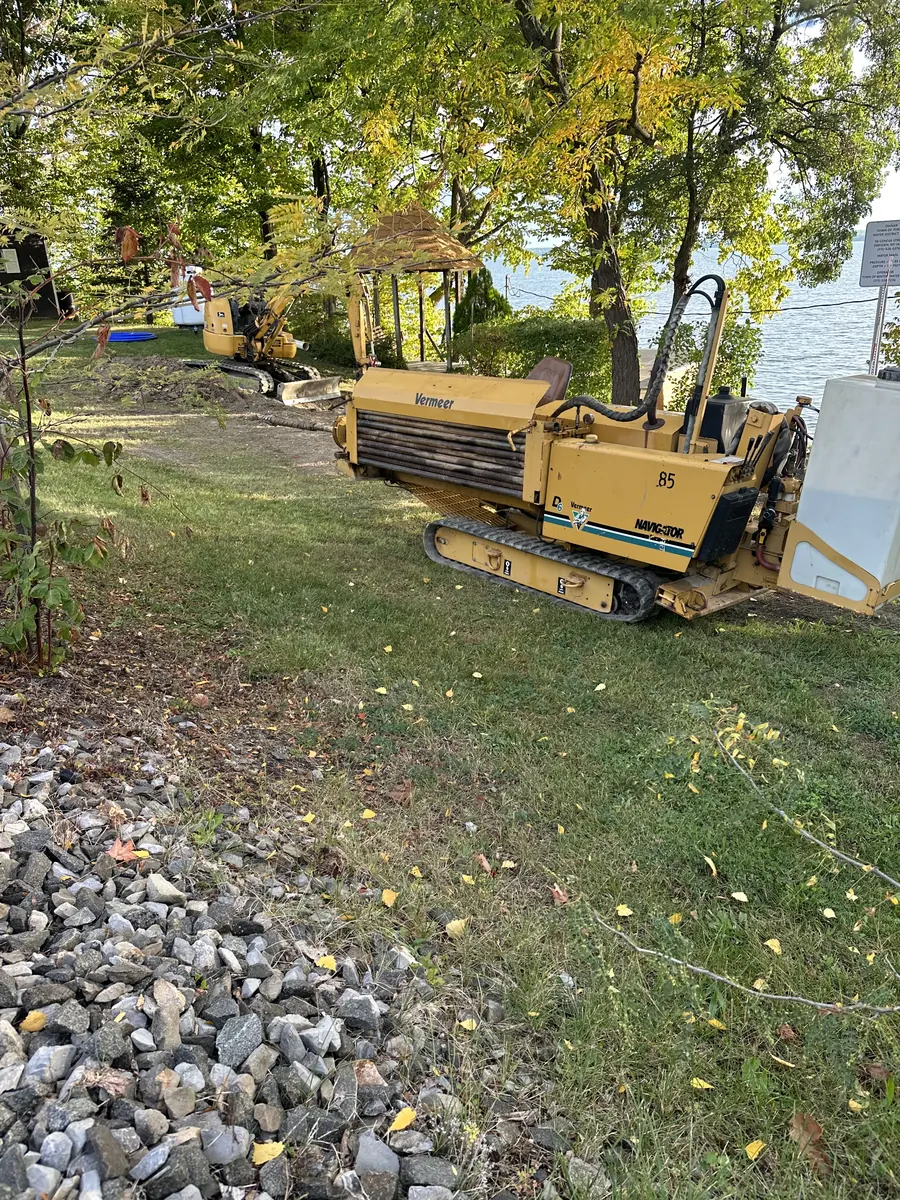
Where the route crosses a driveway, sidewalk, or road, directional drilling can run the line underneath without tearing it up. Our post on directional drilling vs. open trenching explains when each one makes sense.
Locates and Permits
Before digging, utility locates have to be requested through Dig Safely New York by calling 811. Notice is required ahead of digging, generally at least two full working days not counting weekends and holidays. Locates generally mark the public lines, not private ones, so let us know about anything you have installed yourself, like a buried electric line to a shed. Our guide on calling 811 and preparing your property covers what to expect.
If the work crosses or runs in a public road right of way, you may need permission from whoever owns the road, which could be the town, county, or state highway department. Some water providers also require a permit or inspection before the trench is backfilled.
Digging the Trench
A typical water service trench runs from the curb stop or source to the building. The work usually includes:
- Exposing and confirming the connection point at the curb stop, meter pit, or well
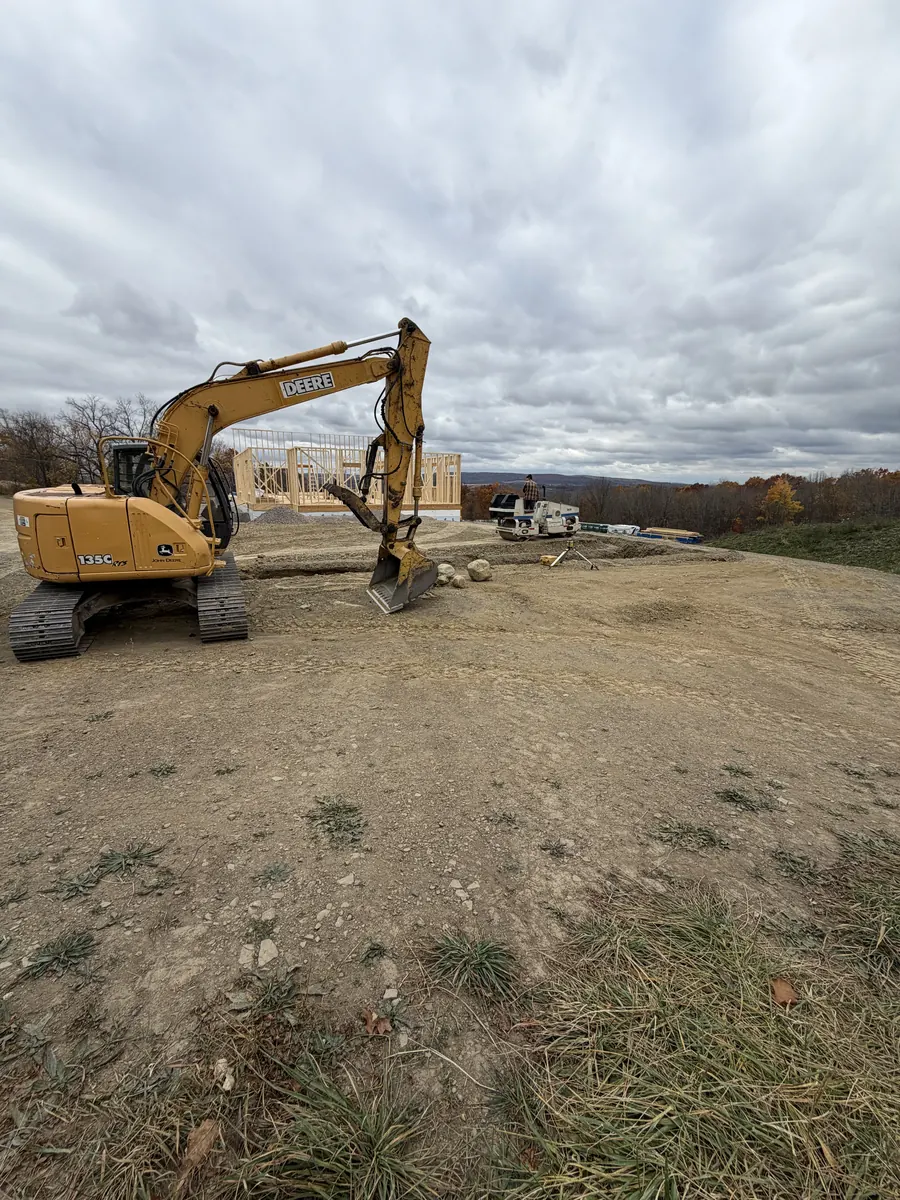
- Digging the trench to depth with clean, stable walls
- Removing rocks and debris that could damage the pipe
- Placing a bed of suitable material where the native soil is rocky
- Laying the line without kinks, sharp bends, or stress on the fittings
- Making the connections and having them inspected where required
Trench safety matters too. Deeper trenches in loose or wet soil need to be sloped, benched, or protected before anyone works in them.
Into the Building
Where the line enters the house, it typically comes through the foundation wall or under the footing. On new construction, a sleeve set before the concrete is poured makes this easy. On an existing house, it usually means coring through the wall.
Either way, the penetration needs to be sealed so water and soil gases do not follow the pipe in. The line should also have enough depth and protection right up to the wall, since the area near the foundation is often where cover gets thinner. Inside, the line connects to the meter or the home's plumbing. Interior plumbing is usually handled by a plumber, and we coordinate with them so the line ends up where they need it.
Pipe Material
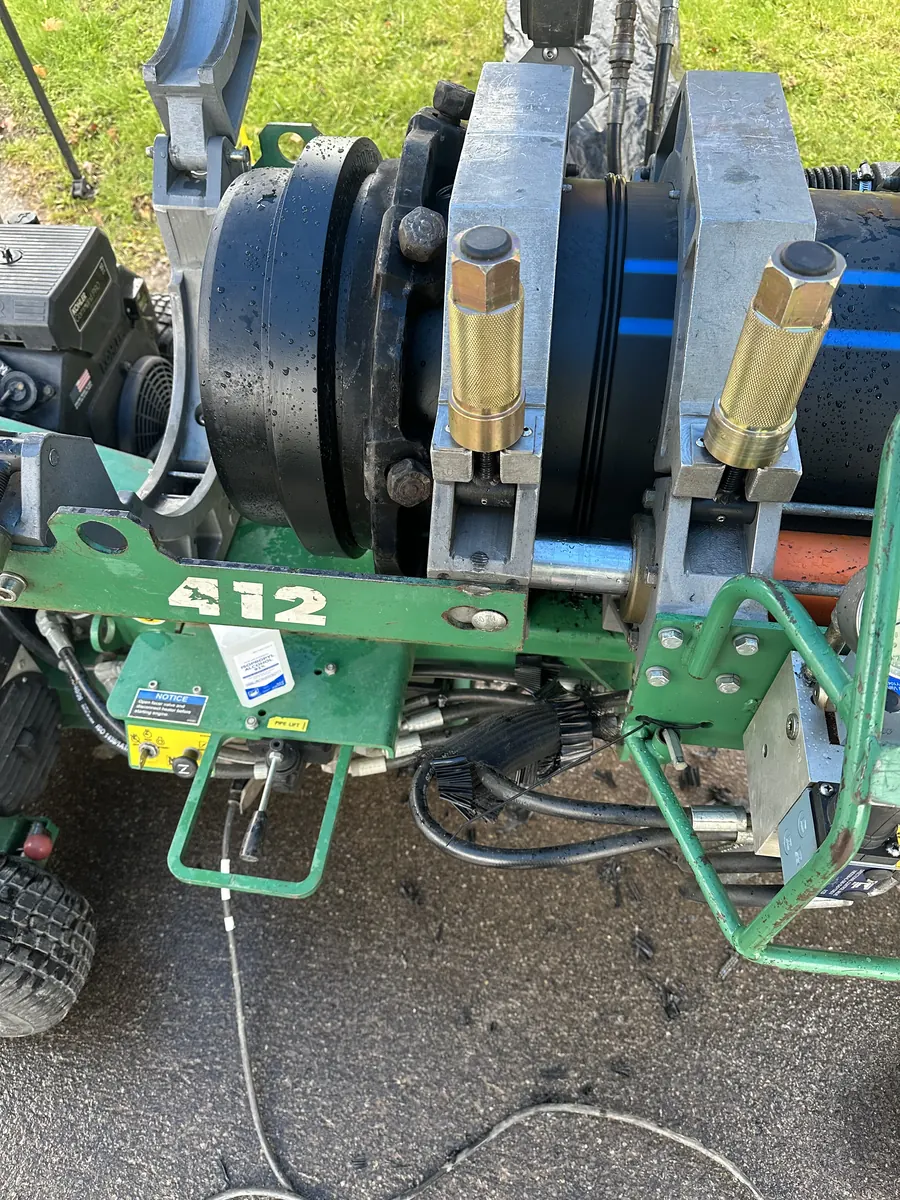
Water service lines are commonly run in polyethylene pipe, which is flexible, resists corrosion, and handles ground movement well. Copper is still used in some places, and your water provider may have rules about which materials are allowed. For larger or longer runs, HDPE pipe joined by butt fusion creates a continuous line with no mechanical joints in the ground, which is why we use it often for farm lines and long runs. See our HDPE pipe fusion page for more on that.
Backfill and Restoration
Once the line is in, connected, and inspected if required, the trench is backfilled. Good backfill does two things: it protects the pipe and it limits settling. The first layer around the pipe should be free of large rocks. After that, the trench is filled in lifts and compacted rather than dumped back in all at once. A trench that sinks a few inches over the next year is a common complaint, and proper backfill helps prevent it.
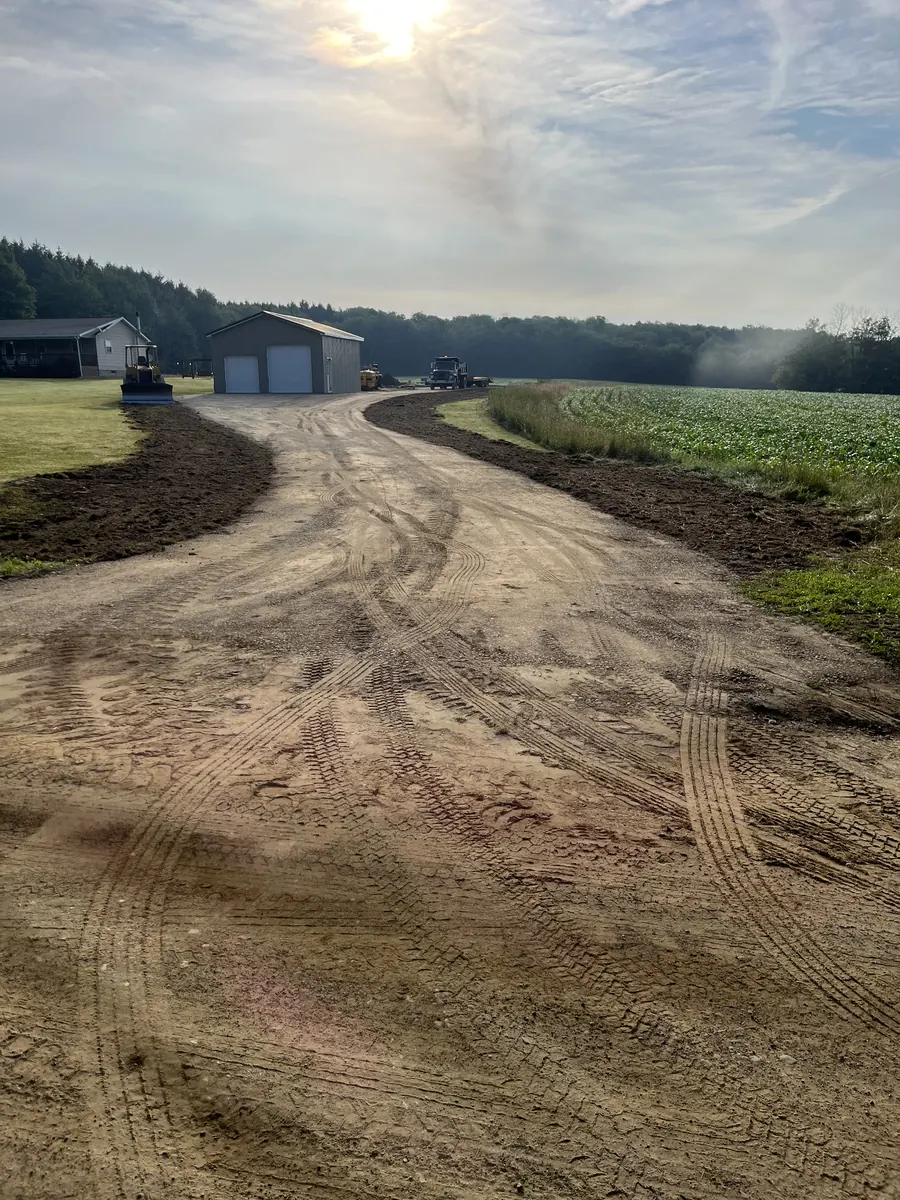
Topsoil goes back on top, and the area is graded so water does not collect along the trench line. If the trench crossed a lawn, expect some seeding and a season of regrowth.
What Makes Rochester-Area Water Lines Different
The local conditions shape how we approach a water line job here.
- Frost and freeze-thaw. Long winters and repeated freeze-thaw cycles make depth the top priority. Areas where snow is plowed off, like driveways, deserve extra attention.
- Clay near the lake. In lake-plain towns like Greece, Hamlin, Parma, and Webster, heavy clay holds water. Trenches can fill with water fast, and wet clay is hard to compact, so backfill takes more care.
- Stony till and rock. South and east of the city, in towns like Mendon, Pittsford, Perinton, and Victor, glacial till is full of stones and boulders. In some areas bedrock sits close to the surface. Rock affects how fast the trench goes and whether bedding material needs to be brought in.
- Farm water. In the surrounding farm country, in places like Riga, Bergen, Le Roy, and Caledonia, water often needs to reach barns, fields, and livestock. Those runs are long and are a good fit for fused HDPE.
- Spring conditions. A muddy spring thaw can make access across lawns and fields tough. Planning around the ground conditions protects your yard.
You can see a recent job in our water service installation project, where a new line was trenched to depth along the road, run to the house, and brought through the foundation wall.
Frequently Asked Questions
How Deep Does a Water Line Need to Be in Rochester?
It needs to be below the frost line set by your water provider or local code, which in this area is generally roughly four feet or more. Confirm the exact requirement with your provider before the work starts.
Can a Water Line Go Under My Driveway Without Digging It Up?
Usually, yes. Directional drilling can bore under a driveway, walkway, or road and pull the line through, leaving the surface intact.
How Long Does a Water Service Installation Take?
A typical residential run is often a short job once permits and locates are in place, but the length of the run, rock, crossings, and inspections all affect the schedule. We will give you a realistic timeline once we see the site.
Should I Replace an Old Water Line or Repair It?
It depends on the age, material, and how many problems it has had. If the old line is shallow, leaking in more than one place, or made of an outdated material, replacement is often the better long-term choice.
Need a New Water Line?
Whether it is a new service for a house, a replacement for an old line, or water to a barn, we can help. Send us your location, a rough idea of the route, and a few photos and we will follow up with a quote. You can also read more about our water and utility line services or check our service area.