
Water Lines Run Deep and Right
A water service line is buried once and forgotten for decades, as long as it was done right. In New York that means getting it below the frost line along the entire run and bringing it into the building cleanly.
Grove trenches and installs water service lines from the source to the building: confirming locates, digging to depth, laying and connecting the line, bringing it through the foundation, and backfilling the trench so it does not settle.
Water and Utility Lines Services
Hire us for one piece of the job or all of it. Pick what your project needs.
New Water Service
New lines from the curb stop, main, or well to the house, garage, or barn.
Trenching to Depth
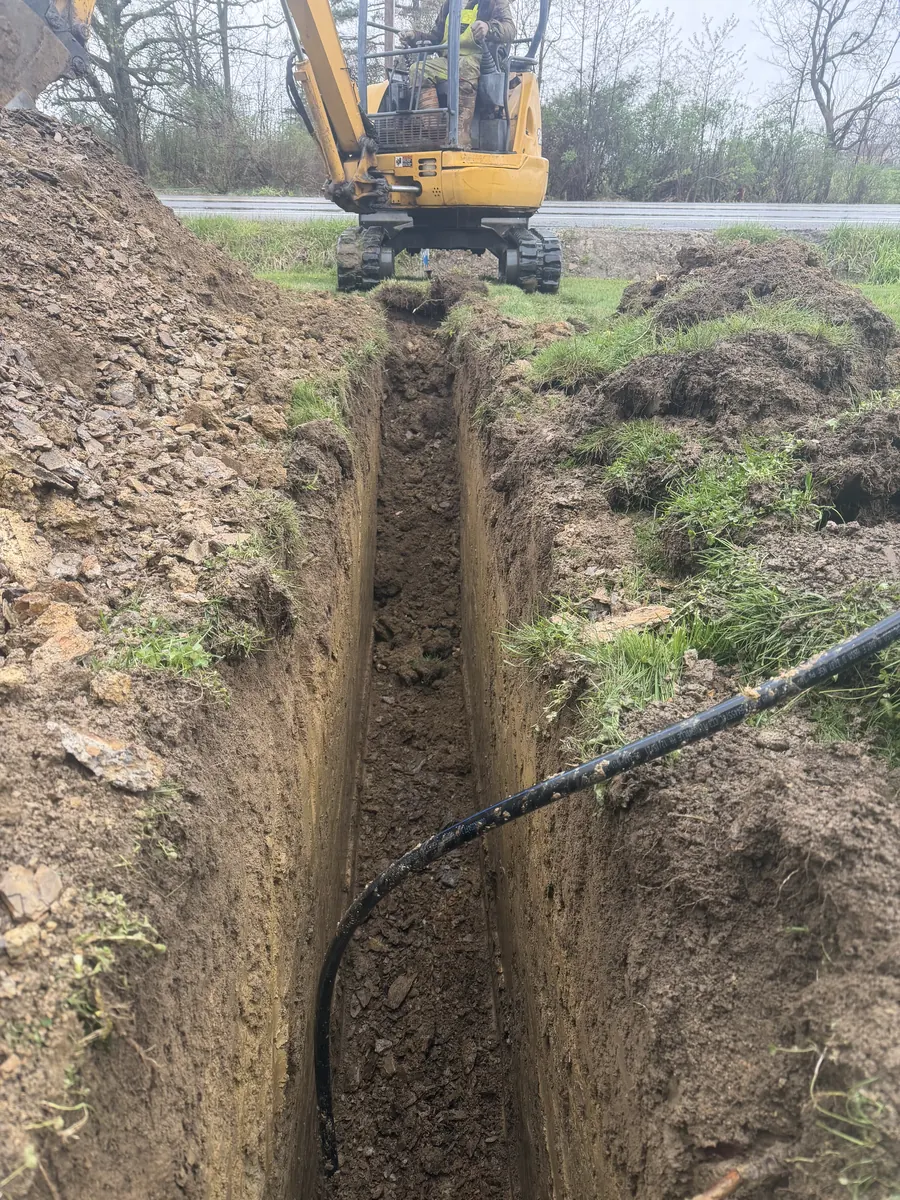
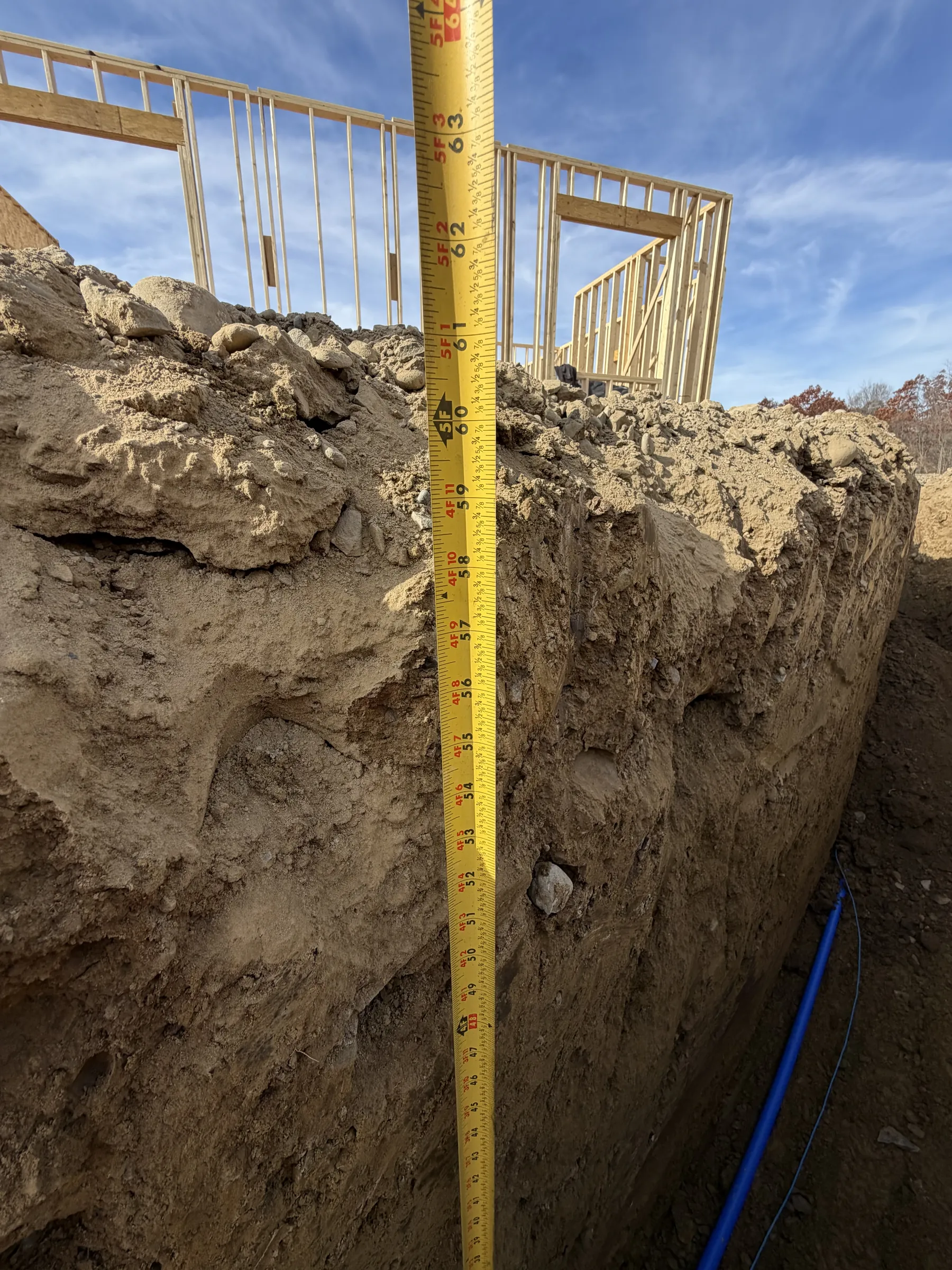
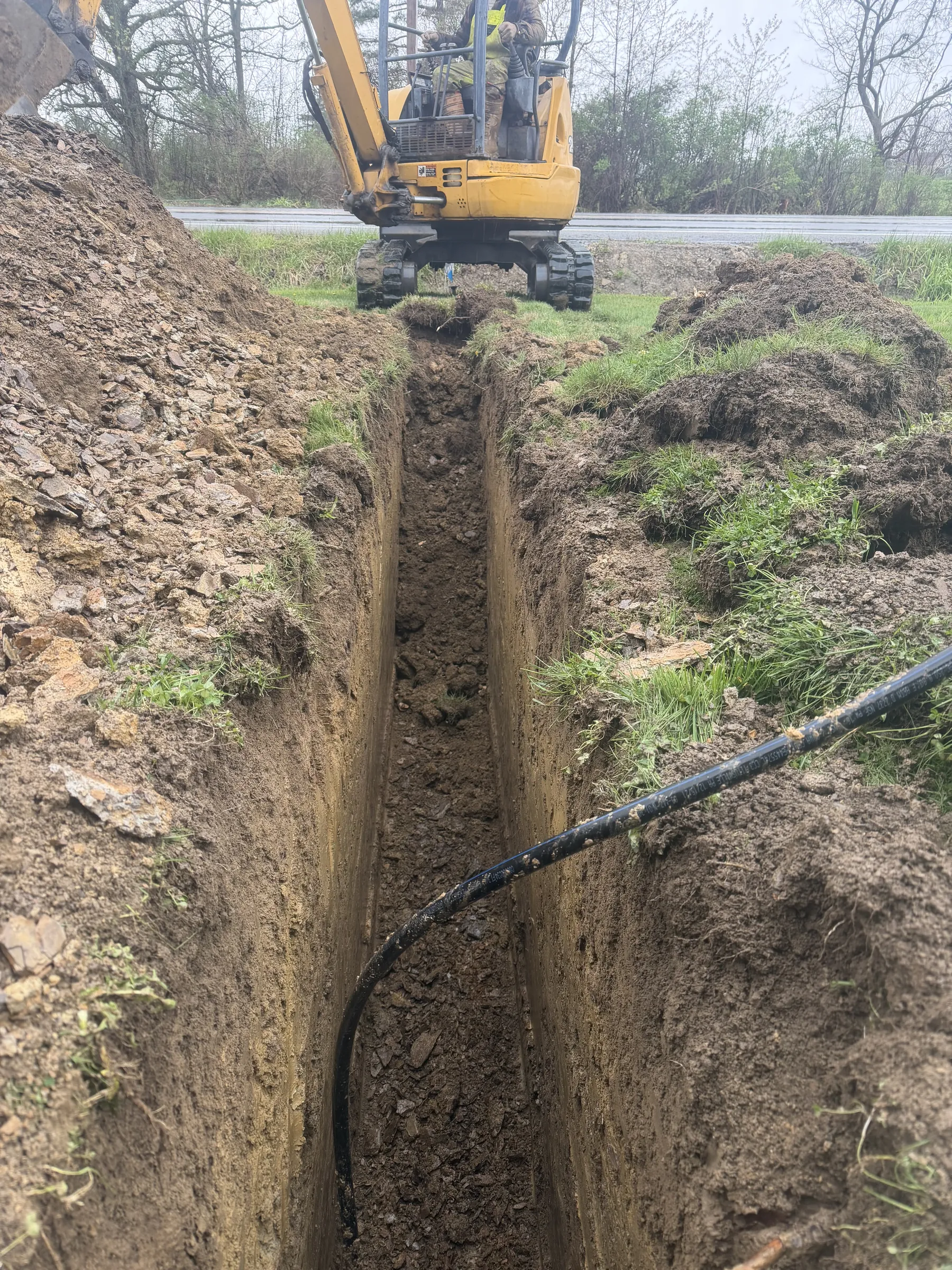
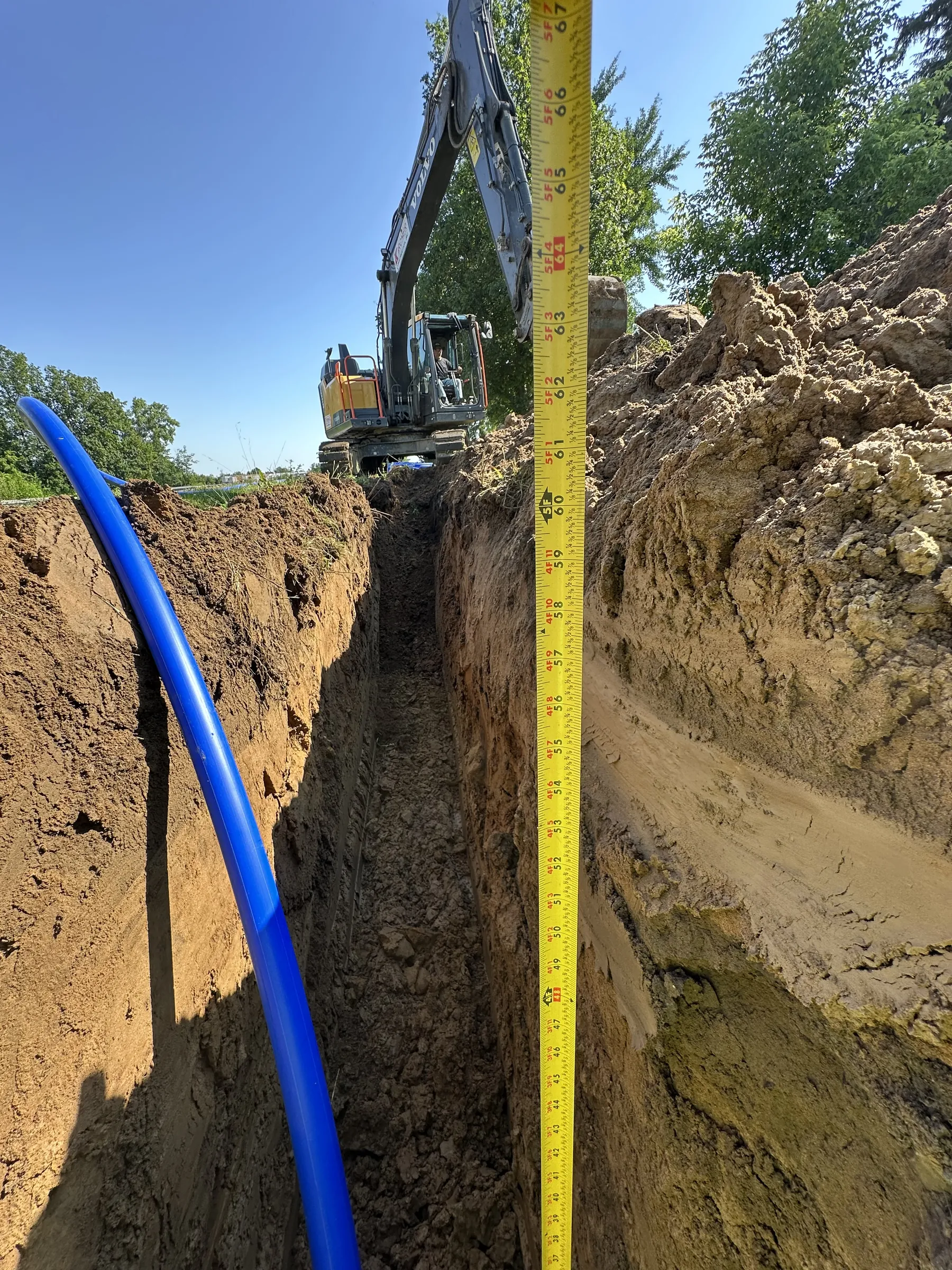
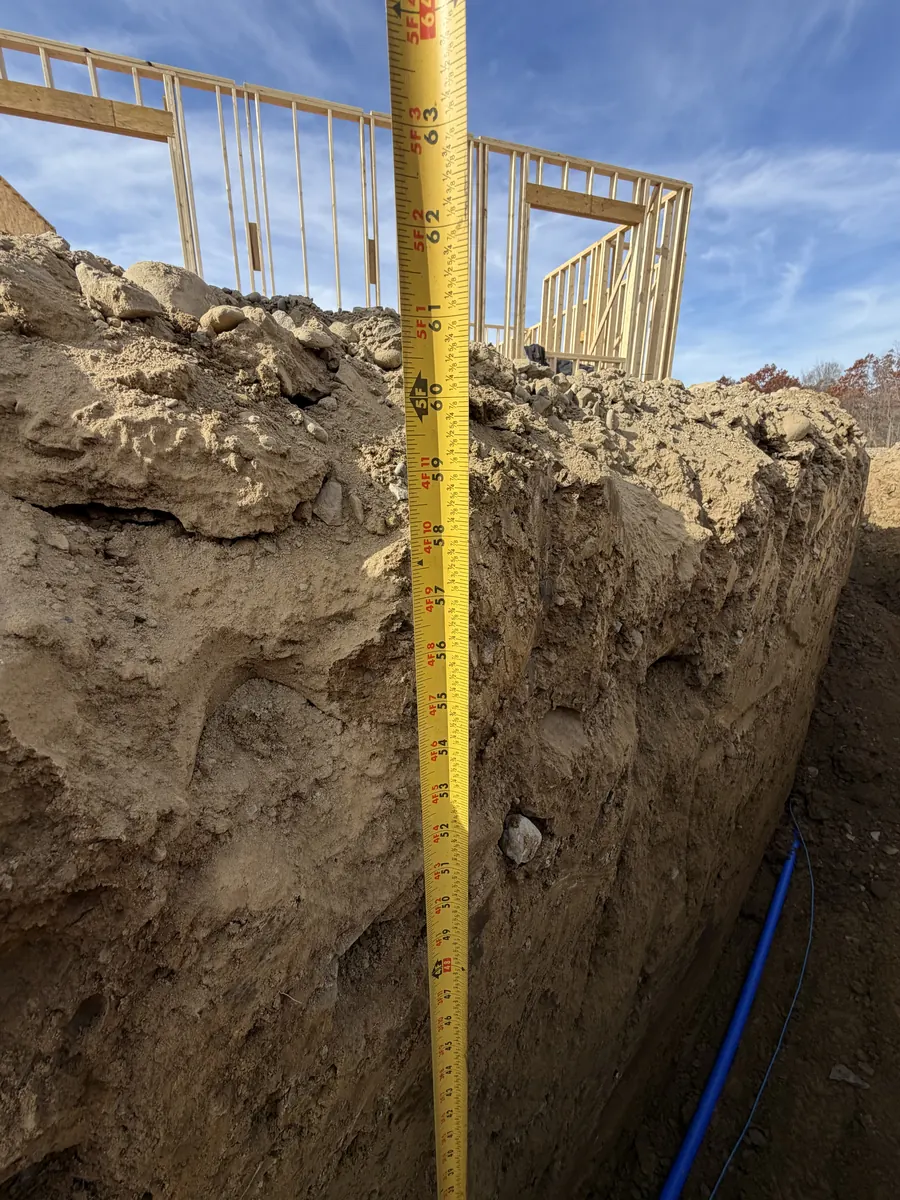
Trenches measured as they are dug so the line sits below frost along the entire route.
Pipe Bedding
Rocks and debris removed and the line laid on a good bed of material to protect it.
Foundation Entry
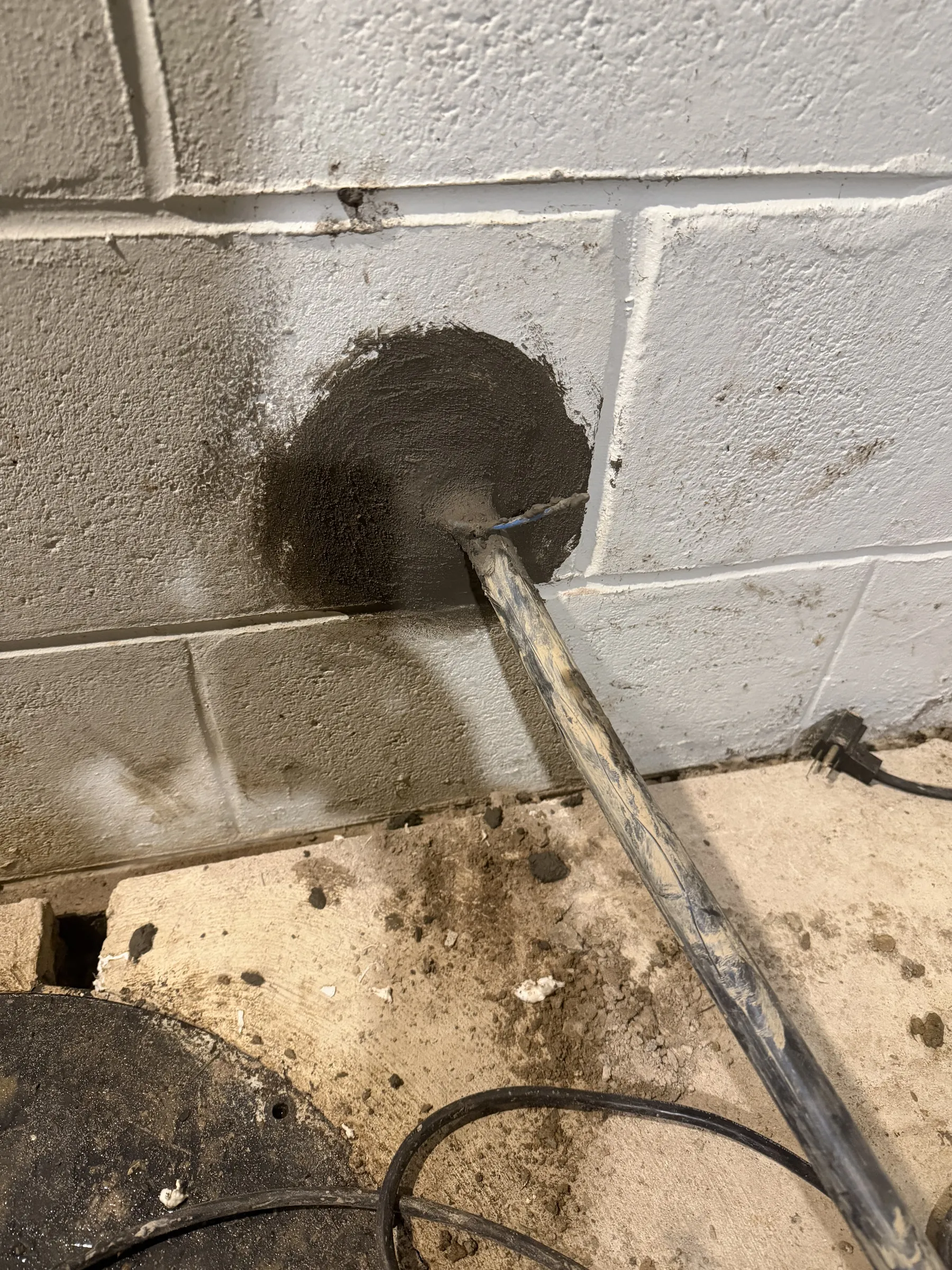
The line brought through the foundation wall or under the footing, with the penetration sealed.
Road and Driveway Crossings
Directional bores under pavement so the surface does not have to be torn up.
Backfill
Trenches backfilled in a way that protects the pipe and limits settling afterward.
Water Service and Utility Lines in Rochester, NY
Water lines in the Rochester area have one main enemy: frost. Long winters, lake-effect snow, and repeated freeze-thaw cycles push cold deep into the ground, and a line that is too shallow anywhere along its run can freeze. Getting depth right from end to end, and bringing the line into the building cleanly, is most of what separates a water service that lasts from one that causes trouble.
We trench and install water service lines with the depth, bedding, and backfill this climate demands.
Who Needs Water Line Work Locally
- New home builds that need a service from the curb stop or main, or from a private well.
- Homeowners replacing an old or failing line, whether it leaks, freezes, or is simply past its life.
- Property owners adding water to a garage, barn, or outbuilding.
- Farms running water to barns, livestock areas, and fields.
- Builders who want the water service planned with the foundation so trenches are not dug twice.
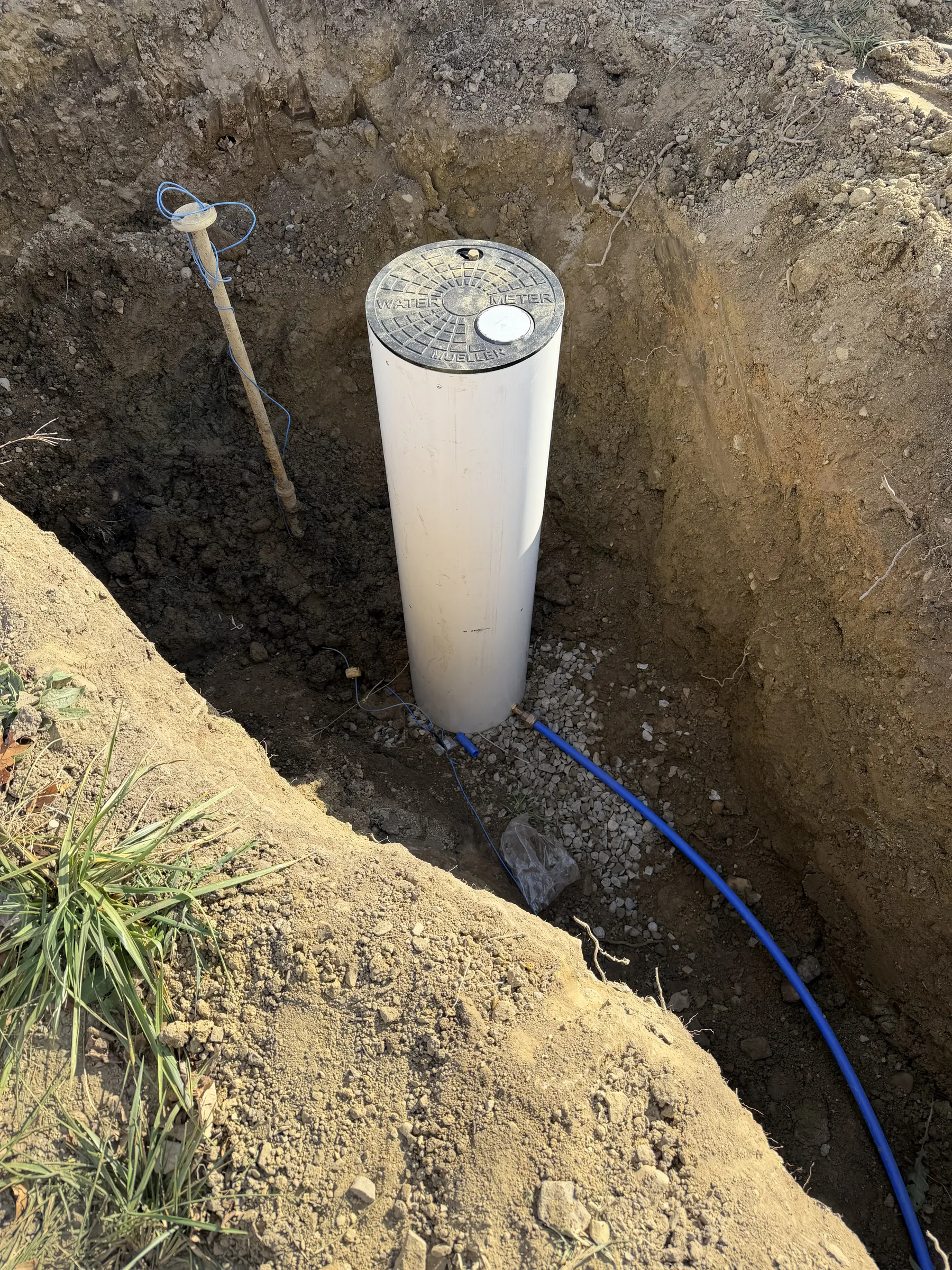
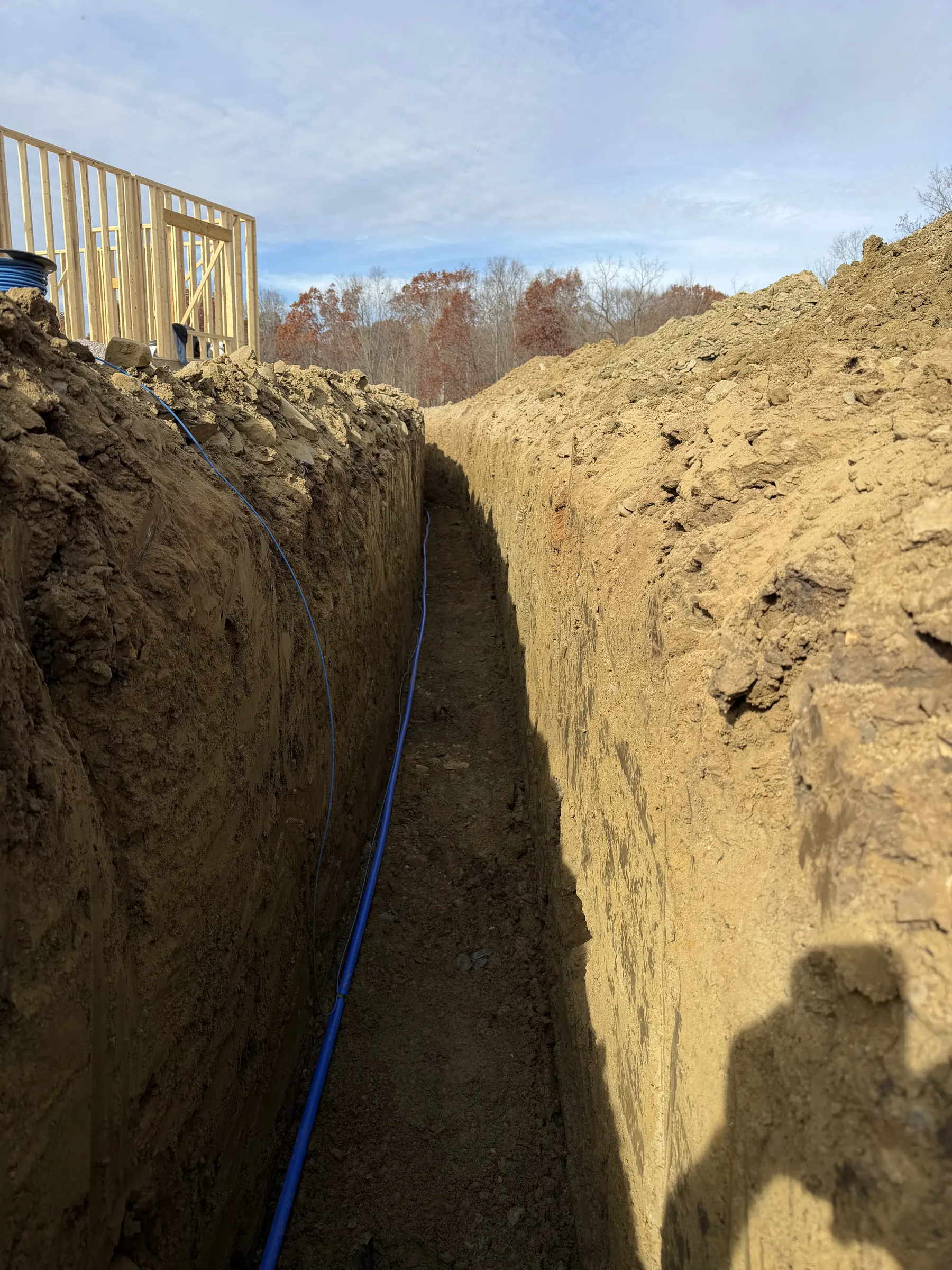
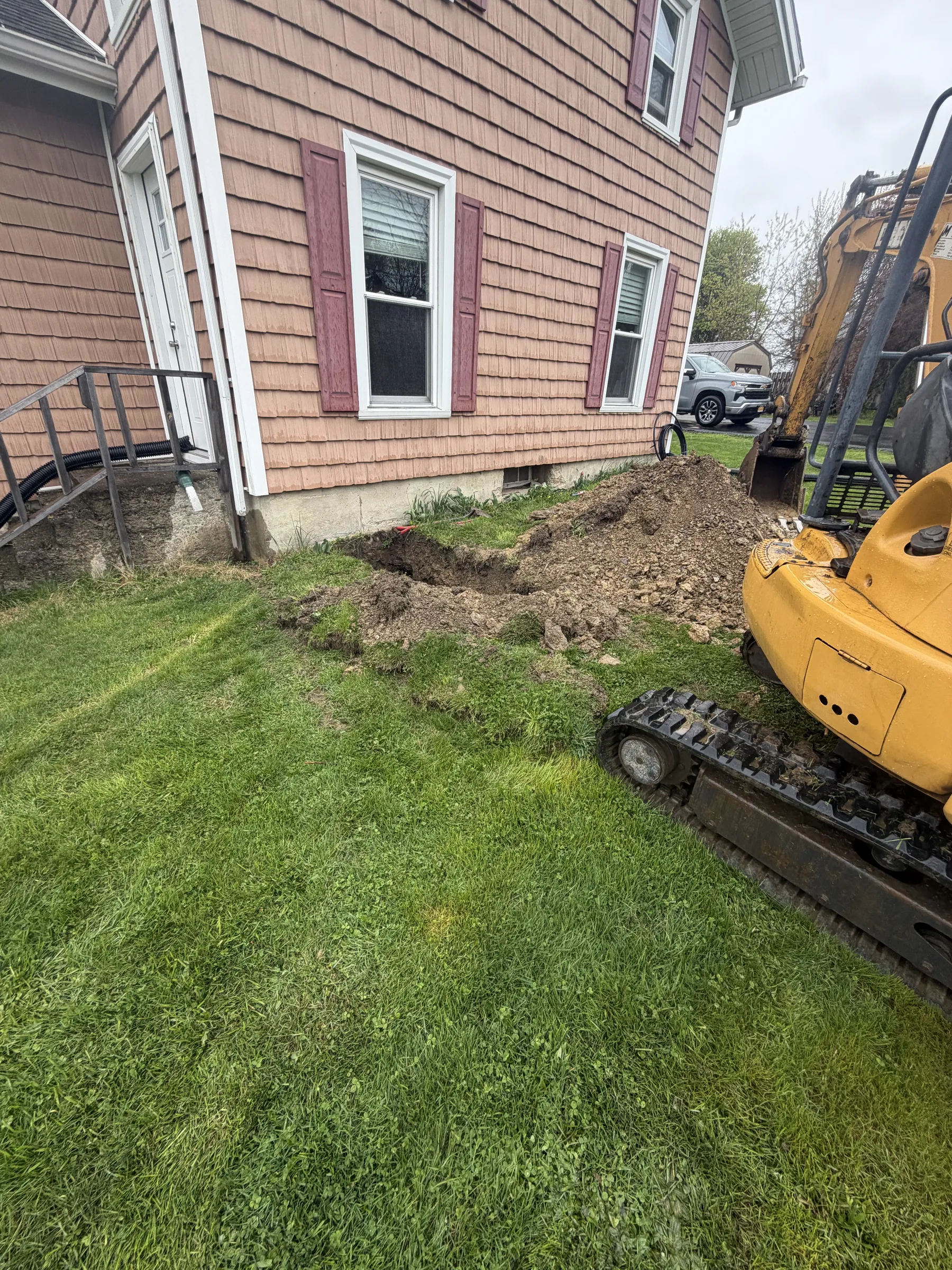
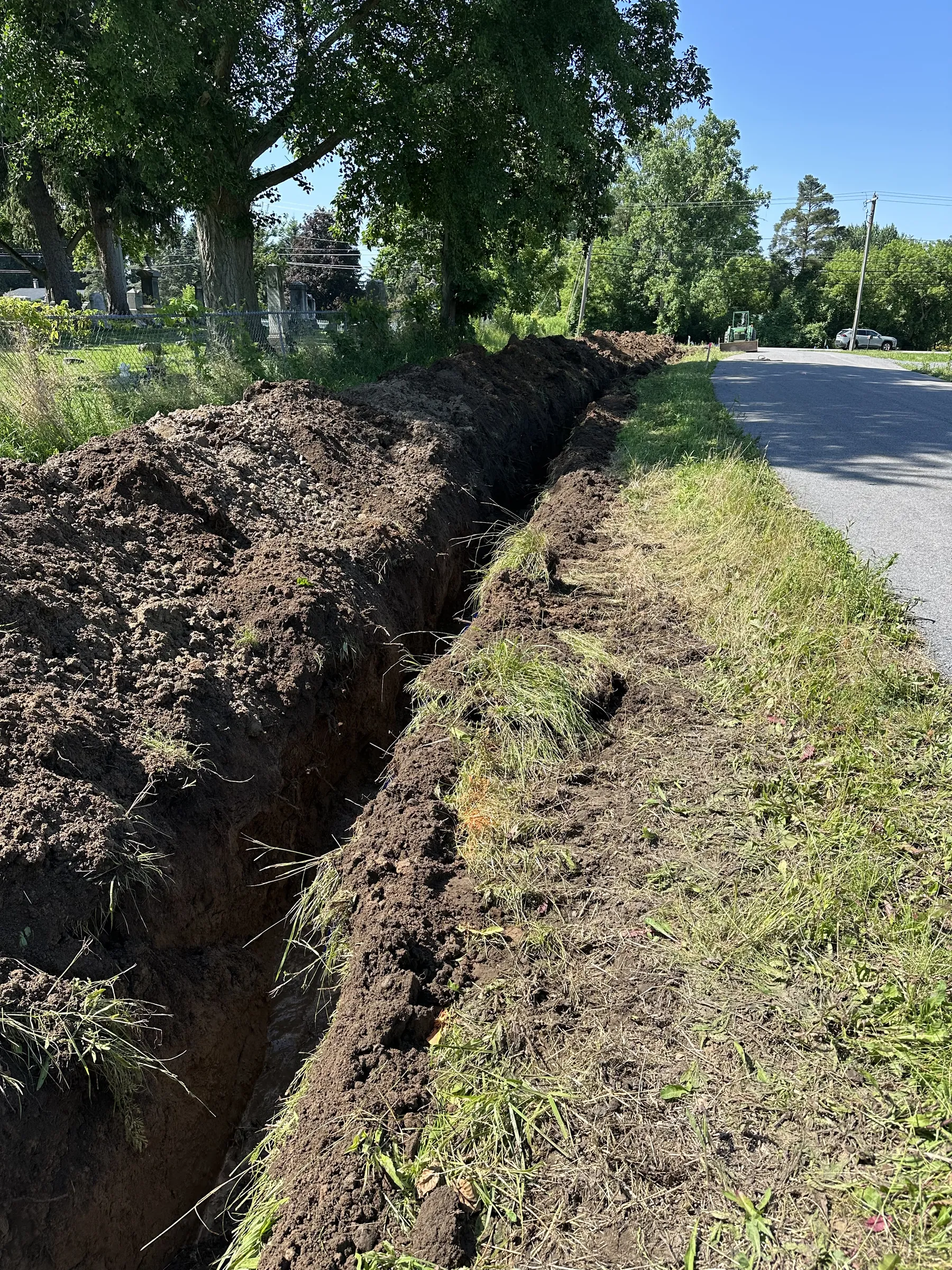
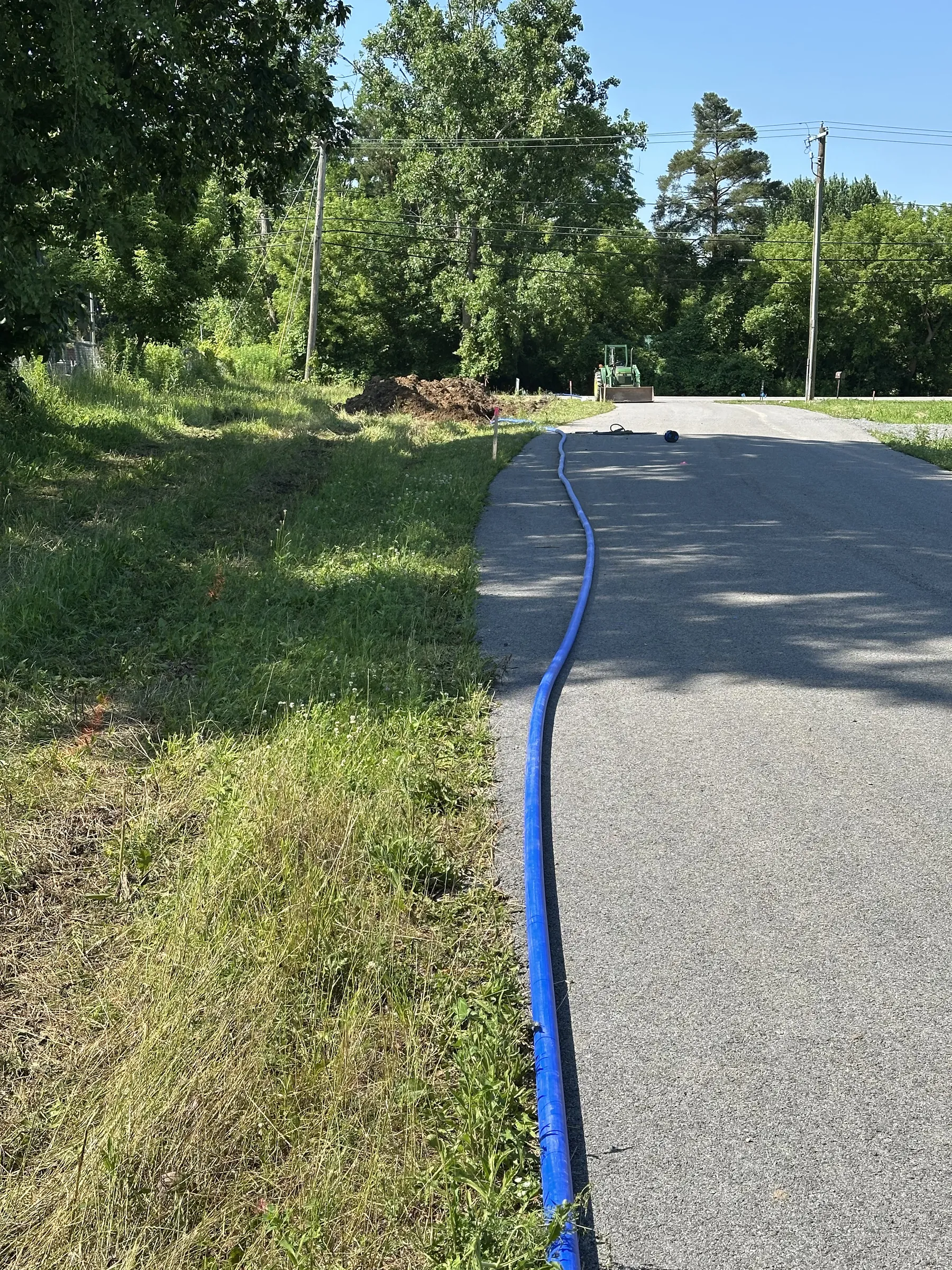
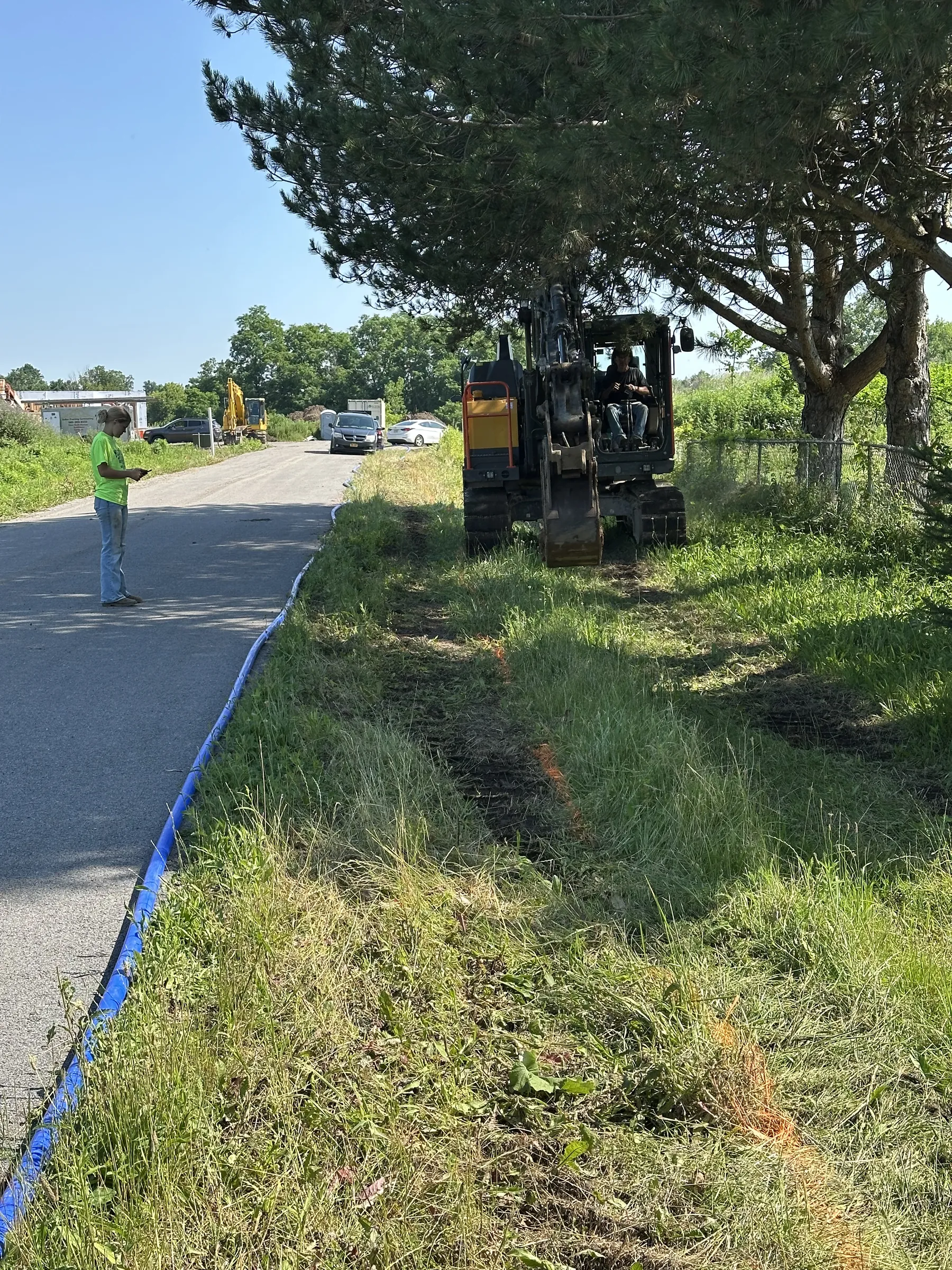
One of our projects was a water service installation along a road and through a foundation wall, which covers most of what a typical service involves.
Who Supplies Your Water Matters
Around Rochester, the water source shapes the job:
- Monroe County Water Authority serves most of the county outside the city.
- The City of Rochester has its own water bureau.
- Rural properties in outer towns and neighboring counties are often on private wells.
Public water providers usually have their own rules for the service line, connection, meter location, and inspection. Contact your provider early, since they set requirements that affect the route and timing.
Local Ground Conditions
Depth below frost. In this area that generally means roughly four feet or more of cover, and your water provider or building department sets the exact requirement. We measure as we dig so the line stays deep along the entire run, including at dips, ditches, and grade changes.
Clay. Lake-plain clay in towns like Greece, Parma, and Webster can be sticky and wet. Trench walls may need extra care, and clay should not go straight against the pipe in big clods.
Stony till and rock. Across much of the region, trenches turn up cobbles and boulders. Sharp stone against the pipe is a problem, so we remove rock from the bedding zone and lay the line on good material.
Groundwater. In spring and in low areas, trenches can take on water. That affects timing and how the line is bedded.
Seasonal Timing
- Late spring through fall is the easiest time for trenching.
- Spring thaw can mean wet trenches and soft ground, especially on clay.
- Winter installs are possible in some cases, but frozen ground slows digging and frozen backfill should not go back around the pipe.
If a line has failed in winter, call us and we can talk through what is practical.
Permits and Approvals to Check
- Your water provider for service connection requirements and inspections.
- Your town building department for any plumbing or building permits tied to the work.
- The road owner for anything in a public right of way. A crossing under a town, county, or state road needs permission from whoever owns that road.
- Dig Safely New York (811) at least two full working days before digging, not counting weekends and holidays.
Our post on calling 811 and preparing your property explains how that works.
How to Prepare
- Know where the line starts and ends: the curb stop, main, or well, and the spot it enters the building.
- Mark private lines such as septic systems, irrigation, and buried power to outbuildings. 811 does not locate private utilities.
- Think about obstacles like driveways, walkways, and finished landscaping. Directional drilling may be the better choice under those.
- Clear access for equipment along the route.
For a deeper look, read water service lines: depth, trenching, and what to expect.
How Grove Approaches Water Lines
Grove's founder spent years doing site work and land moving for other contractors before starting Grove. We bring that to every water line:
- We confirm locates and plan the route with you before digging.
- We dig and measure to depth along the whole run.
- We bed the pipe properly and keep rock away from it.
- We bring the line through the foundation or under the footing and seal the penetration.
- We use fused HDPE where it fits. For long runs, HDPE pipe fusion creates one continuous line with no buried mechanical joints.
- We backfill carefully to protect the pipe and limit settling.
Serving Rochester and Surrounding Towns
We install water service lines in Rochester and across Monroe County, including Brighton, Gates, Greece, Henrietta, Chili, Irondequoit, Penfield, Pittsford, Perinton, Webster, Ogden, and Sweden. We also serve well and farm properties in towns like Victor, Macedon, Ontario, Avon, Caledonia, Batavia, and Le Roy. See our service area, view our projects, or contact us to plan your line.
The Process
-
Step 1
Mark and Plan
Utilities are located and the route is laid out from the source to the building.
-
Step 2
Trench to Depth
The trench is dug and measured to the required depth along the run.
-
Step 3
Lay and Connect
The line is bedded, laid, and brought into the building.
-
Step 4
Backfill
The trench is backfilled and the surface is left clean.
On the Job
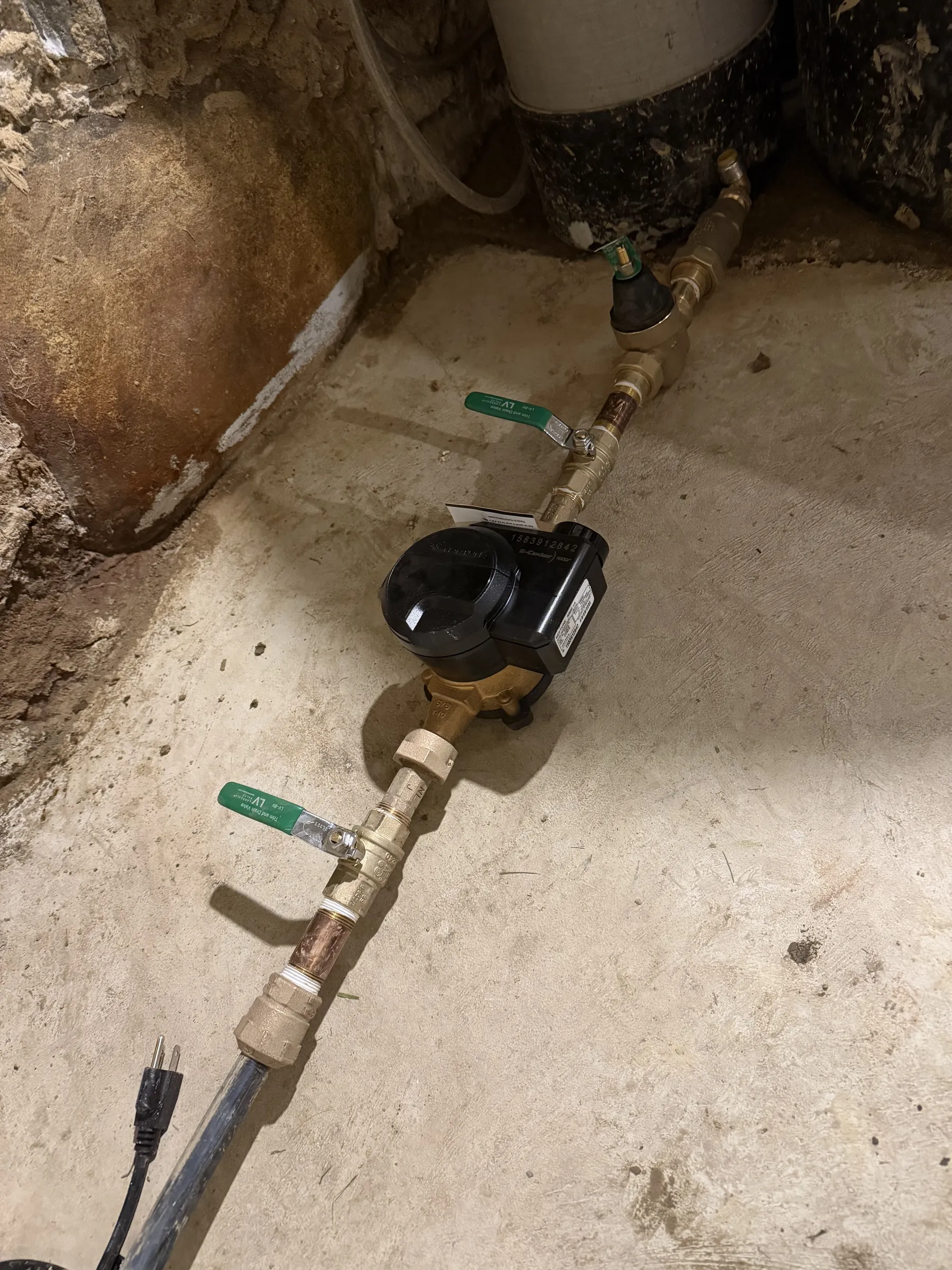
New water service trenched to depth, run to the house, and brought through the foundation wall.
Need Water and Utility Lines?
Send the location and a few photos of the site and we will get back to you.
Common Questions
Do not see your question here? Ask us directly when you send your project details.
Ask a Question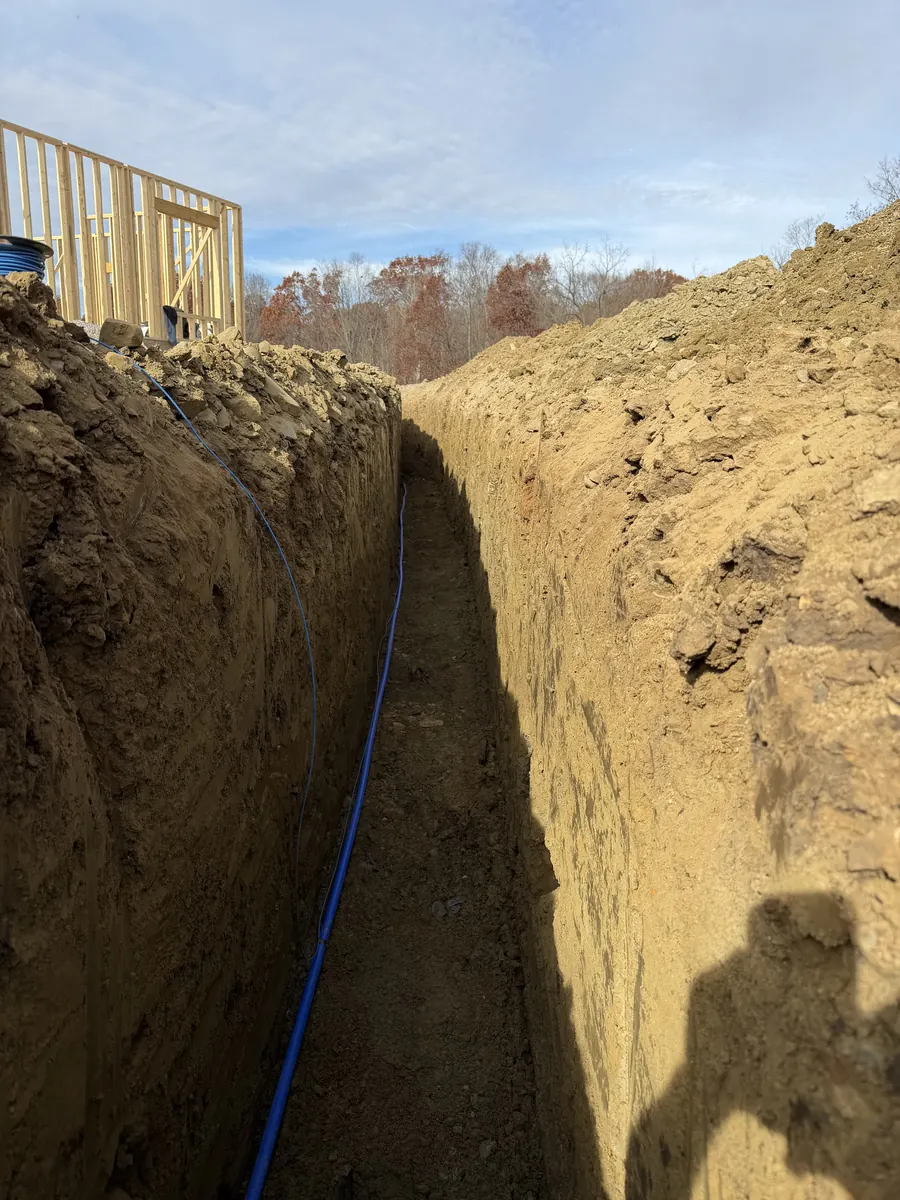
How deep does a water line need to be?
Below the frost line. In much of upstate New York that means four feet or more of cover, and your local water authority or building department sets the exact requirement.
Can you go under my driveway without digging it up?
Yes. Directional drilling can run the line under a driveway, road, or walkway so the surface stays intact.
What kind of pipe do you use?
Water services are commonly run in polyethylene pipe, which is flexible and resists corrosion. For longer runs, fused HDPE creates one continuous line with no mechanical joints.
Will the trench sink afterward?
Proper backfill limits settling. Some minor settling over the first season is normal on any trench, and we backfill to keep it to a minimum.
Who do I contact about a new water service in Monroe County?
Start with your water provider. Most of the county is served by the Monroe County Water Authority, and the City of Rochester has its own water bureau. They set rules for the connection, meter, and inspection.
Do I need permission to run a water line under a public road?
Yes. Any work in a public right of way needs permission from whoever owns the road, whether that is the town, the county, or the state. We help you figure out who to contact.
Does 811 mark my private lines?
No. Dig Safely New York members mark their own utilities up to the meter or service point. Private lines, like power to a barn, septic systems, or irrigation, need to be located by the owner or a private locator.
Can I run a water line to my barn on a rural well?
Yes. A line from a well system to a barn or outbuilding follows the same rules of depth and bedding. Talk with your well or plumbing contractor about the pump and pressure side, and we handle the trench and line.
Helpful Reading
Water Service Lines in Rochester, NY: Depth, Trenching, and What to Expect
A new water service line is buried, connected, and then forgotten for decades. Here is how the work is done around Rochester, NY, why depth below frost matters so much, and what to expect from locates through backfill.
July 15, 2026 · 7 Min Read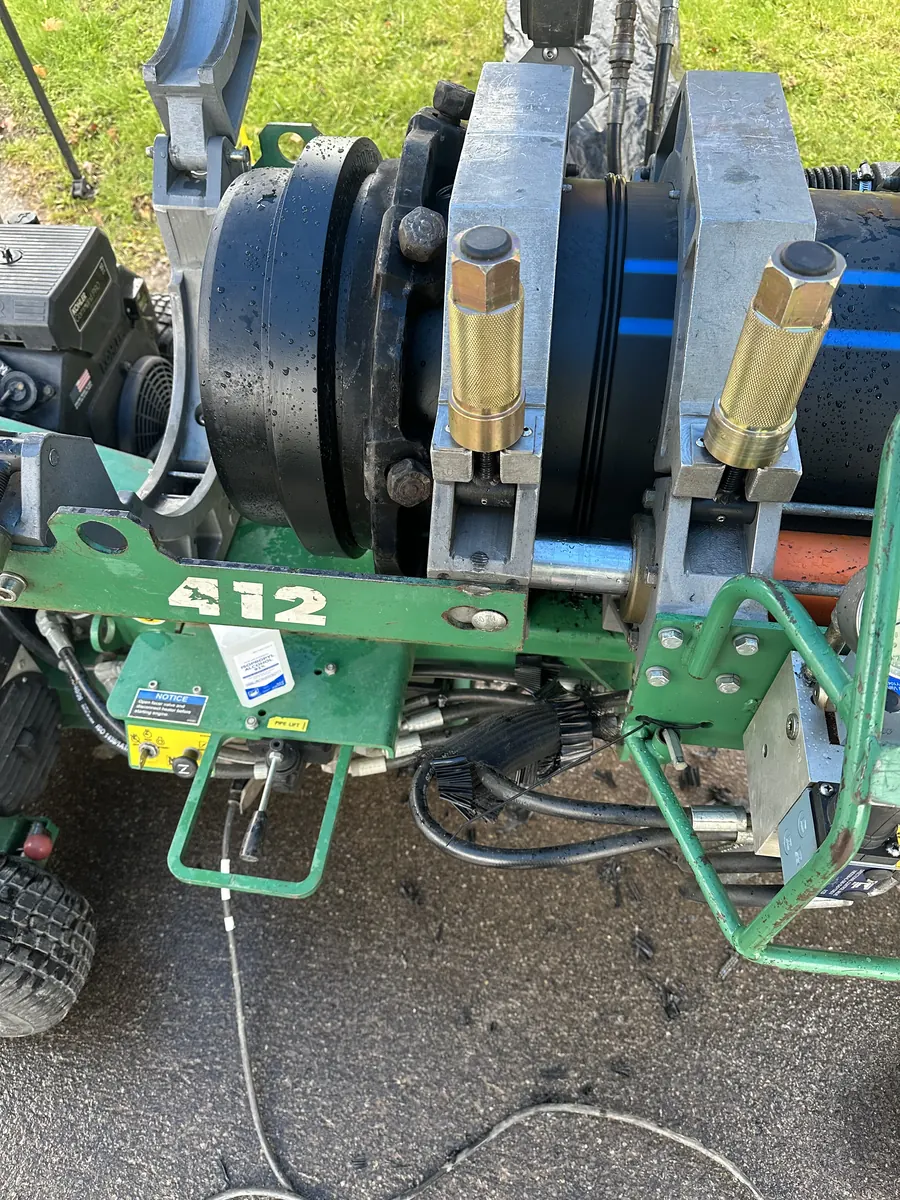
What Is HDPE Butt Fusion? A Guide for Rochester, NY Water Lines
HDPE pipe joined by butt fusion becomes one continuous line with no couplings to leak. Here is how the process works, why it suits Rochester-area frost and farm water lines, and when it makes sense for your project.
August 12, 2026 · 6 Min Read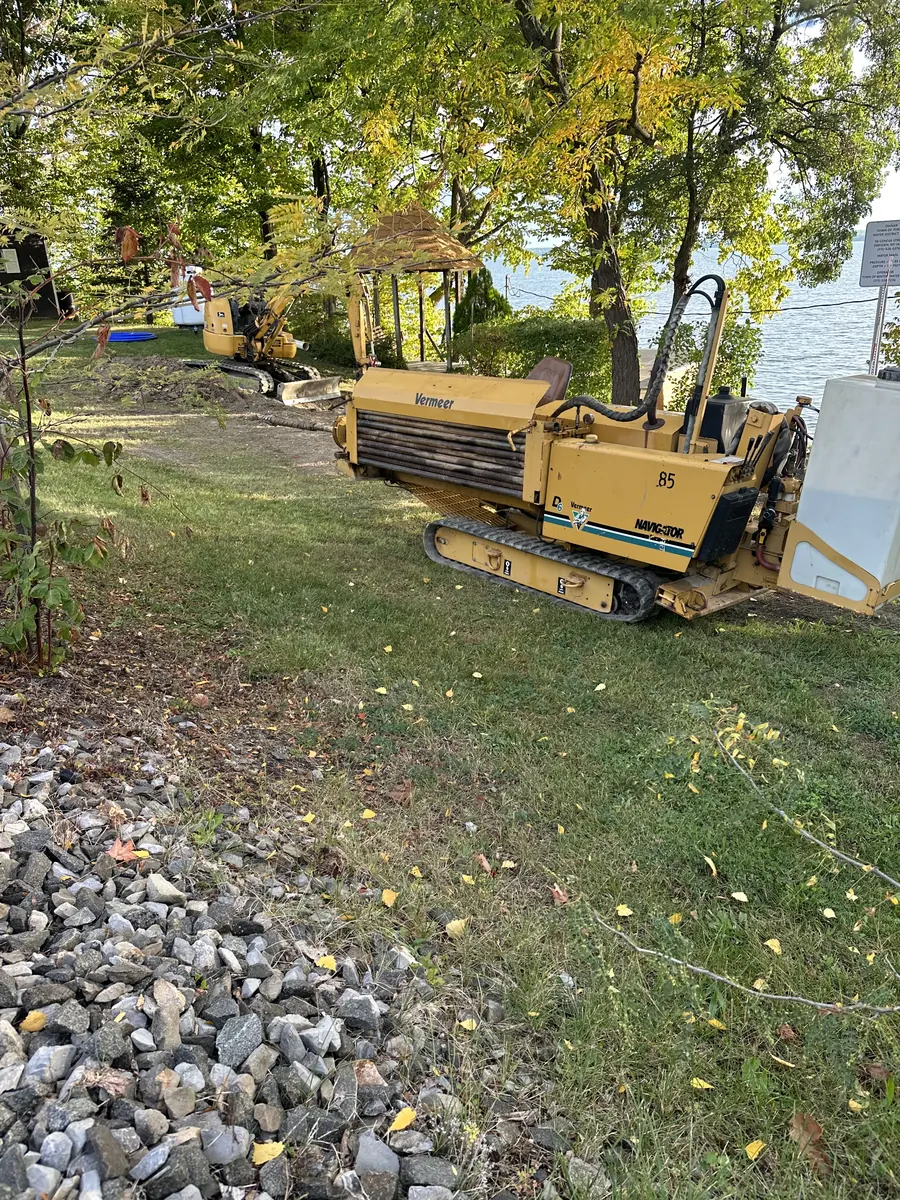
Directional Drilling vs. Open Trenching in Rochester, NY: Which Fits Your Project?
There are two ways to get a water line or conduit underground. Here is how directional drilling and open trenching compare on Rochester-area properties, and how to tell which one fits your job.
September 16, 2026 · 6 Min ReadOften Done Together
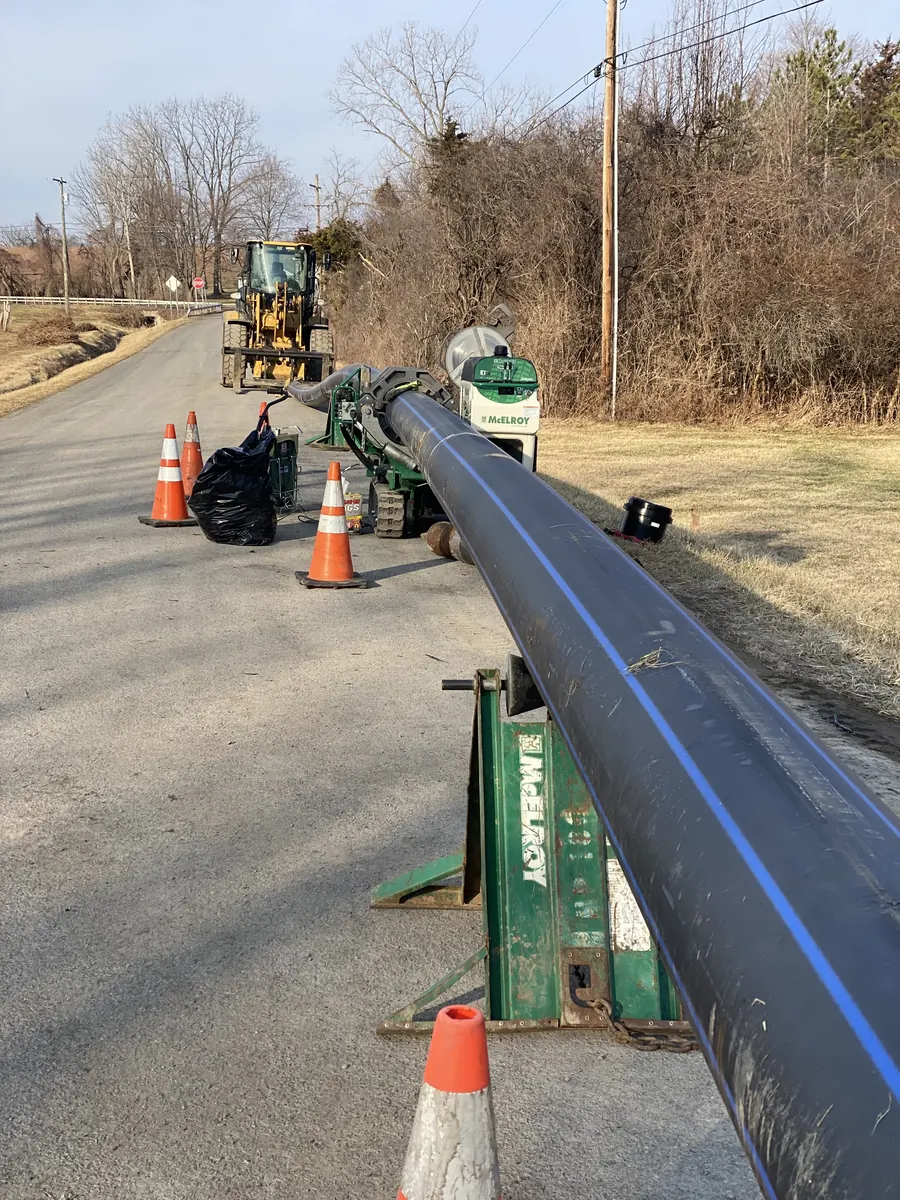
HDPE Pipe Fusion
On-site butt fusion and installation of HDPE pipe for water and utility runs.
Learn More
Directional Drilling
Trenchless boring to run lines under driveways, roads, and yards without digging them up.
Learn More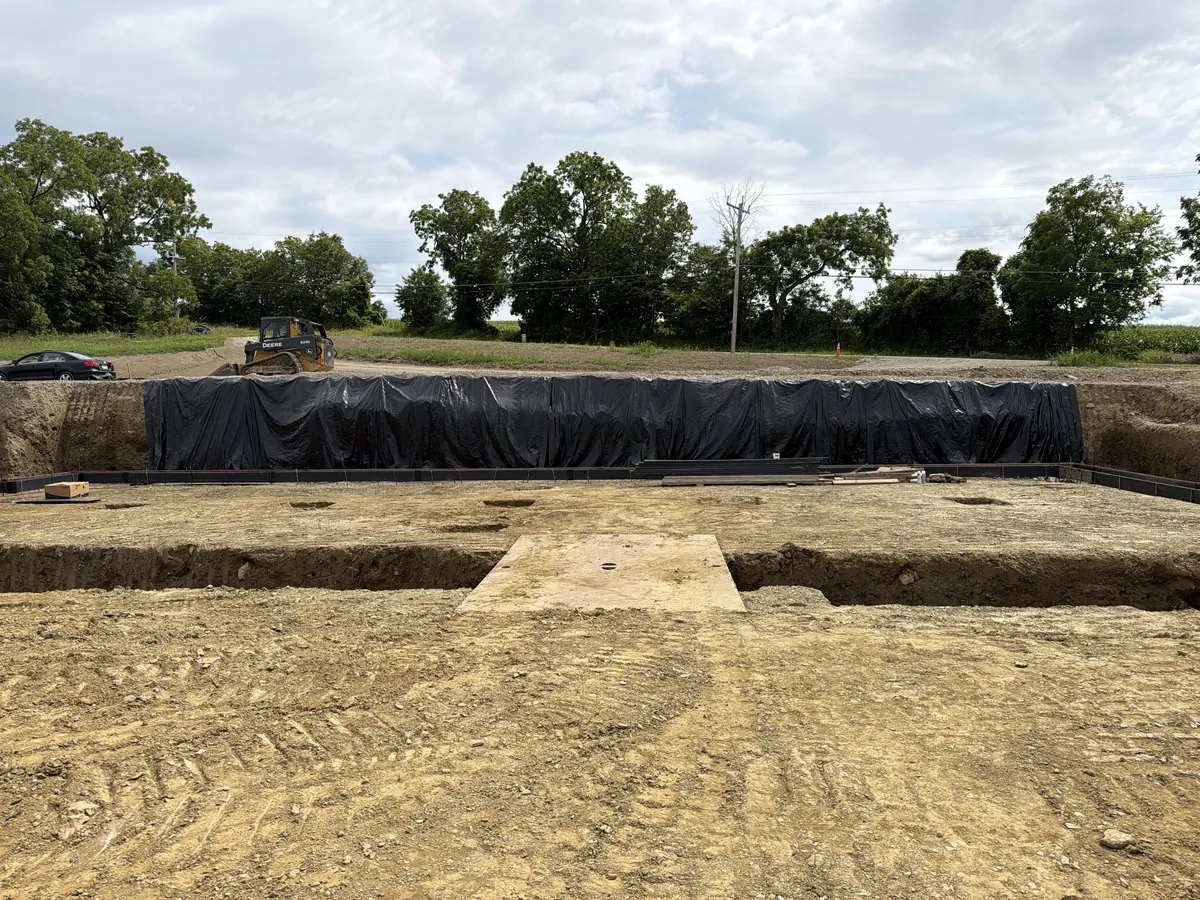
Site Work and Excavation
Site prep, foundation digs, trenching, and grading to get a build started on solid ground.
Learn More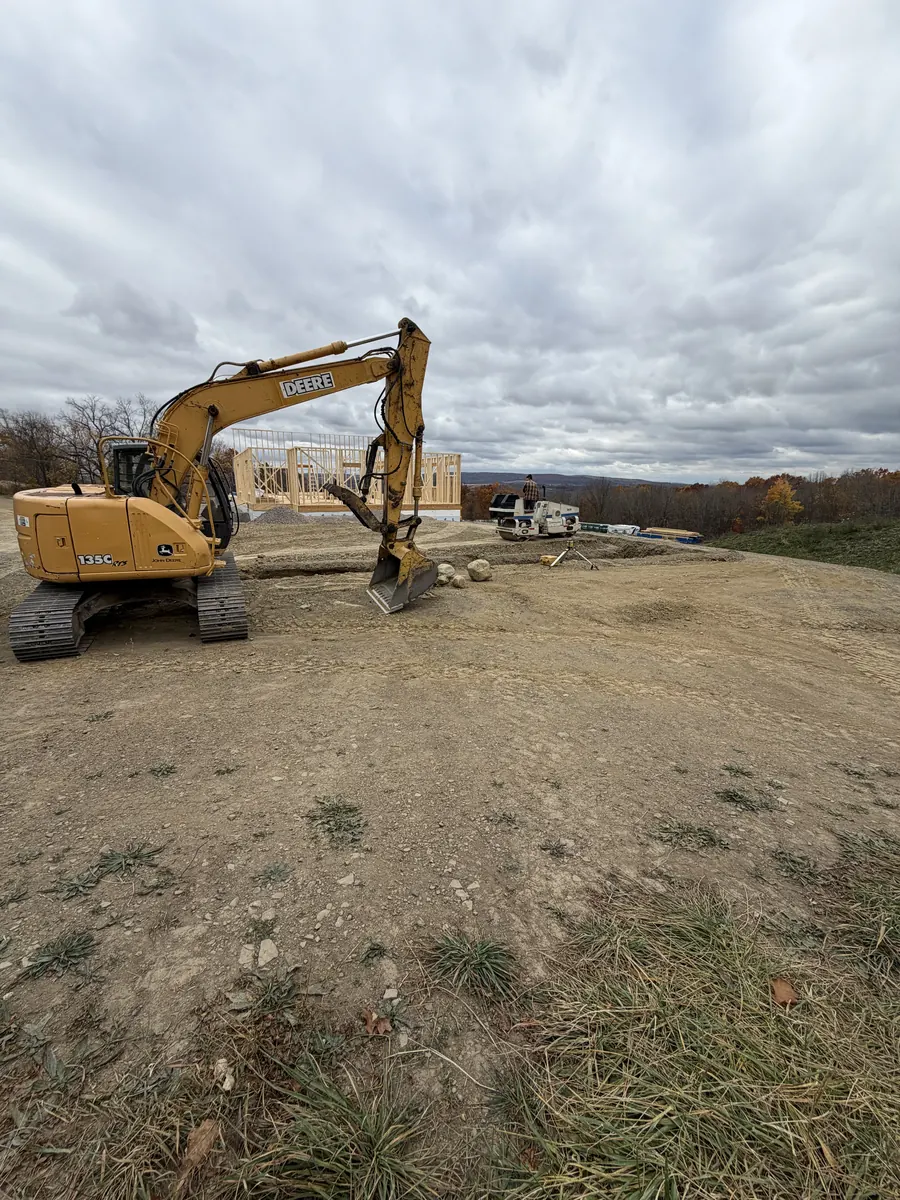
Got Ground That Needs Work?
Send us the location, what you need done, and a few photos. We will get back to you to talk it through.
Request a Quote