The ground work sets up everything that comes after it. Here are the questions Rochester-area homeowners, farmers, and builders should ask before hiring someone to dig, clear, grade, or run utilities on their property.
Excavation is one of those trades where you only notice the work when it goes wrong. A foundation that settles, a driveway that turns to ruts every spring, a water line that freezes in February, or a basement that takes on water can usually be traced back to how the ground was prepared. Once the house is framed or the driveway is paved, fixing those problems gets expensive fast.
That makes choosing who does your dirt work one of the more important decisions on any project, whether you are building a new home in Mendon, putting up a pole barn in Hamlin, or running a new water line in Penfield. Below are the questions we think every property owner and builder in the Rochester area should ask before hiring someone for site work, excavation, or utilities. They are the same questions we would want answered if we were on the other side of the table.
What Exactly Is Included in the Price?
Two quotes for "excavation" can describe very different jobs. One contractor may be pricing a hole in the ground. Another may be pricing the hole, the stone, the backfill, the hauling, and the grading. Ask the contractor to spell out what is included and what is not. Items that commonly get left out or handled differently:
- Clearing trees, brush, and stumps before digging
- Stripping topsoil and stockpiling it for reuse
- Hauling away excess material, or spreading it on site
- Bringing in stone, gravel, or fill
- Dewatering if the hole takes on water
- Backfill and compaction after the foundation or pipe goes in
- Rough grading, final grading, and seeding
A written scope protects both sides. It also makes quotes easier to compare, because you are comparing the same job instead of guessing what each number covers. For more on getting a clean quote, see our guide on what to include in a site work quote request.
How Do You Handle Rochester-Area Soil and Rock?
This is where local experience matters. Ground conditions around Rochester change a lot from one town to the next, sometimes from one end of a lot to the other.
Clay and Lake-Plain Soils
Closer to Lake Ontario, in towns like Greece, Parma, Hamlin, and Webster, you often find heavy clay and silty lake-plain soils. Clay holds water and drains slowly. It can be workable one week and turn to grease after a few days of rain. A contractor should have a plan for keeping a foundation hole or trench from turning into a mud pit and for what goes back in as backfill around a foundation.
Glacial Till and Stone
Farther south and east, toward Mendon, Pittsford, Perinton, and Victor, the landscape was shaped by glaciers. Drumlins, kames, and eskers mean hills, gravel pockets, and stony till. That ground can be great for drainage in one spot and full of boulders in the next.
Bedrock Close to the Surface
In parts of the region, limestone and dolostone bedrock sits close to the surface. If you hit rock in a foundation dig or a trench, the job changes. Ask how the contractor handles it and how it is priced before it happens, not after.
What Happens if You Hit Rock or Water?
Nobody can see underground. Ledge rock, groundwater, springs, and old buried debris all turn up. On older Rochester-area properties it is not unusual to find old foundations, buried farm drains, or fill from a previous owner.
Ask how unexpected conditions are handled. Will the contractor stop and call you? Is there an hourly rate for extra work, or a per-unit price for rock? Getting this agreed on in advance keeps a surprise in the ground from turning into an argument.
Where Does the Dirt Go?
Every hole produces spoil. A full basement dig produces a lot of it. On some properties the extra material can be spread out, used to build up a low area, or shaped into berms. On others it has to be trucked away. Ask how the contractor plans to handle it, because it affects the price, the schedule, and how your property looks when the job is finished.
Also ask about topsoil specifically. Good topsoil is worth saving. It should be stripped and stockpiled separately so it can go back on top at the end, instead of getting buried under subsoil and clay.
How Will You Get Equipment Onto the Site?
Access matters more than most people expect. A soft lawn, a septic field, a narrow gap between buildings, a steep grade, a culvert at the road, or an overhead line can all change how a job is done and what machine makes sense.
A good contractor will ask about access, and ideally look at the site, before giving you a firm number. If someone gives you a firm price without asking how they will get to the work area, ask why.
Who Is Calling in the Utility Locate?
Before any digging, underground utilities need to be marked. In the Rochester area that means filing a request with Dig Safely New York by calling 811 ahead of time, generally at least two full working days before digging, not counting weekends and holidays. Ask who is filing the request and confirming the marks.
Also ask how the contractor handles private lines that 811 will not mark, like a well line, power to a barn, or a septic system. We cover this in detail in our article on calling 811 and preparing your property before you dig.
How Do Weather and Seasons Affect the Schedule?
Rochester weather has a big say in when dirt work can happen. The spring thaw can leave sites too soft for heavy equipment for weeks. Clay soils stay wet long after the rain stops. Long winters and lake-effect snow limit some kinds of work, though not all.
Ask the contractor:
- When is the best window for your type of work?
- What do they do if the site is too wet to work without causing damage?
- Can any of the work be done in winter, and does frozen ground change the approach?
A contractor who is honest about weather delays is easier to work with than one who promises a date the ground will not allow.
Do You Do the Whole Job or Just Part of It?
Many projects involve more than one kind of ground work. A new home on a wooded lot might need land clearing, a foundation dig, a water service line, and a gravel driveway. If one contractor can handle several of those, there are fewer handoffs and fewer gaps where something gets missed.
Ask which parts of the job the contractor does themselves and which parts they would subcontract or leave for someone else. You can see the full list of what we do on our services page.
What Does the Site Look Like When You Leave?
Some contractors leave a rough site and expect the owner or the next trade to clean it up. Others backfill, grade, and leave the area ready for what comes next. Neither is wrong, but you should know which one you are paying for.
If you expect final grading, topsoil, and seed, put it in the scope. If you only need rough grade because a landscaper is coming next, say so.
Can I See Your Work?
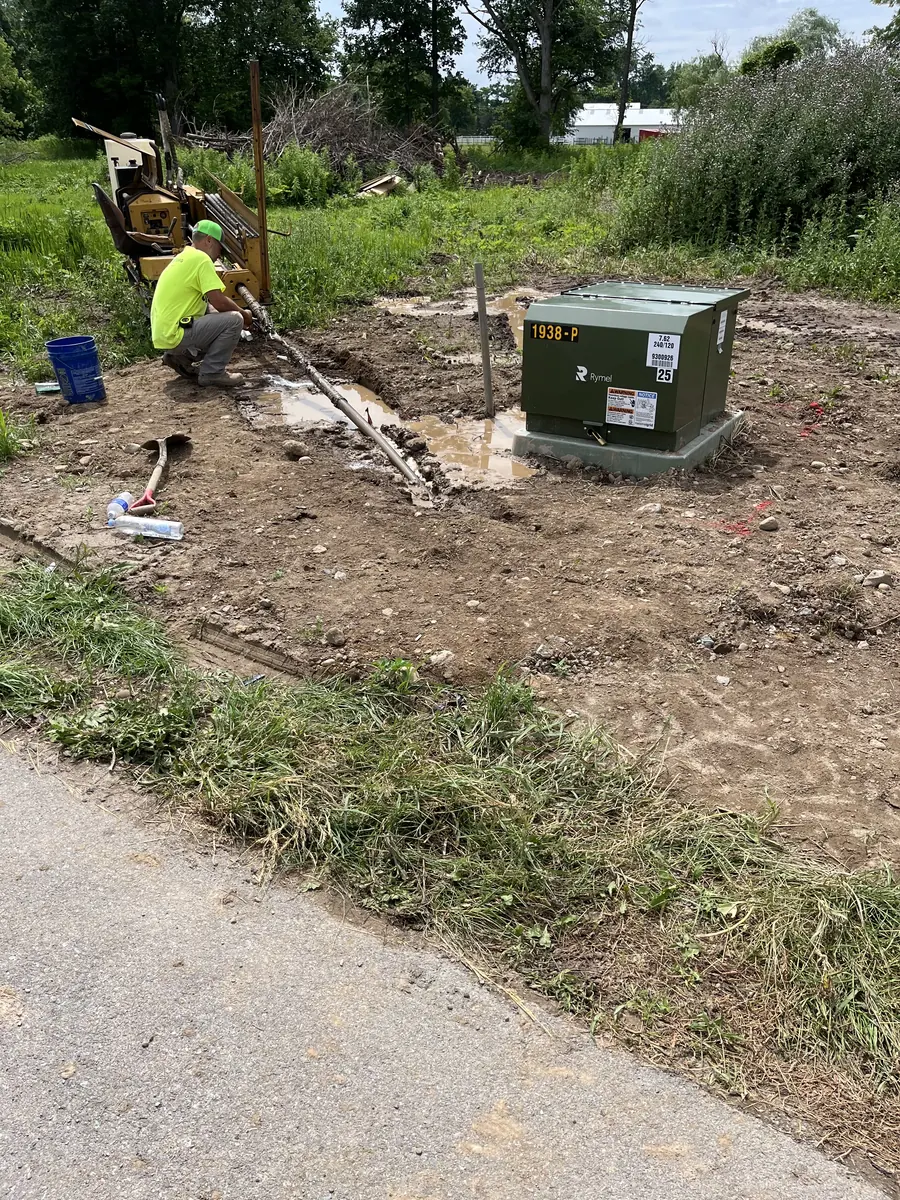
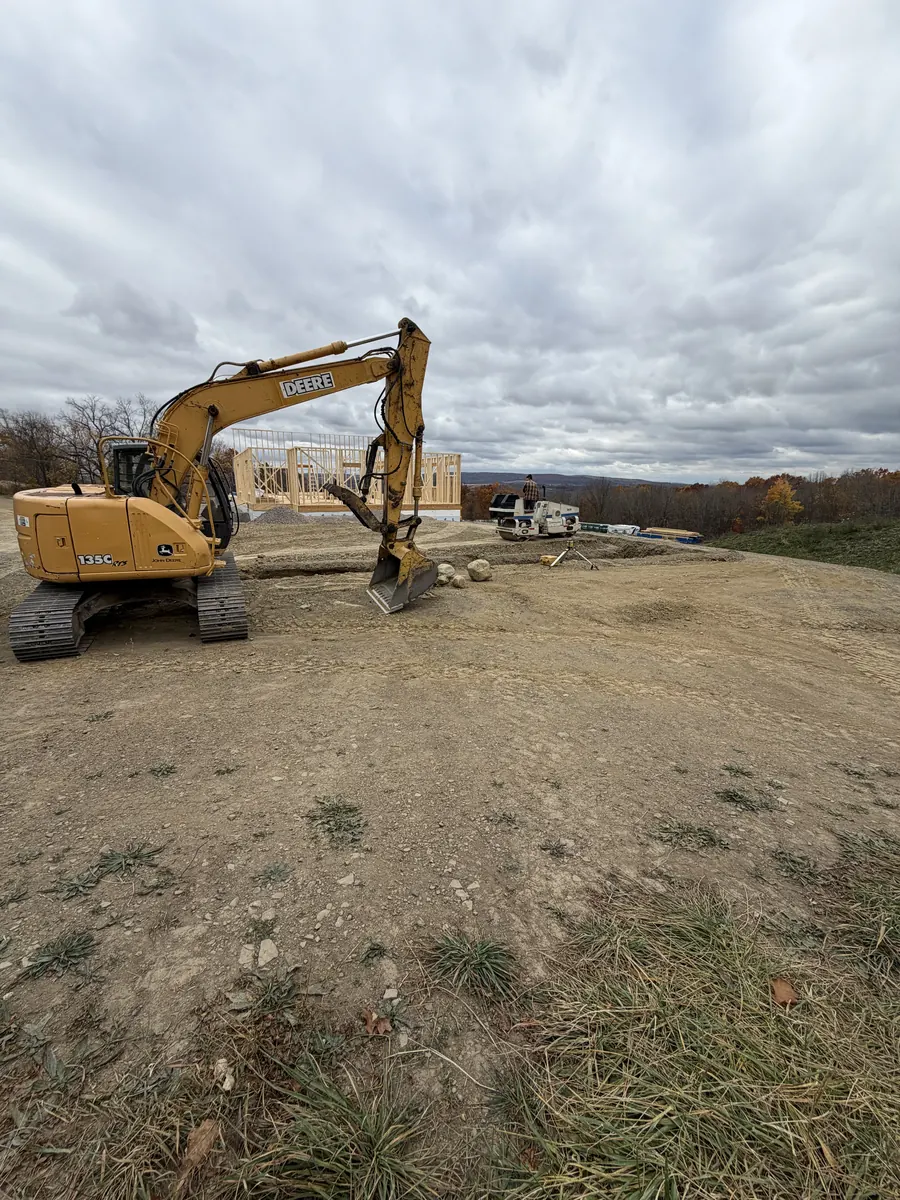
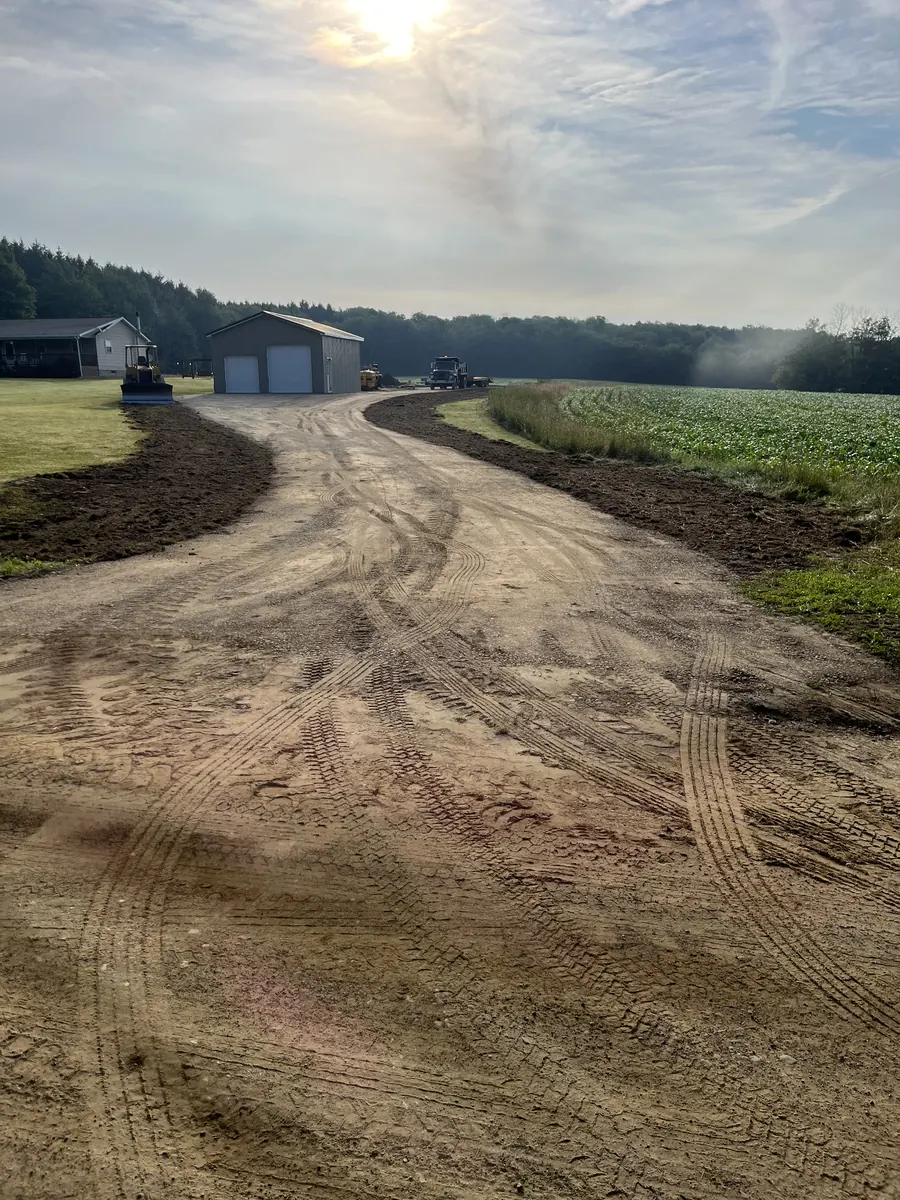
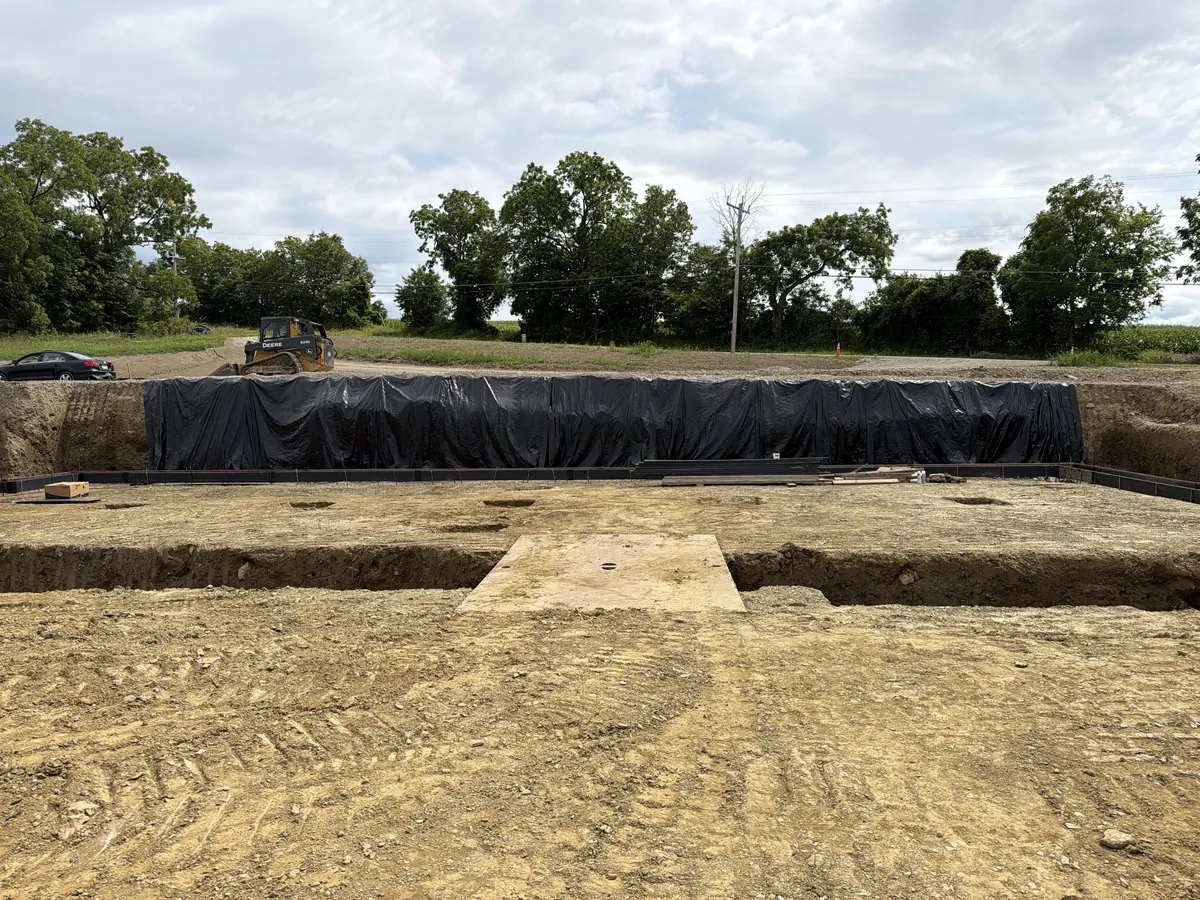
Photos of past jobs tell you a lot. Look for work similar to yours, whether that is a foundation dig, a pond, a water line, HDPE pipe, or a driveway. You can see some of ours on our projects page, including a site and foundation project on a hilltop home site and a water service installation trenched to depth along a road.
Our founder spent years doing site work, land moving, and paving for other contractors before starting Grove Construction, and we are happy to talk through how we would approach your job.
Frequently Asked Questions
Do I Need a Permit for Excavation in Monroe County?
It depends on the work and the town. New homes, additions, and many accessory buildings need a building permit from your town, and some towns also have rules on grading, clearing, and driveways. Work near wetlands or streams may involve the NYS Department of Environmental Conservation. Check with your town building department before work starts.
How Far Ahead Should I Book Excavation Work?
Earlier is better, especially for spring and early summer, which is when most Rochester-area projects want to start. Reaching out a few months ahead gives time for site visits, permits, and planning around the thaw.
Should I Get More Than One Quote?
That is reasonable. Just make sure each quote covers the same scope so you are comparing like with like.
Get Started
The best way to get a useful answer from any contractor is to give them a clear picture of the job up front. If you have a project coming up in Rochester or the surrounding towns, send us the location, a short description, and a few photos, and we will get back to you with next steps. You can also check our service area to see where we work.