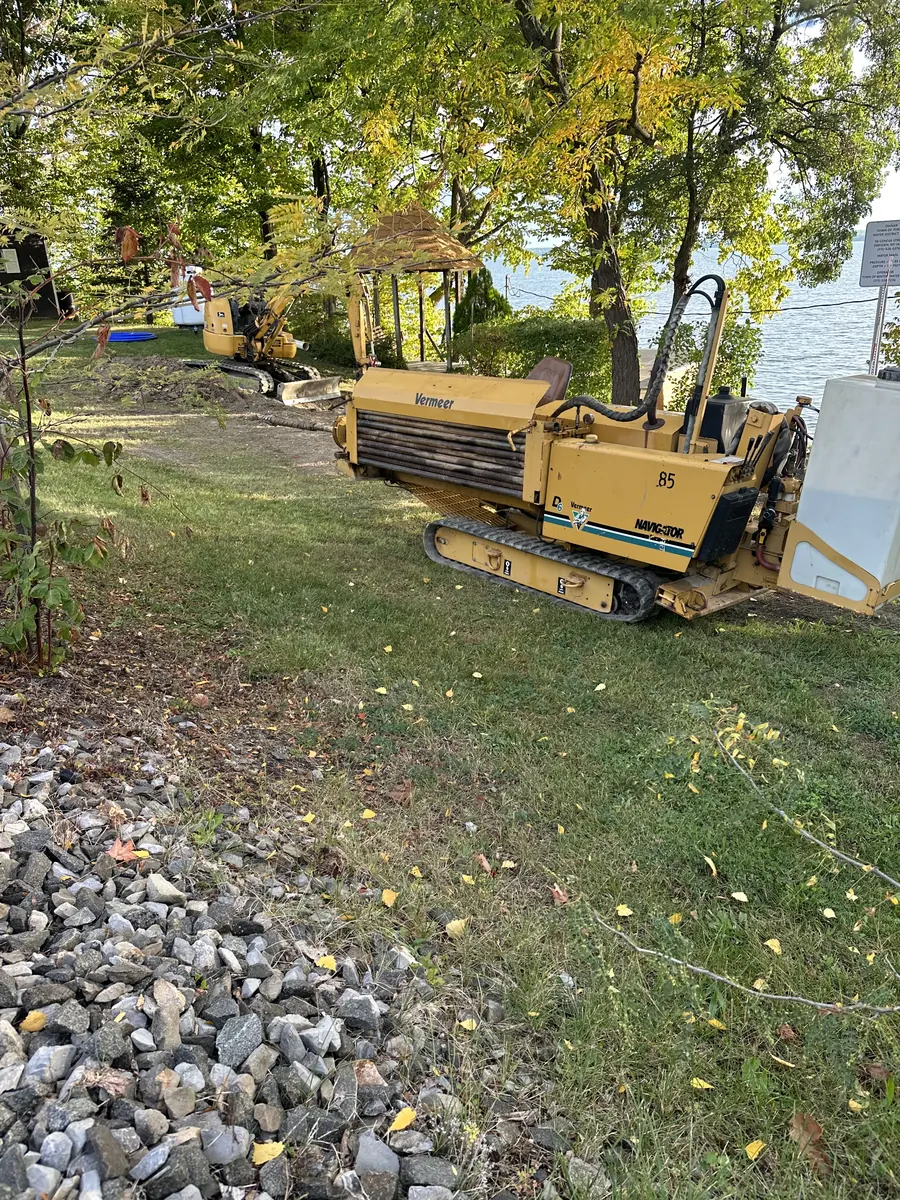
There are two ways to get a water line or conduit underground. Here is how directional drilling and open trenching compare on Rochester-area properties, and how to tell which one fits your job.
When a new water line or conduit needs to go underground, there are two basic ways to do it. You can dig a trench, lay the line, and backfill it. Or you can bore underneath with directional drilling and pull the line through without opening the ground. Both have their place, and plenty of jobs use both.
This is how each method works, where each one makes sense, and what Rochester-area ground and weather mean for the choice.
How Open Trenching Works
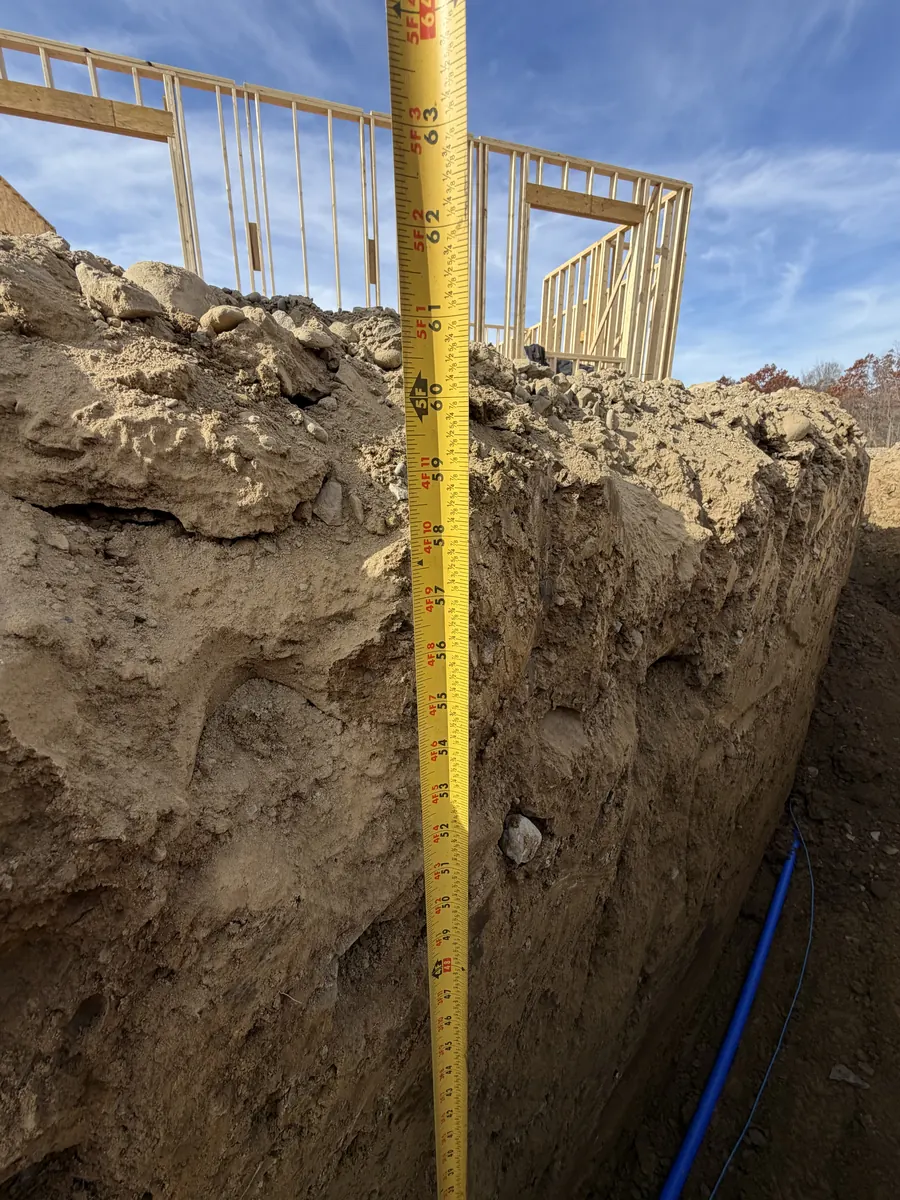
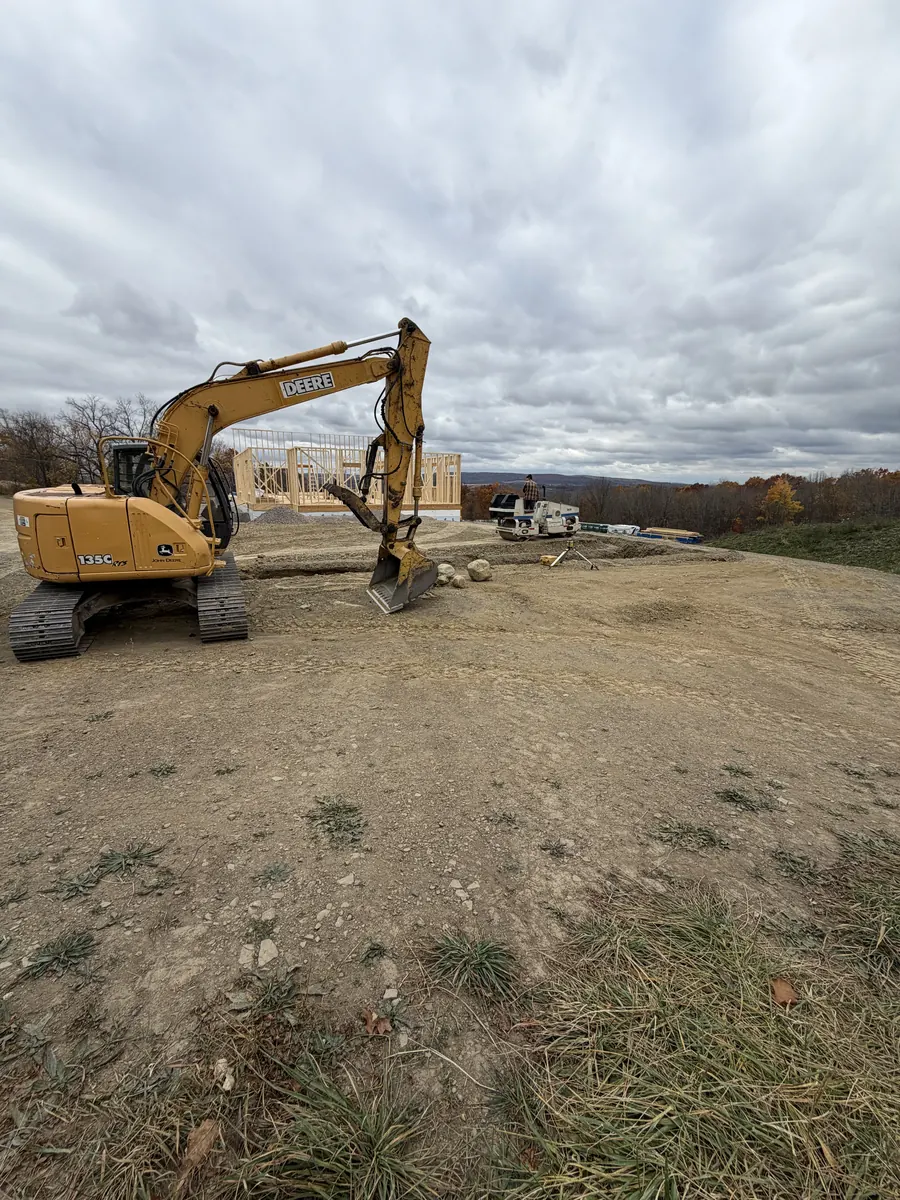
Open trenching is what it sounds like. An excavator digs a trench along the route to the required depth, the line is laid in on suitable bedding, and the trench is backfilled and compacted in lifts. Topsoil goes back on top and the surface is restored.
Open trenching works well when:
- The route crosses open ground like a field, rough lawn, or a new construction lot
- Several lines need to go in the same trench, such as water and conduit together
- The line needs connections, fittings, tees, or valves at points along the way
- There is nothing on the surface you need to protect
- The ground is so rocky that boring would be slow or impractical
The tradeoff is surface disturbance. The whole route gets opened up, and anything on it, including lawn, landscaping, pavement, and tree roots, is affected.
How Directional Drilling Works
Directional drilling, also called horizontal directional drilling, HDD, or boring, uses a drill rig set up at one end of the run. The basic process:
- Plan the path. The entry point, exit point, depth, and route are laid out around existing utilities and obstacles.
- Drill the pilot bore. A steerable drill head is pushed through the ground along the planned path while the operator tracks its location and depth from the surface with a locating receiver.
- Steer and adjust. The head is steered up, down, left, or right to stay on line and at depth.
- Pull back. Once the head reaches the far end, the line is attached and pulled back through the bore. Larger lines may need the bore enlarged on the way back.
Drilling fluid is used to cool the head, carry cuttings, and support the bore. Only the entry and exit points are disturbed, along with small pits where a connection needs to be made.
Directional drilling makes sense when:
- The route crosses a driveway, road, sidewalk, or parking area
- You want to save a finished lawn, landscaping, patio, or trees
- The route goes under a structure, a stream, or another obstacle
- Steep or wooded terrain makes trenching difficult or destructive
Comparing the Two Side by Side
- Surface disturbance. Trenching opens the whole route. Drilling only disturbs the entry and exit points.
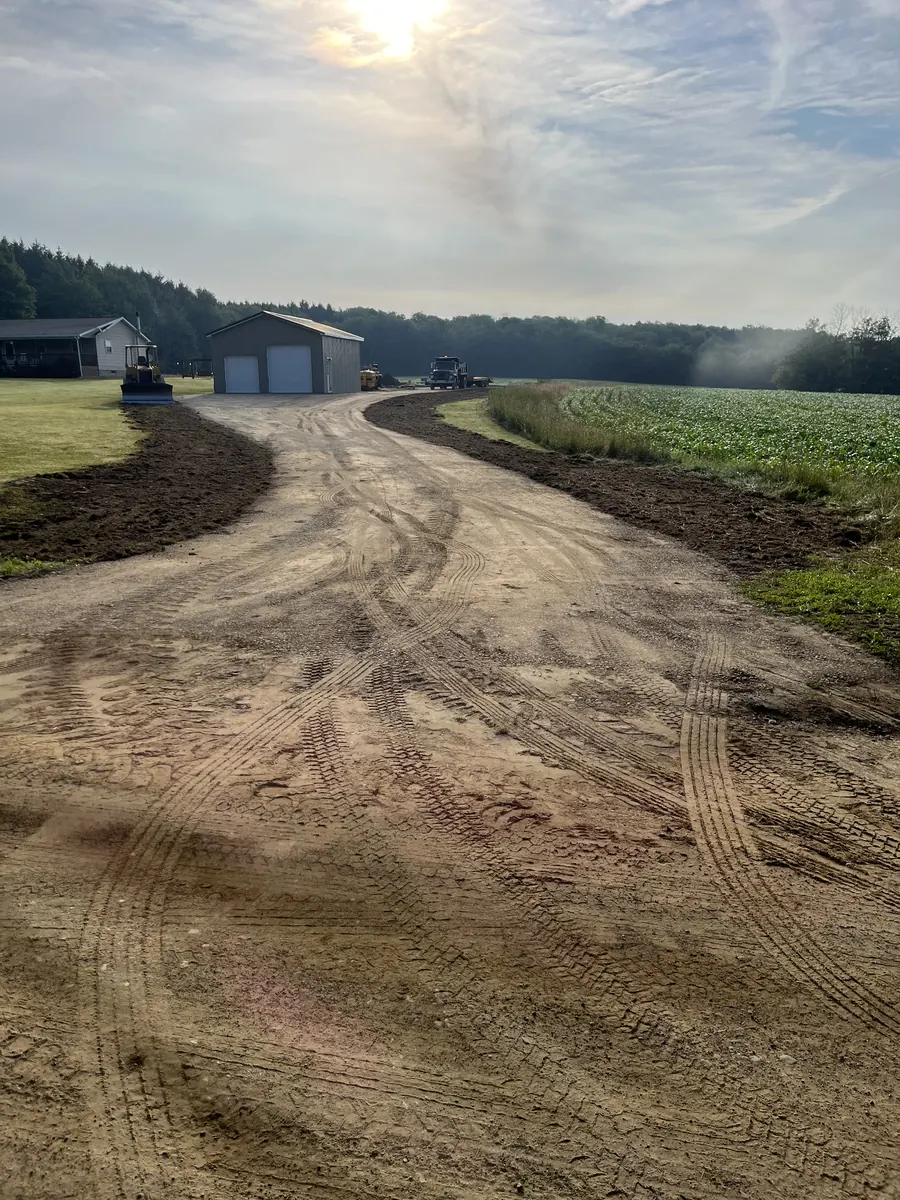
- Restoration. After trenching, you may need to repair pavement, lawn, or landscaping. With drilling there is usually much less to fix.
- Ground conditions. Trenching handles almost any ground, including rock and cobbles. Boring works best in soils it can steer through. Large boulders and solid rock can slow or block a bore.
- Multiple lines and connections. Trenching makes it easy to lay several lines and add fittings along the way. Drilling is best for continuous runs between two points.
- Visibility. In a trench, you can see what you hit. With drilling, the crew cannot see the path, so confirmed utility marks, potholing to expose existing lines where needed, and careful tracking are critical.
- Cost. Neither method is always cheaper. It depends on the length, the ground, and how much restoration a trench would need. On a short open-field run, trenching is often simpler. Under a long paved driveway or a finished yard, a bore may come out ahead once you count the repair work.
Many Jobs Use Both
Plenty of projects combine the two methods. A common example is a new water service that is trenched across an open yard and then bored under the driveway or road to finish the run. Another is a farm line that is trenched across fields and bored under a road or stream crossing. Using each method where it fits keeps the job efficient and the property intact.
Pairing with HDPE Pipe
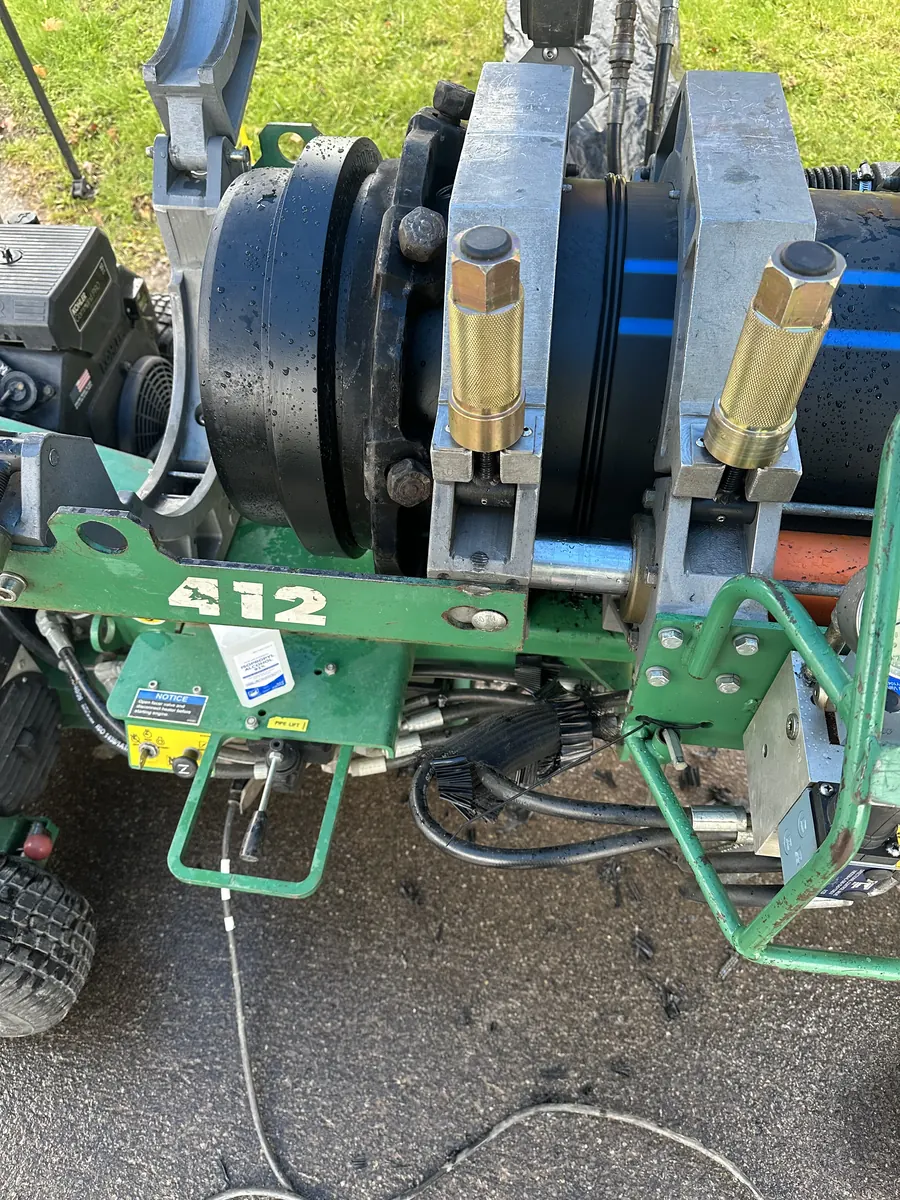
Directional drilling and HDPE pipe go together well. A continuous fused HDPE line can be pulled through a bore in one piece, with no couplings inside the ground. It is flexible enough to follow the curve of the bore and tough enough to handle the pullback when it is installed carefully. Our HDPE pipe fusion page covers that part of the work.
Locates, Permits, and Crossings
Whichever method you use, the utility locates come first. In upstate New York that means calling 811 through Dig Safely New York, generally at least two full working days ahead of digging not counting weekends and holidays. For boring, accurate marks matter even more, because the crew is working blind below the surface. Our guide on calling 811 and preparing your property has more detail.
Other things to sort out before the work starts:
- Road crossings. Bores or trenches in a public right of way may need permission from the town, county, or state highway department that owns the road.
- Streams and wetlands. The NYS Department of Environmental Conservation regulates certain streams and wetlands, and Region 8 covers the Rochester area. Some towns also have their own rules. Check before planning a crossing.
- Water provider rules. If the line is a water service, your water provider may have rules on pipe, depth, and inspections.
What Rochester-Area Ground Means for the Choice
Local conditions often decide which method works best.
- Clay near the lake. In lake-plain towns like Greece, Parma, Hamlin, and Webster, heavy clay generally bores well, but open trenches in wet clay can fill with water and are slow to compact. Boring can save a lawn from a muddy, settling trench line.
- Glacial till and boulders. South and east of the city, in towns like Pittsford, Mendon, Perinton, and Victor, stony glacial till is common. Cobbles and boulders can deflect a drill head, so trenching may be more practical in some spots.
- Shallow rock. In parts of the region, limestone and dolostone bedrock sits close to the surface. Rock can rule out boring at a given depth and makes trenching harder too, so knowing about it early helps.
- Frost depth. Water lines still need to be below the frost line set by local code, generally roughly four feet around here. Both methods have to hit that depth.
- Hills, lakeshores, and wooded lots. Steep lots near Lake Ontario, Irondequoit Bay, and the Finger Lakes, and wooded hillsides across the region, are where boring really helps. It avoids cutting across slopes, trees, and finished landscaping.
- Mud season. A wet spring thaw can make it hard to run equipment across a yard without damage. Boring keeps the heavy work at two points instead of along the whole route.
See Both Methods
Our directional drilling project includes bores on a steep, wooded lakeside lot, and our water service installation project shows open trenching to depth along a road. Our post on water service line depth and trenching covers the trenching side in more detail.
Frequently Asked Questions
Is Directional Drilling More Expensive than Trenching?
Not necessarily. It depends on the length of the run, the ground, and how much surface repair a trench would require. Once you count restoring pavement or landscaping, a bore can be the better value.
Can You Bore Under a Road or Stream?
Often, yes, with the right permissions. Road crossings may need approval from the agency that owns the road, and certain stream and wetland crossings are regulated by the NYS DEC.
Can You Bore Through Rock?
Boring through solid rock takes specialized tooling, and large boulders can deflect a drill head. If we expect rock, we will talk through options, including trenching sections of the route.
How Deep Can a Bore Go?
Deep enough for a water line to sit below frost and to pass safely under driveways, roads, and other utilities. The exact depth is planned for each job.
Not Sure Which Method Fits?
Tell us where the line needs to start and end, what is in the way, and what the ground is like. Send us your location and a few photos of the route and we will tell you what makes sense and put together a quote. You can also read more about our directional drilling and water and utility line services.