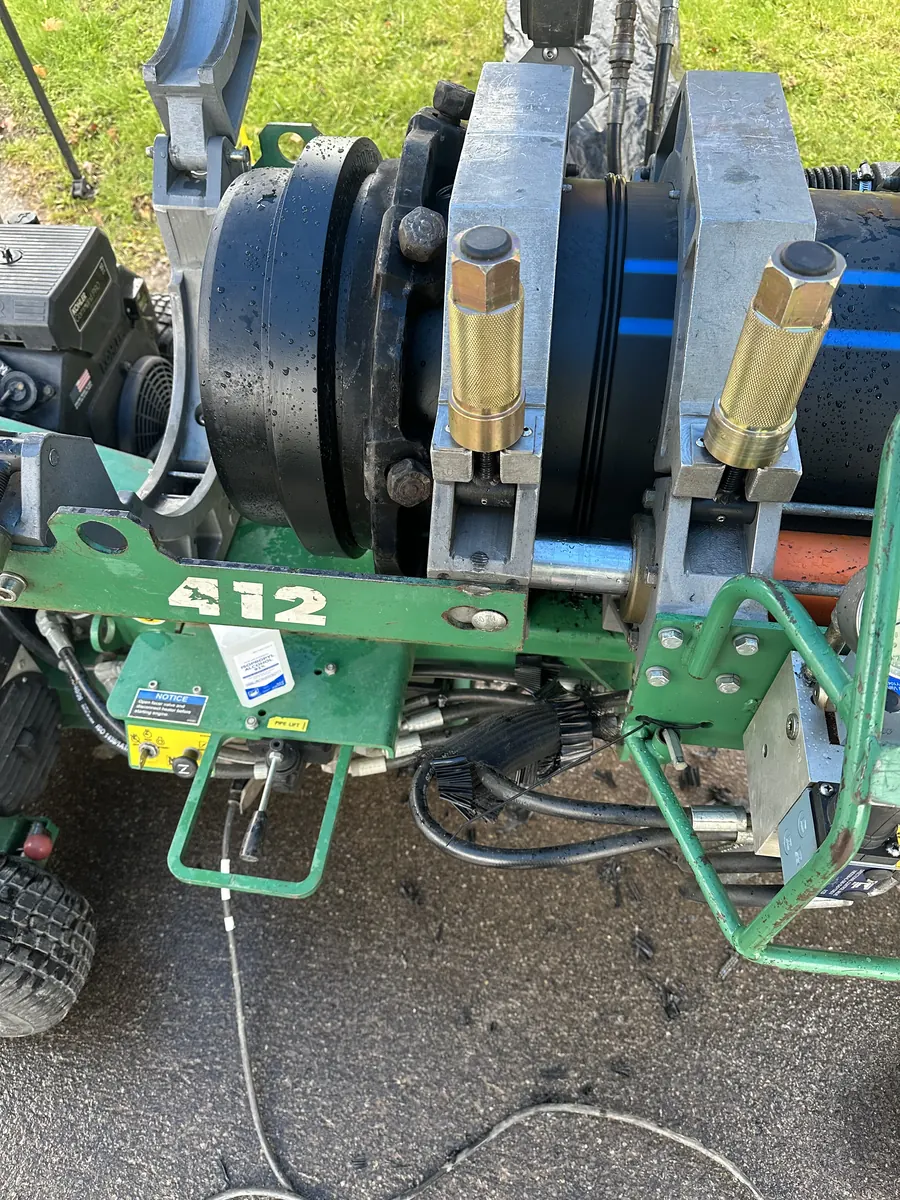
HDPE pipe joined by butt fusion becomes one continuous line with no couplings to leak. Here is how the process works, why it suits Rochester-area frost and farm water lines, and when it makes sense for your project.
If you have ever seen a long black pipe with a colored stripe stretched out along a road shoulder or across a farm field, there is a good chance it was HDPE. High-density polyethylene pipe is widely used for water lines, and one of the main reasons is how it is joined. Instead of couplings and gaskets, the pipe is fused together with heat and pressure into one continuous line.
This is what butt fusion is, how it works, and when it is the right call for a water line in the Rochester area.
What HDPE Pipe Is
HDPE stands for high-density polyethylene. It is a tough, flexible plastic pipe that comes in a wide range of diameters and pressure ratings. Smaller sizes come in coils, and larger sizes usually come in straight sticks. It is used for potable water, farm and irrigation water, and conduit, among other things.
A few things to know about it:
- Pressure ratings vary. HDPE is made in different wall thicknesses for different pressures. The right pipe depends on the use, the pressure in the system, and what your water provider or engineer specifies.
- Potable water pipe is specific. Pipe for drinking water must be rated and approved for that use. Your water provider may have rules about which pipe and fittings are allowed on a service line.
- It moves with temperature. Polyethylene expands and contracts more than metal pipe, which installers account for, especially on long runs.
How Butt Fusion Works
Butt fusion joins two pieces of HDPE pipe end to end using a fusion machine. The basic steps are:
- Clean. The pipe ends are cleaned of dirt, mud, and moisture. Contamination is one of the main causes of a bad joint.
- Clamp. The two pipe ends are clamped in the fusion machine and lined up.
- Face. A facing tool trims the ends so they are clean, square, and sit flat against each other.
- Align. The ends are checked for alignment so the walls match up all the way around.
- Heat. A heater plate is placed between the ends until the plastic softens and forms a bead.
- Join. The plate is removed and the ends are pressed together under controlled pressure.
- Cool. The joint is held under pressure while it cools and solidifies, without being disturbed.
The heater temperature, the joining pressure, and the heating and cooling times all depend on the pipe size, wall thickness, and material. We follow the pipe manufacturer's fusion procedure and the applicable industry standard on every joint, rather than guessing or rushing.
When it is done correctly, the two pieces of pipe become one. The finished joint has a small rolled bead on the inside and outside, and the line has no gaskets or mechanical couplings in the ground.
Why Fused Pipe Is a Good Choice
- No joints to leak. Couplings and gaskets are common failure points in buried pipe. A properly fused joint does not have them.
- Handles ground movement. HDPE bends with the ground instead of cracking, which helps in areas that move with freezing and thawing.
- Corrosion resistant. Polyethylene does not rust or corrode, and it holds up in wet or acidic soils.
- Long, continuous runs. Pipe can be fused into long sections above ground and then laid in a trench or pulled through a bore.
- Root and debris resistant. With no joints to work into, roots have a harder time causing problems.
Where It Gets Used
HDPE butt fusion is a common choice for:
- Water service lines, especially longer runs from the road or a well
- Farm and agricultural water lines to barns, fields, waterers, and livestock
- Directional drilling bores, where a continuous fused pipe can be pulled through in one piece
- Multiple lines in one trench, such as several water lines running side by side
- Roadside runs where long sections are fused on the shoulder and then installed
Smaller service lines are sometimes joined with mechanical or compression fittings instead, and in some cases electrofusion fittings are used for tees, connections, and repairs. The right method depends on the pipe size, the job, and what your water provider or engineer calls for.
Fusing in the Field
Most of our fusion work happens right on the job, beside the trench or bore. A few things make a big difference outdoors:
- Keeping it clean and dry. Rain, mud, and dust are the enemy of a good joint. Pipe ends are protected and cleaned before fusing.
- Cold weather. Fusing in cold or windy conditions needs extra care. Manufacturer procedures address cold weather, and shelter around the machine may be needed.
- Supporting the pipe. Long fused sections are heavy and need to be supported on rollers or stands so the joint is not stressed while it cools.
- Handling. HDPE is tough, but deep scratches and gouges from dragging over rock or sharp edges can weaken it. We handle it with care during installation.
- Inspection. Each joint is checked visually, and lines are pressure tested where the job or water provider requires it.
Why HDPE Makes Sense Around Rochester
Our local conditions are a good fit for fused polyethylene pipe.
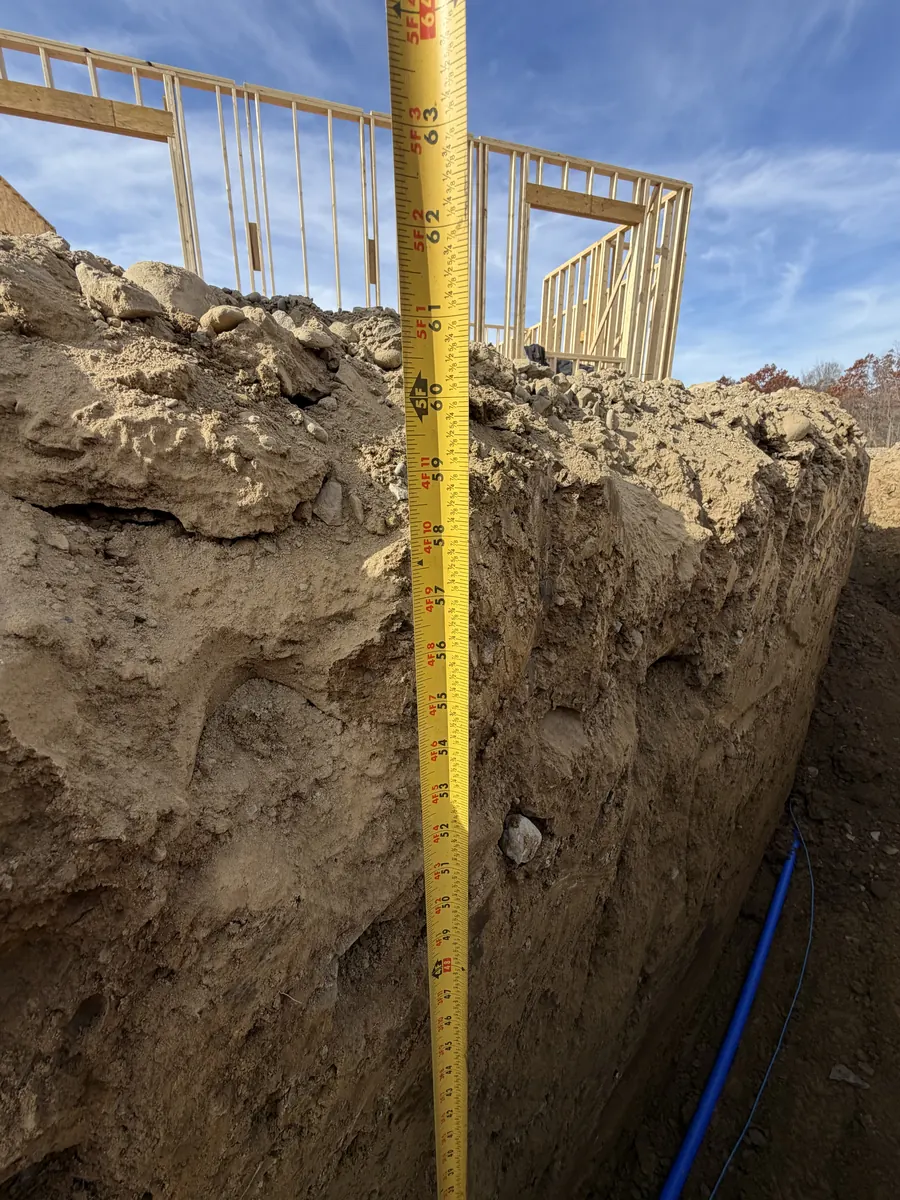
- Frost and freeze-thaw. Long winters and repeated freeze-thaw cycles move the ground. Water lines still need to be buried below the frost line set by local code, generally roughly four feet in this area, but a flexible, jointless line handles the movement that does reach it.
- Long farm runs. Farms in Monroe, Genesee, Livingston, Ontario, and Wayne counties often need water carried a long way to barns, fields, and livestock. Fused HDPE is well suited to those distances.
- Wet clay soils. Lake-plain clay near Lake Ontario, in towns like Hamlin, Parma, Greece, and Webster, stays wet and can be hard on some materials. Polyethylene does not corrode.
- Stony ground. In the glacial till found across much of the region, rocks need to be kept off the pipe. Proper bedding and backfill protect it.
- Crossings. Roads, driveways, and streams are common along rural routes. Fused HDPE pulled through a directional drilling bore crosses them without open-cutting the surface. Road crossings in a public right of way may need permission from the town, county, or state highway department that owns the road.
See It on the Job
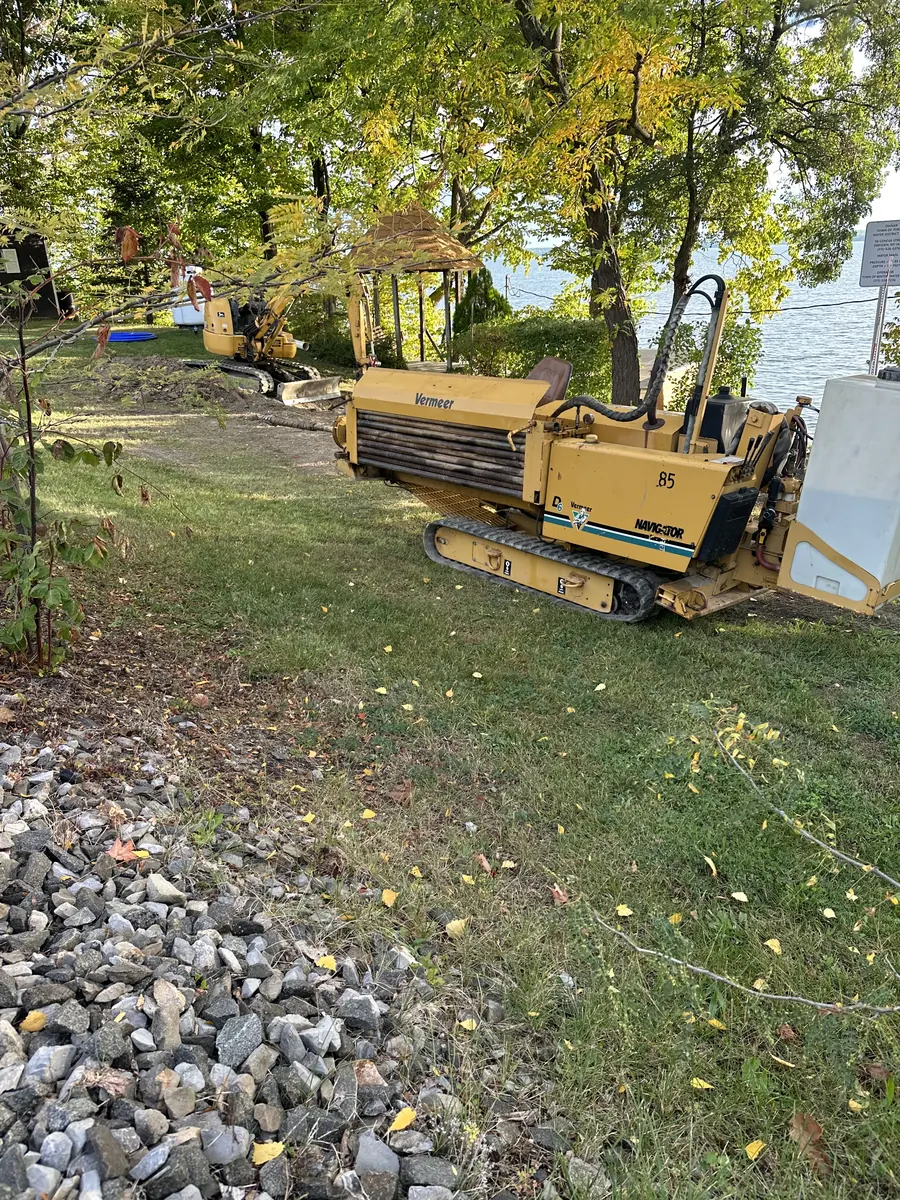
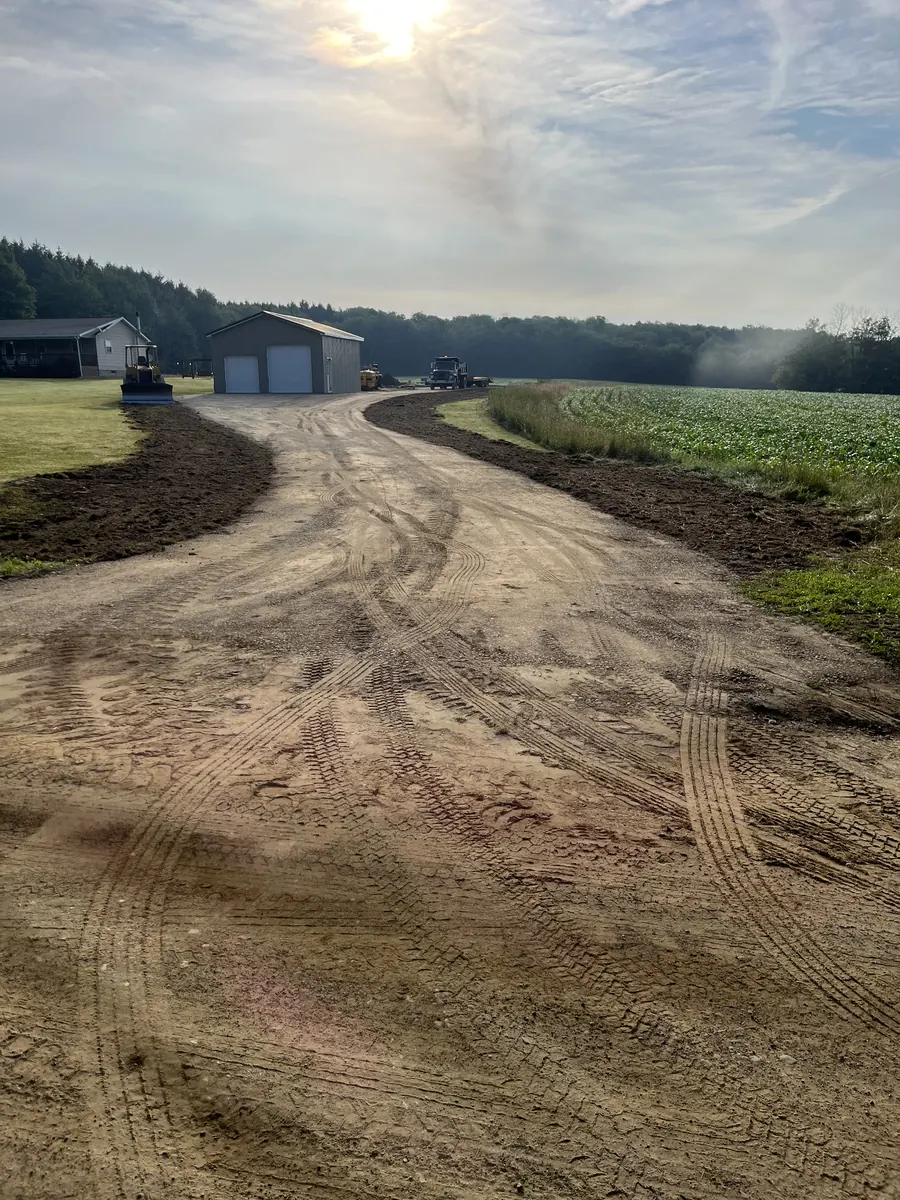
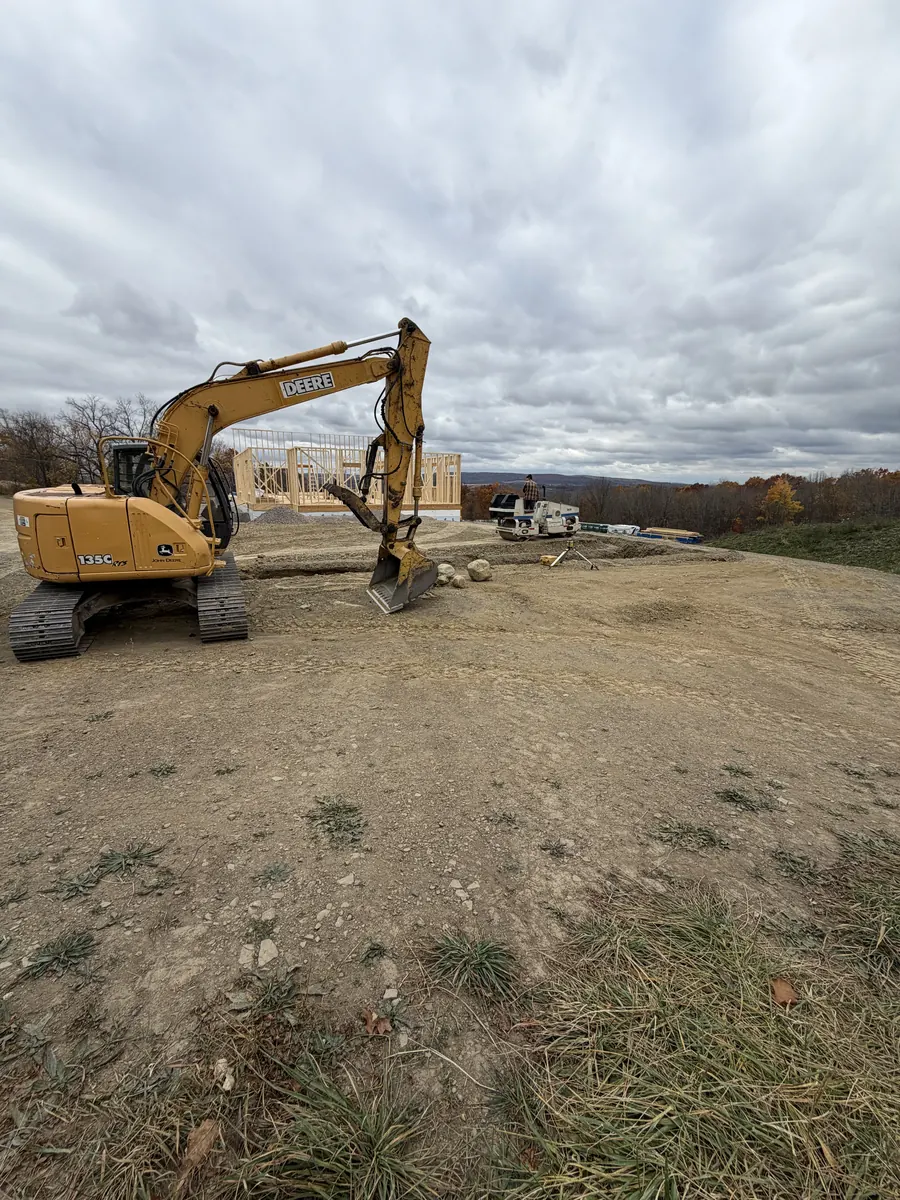
Our HDPE pipe fusing and installation project includes multi-line runs at a farm and long roadside runs fused on site. You can see more of our work on our projects page.
Frequently Asked Questions
Is HDPE Pipe Safe for Drinking Water?
HDPE pipe made and rated for potable water is widely used for drinking water service. Make sure the pipe used is approved for potable water and accepted by your water provider.
How Long Does a Fused HDPE Line Last?
Properly installed HDPE is a long-lasting material, and fused joints remove one of the most common failure points in buried pipe. Installation quality, bedding, and backfill matter as much as the pipe itself.
Can HDPE Be Connected to My Existing Line?
Yes. HDPE can be transitioned to other pipe materials with the right fittings. We match the fittings to the existing pipe and to what your water provider allows.
Do I Need Fused Pipe for a Short House Service?
Not always. Short, small-diameter services are often run in coiled polyethylene with fittings at each end, with no fusion joints needed. Fusion becomes more useful on longer runs, larger pipe, and bores.
Planning a Water Line?
If you have a farm line, a long service, or a crossing that could use fused HDPE, we can help. Read more about our HDPE pipe fusion and water and utility line services, or send us your location, the route, and a few photos and we will follow up with a quote.