A pond can add beauty, wildlife, and water to a property, but only if it holds water and holds up. Here is what Rochester-area landowners should think about before pond excavation starts, from location and soil to spoil, depth, and permits.
A pond is one of the most rewarding projects you can do on a piece of land. It can be a swimming hole, a place for fish and wildlife, a water source for livestock or irrigation, or simply something nice to look at from the porch. Plenty of properties around Rochester, from farms in Riga and Hamlin to wooded lots in Mendon and Penfield, have a spot that seems made for one.
But a pond is mostly careful dirt work, and the decisions made before digging decide whether it holds water and holds up over time. A pond in the wrong place, in the wrong soil, or with poorly built banks can leak, go stagnant, or wash out in the first big spring melt. Here is what to think about before excavation starts.
Start With What the Pond Is For
The purpose of the pond shapes almost every other decision. Be clear about it from the start:
- Looks and wildlife. Can be shallower and more natural in shape, with gentle edges and room for plants.
- Swimming. Needs a clean, firm bottom in the swimming area, a safe entry, and enough depth to stay cool.
- Fish. Generally needs deeper water to help fish get through a hot summer and a long Rochester winter under ice.
- Livestock or irrigation. Needs a reliable water supply and a way to get water out, and the size has to match the demand.
- Fire protection or utility water. Needs year-round access and reliable volume.
A pond can serve more than one purpose, but knowing the main one helps you make the right trade-offs.
Pick the Right Spot
Location matters more than anything else. A good pond site usually has:
- A natural low area where water already wants to collect
- Enough watershed feeding it, whether from runoff, a spring, or groundwater
- Room for the banks and spoil, not just the water surface
- Distance from septic systems, wells, and buildings
- Equipment access for both construction and future maintenance
- A good view from the house, if looks are part of the goal
Avoid building where a failed bank could send water toward a house, road, or neighbor. Also think about where water goes when the pond overflows. Every pond needs a planned overflow or spillway route that carries extra water away without eroding the bank.
Look at the Soil: Rochester-Area Conditions
Water has to stay in the pond, and that comes down to soil. Soils with good clay content hold water well. Sandy or gravelly soils tend to drain. Digging a few test holes before committing to a location tells you a lot about what you are working with, and it is far cheaper than discovering a gravel layer halfway through the dig.
The Rochester area has a real mix of conditions for pond building, sometimes on the same property.
Clay Near the Lake
Closer to Lake Ontario, in towns like Greece, Parma, Hamlin, and Webster, heavy clay and silty lake-plain soils are common. That is often good news for a pond, since clay holds water. The trade-off is that wet clay is hard to work, slow to dry, and can be slick and unstable on steep banks.
Glacial Hills, Gravel, and Stone
South and east of the city, the landscape was shaped by glaciers. Mendon Ponds Park is known for its glacial features, and the surrounding area has drumlins, kames, and eskers. Kames and eskers are often made of sand and gravel, which drains well. That makes for good driveways and poor pond bottoms. A pond in this kind of ground may need clay brought in or a different location.
Rock and Groundwater
In parts of the region, limestone and dolostone bedrock sits close to the surface. Hitting rock limits how deep a pond can go. On the other hand, a high water table can help a pond stay full, and it can also make digging wet and messy.
Long Winters and Spring Melt
Lake-effect snow and repeated freeze-thaw cycles mean a big pulse of water every spring. The overflow and banks need to handle that melt without washing out. Ice cover in winter also matters if you plan to keep fish.
Know Where the Water Comes From
Ponds are fed by surface runoff, springs, groundwater, or some combination. A pond fed only by runoff may drop noticeably in a dry summer. A spring-fed or groundwater pond tends to stay more consistent. If you are relying on runoff, look at how much land drains toward the site. Too little and the pond will not fill. Too much, especially from farm fields or a road, and it may fill with sediment.
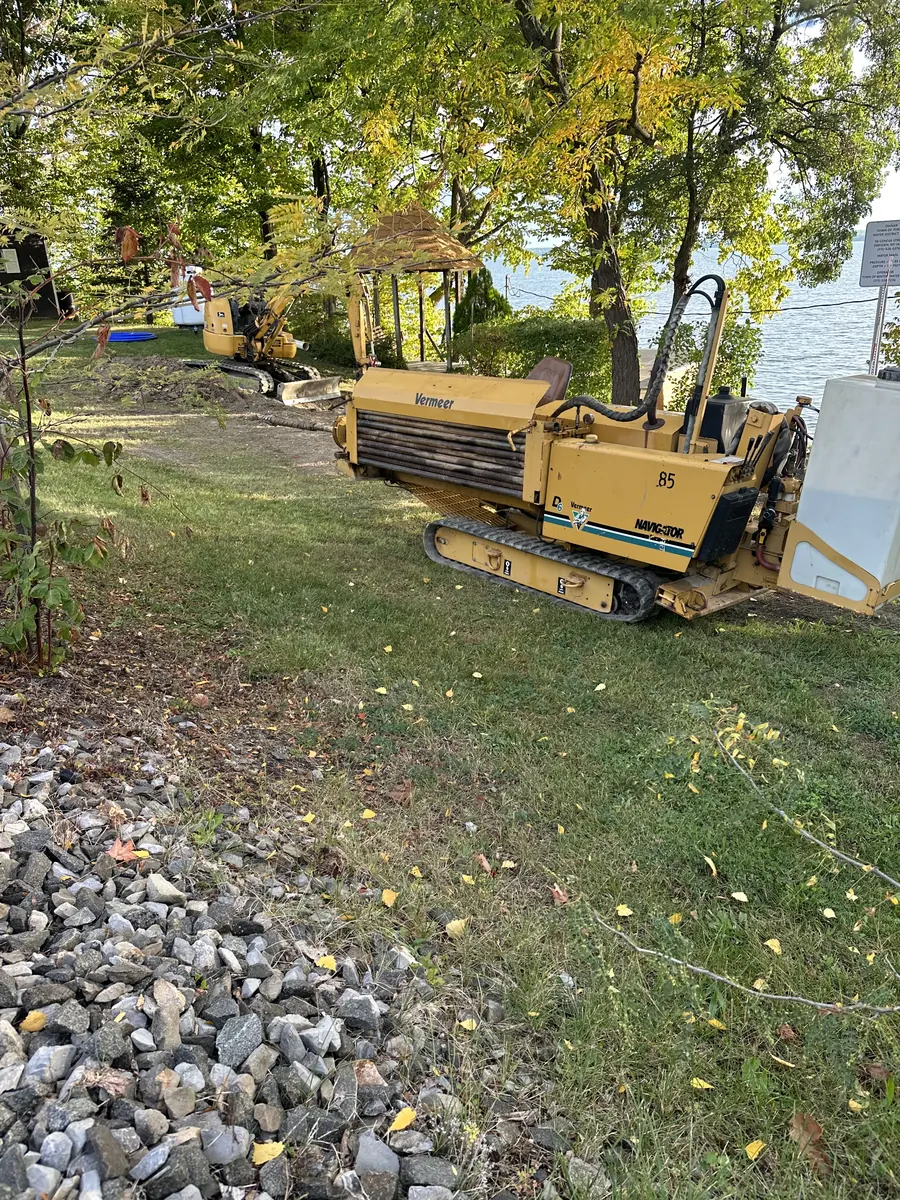
If the pond will need a pipe for an inflow, outflow, or water supply to a barn or field, think about it during planning. Durable HDPE pipe joined by butt fusion is well suited to water lines on farms and rural properties. See what HDPE butt fusion is for more.
Size, Depth, and Shape
Bigger is not always better. Consider how much of your property you want to give to water, how much it will cost to dig, and how deep it needs to be for your purposes.
A few general points:
- Deeper areas help with water quality, reduce weed growth, and give fish a place to go in summer heat and under winter ice.
- Gently sloped edges are safer for people and animals and easier to mow and maintain than steep drop-offs.
- A shallow shelf around part of the edge can support plants and wildlife.
- Natural shapes often look better than perfect rectangles and fit the land more easily.
If someone will swim in it or kids will be around it, safety should drive the edge design.
Banks, Spoil, and Clearing
Every cubic yard that comes out of the hole has to go somewhere, and a pond produces a lot of it. Spoil can be used to build up the banks, shape the area around the pond, create a berm, or fill a low spot elsewhere on the property. Planning where it goes before digging keeps the finished site looking intentional instead of piled up.
Banks built from fill need to be placed in layers and compacted, not just pushed up. Topsoil should be stripped first and saved to spread over the finished banks so grass can take hold and hold the soil.
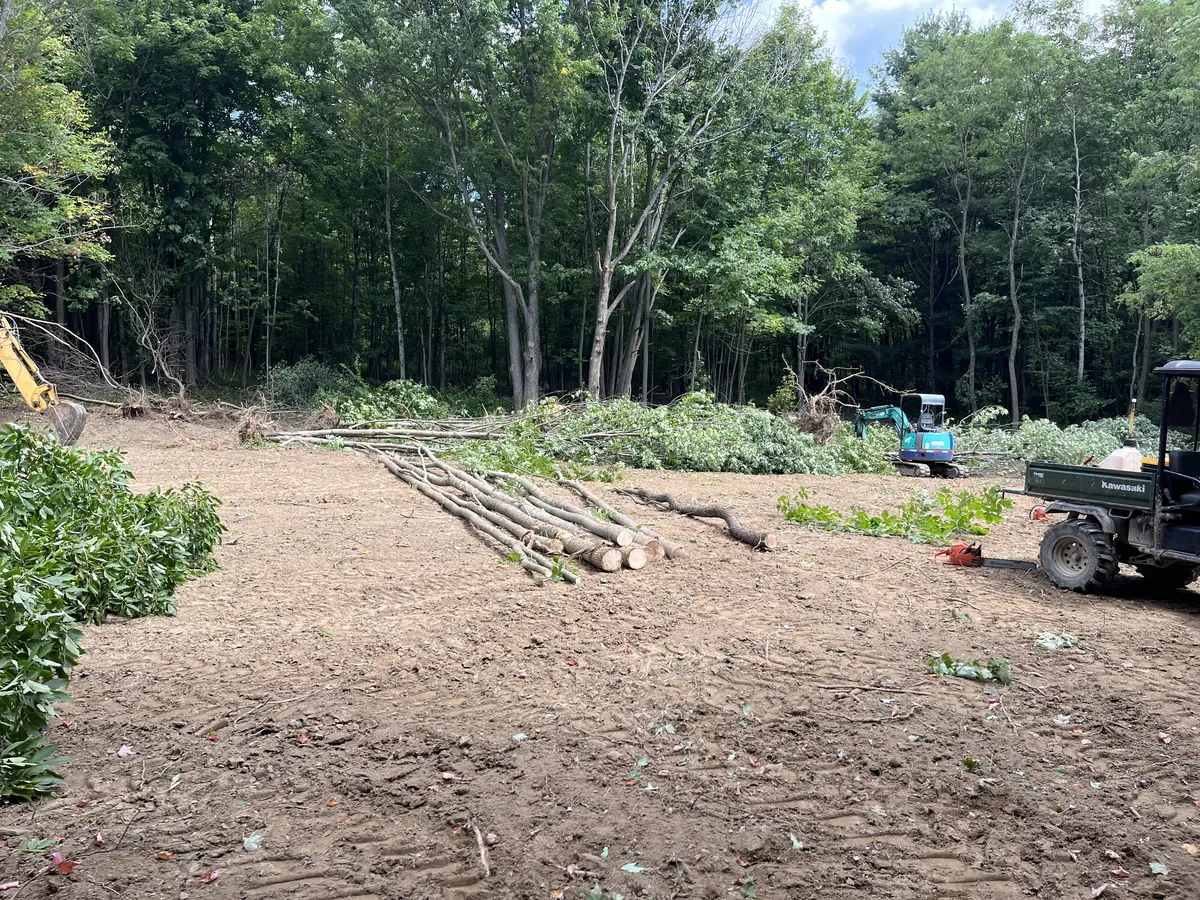
If the site is wooded, land clearing comes first. Stumps and roots need to come out of the pond footprint and bank area, since buried organic material can rot and leave paths for leaks. Our article on land clearing for a new home covers how that process works.
Permits and Rules
Depending on the size, location, and whether wetlands or a stream are involved, a pond may need approval from your town, the NYS Department of Environmental Conservation, or federal agencies. DEC Region 8 covers the Rochester area. Building a pond by damming a stream or digging in a regulated wetland is a very different process from digging a pond in a dry field. Larger ponds and those with a raised embankment may also have additional requirements. Check with your town and the DEC before you dig.
See One Take Shape
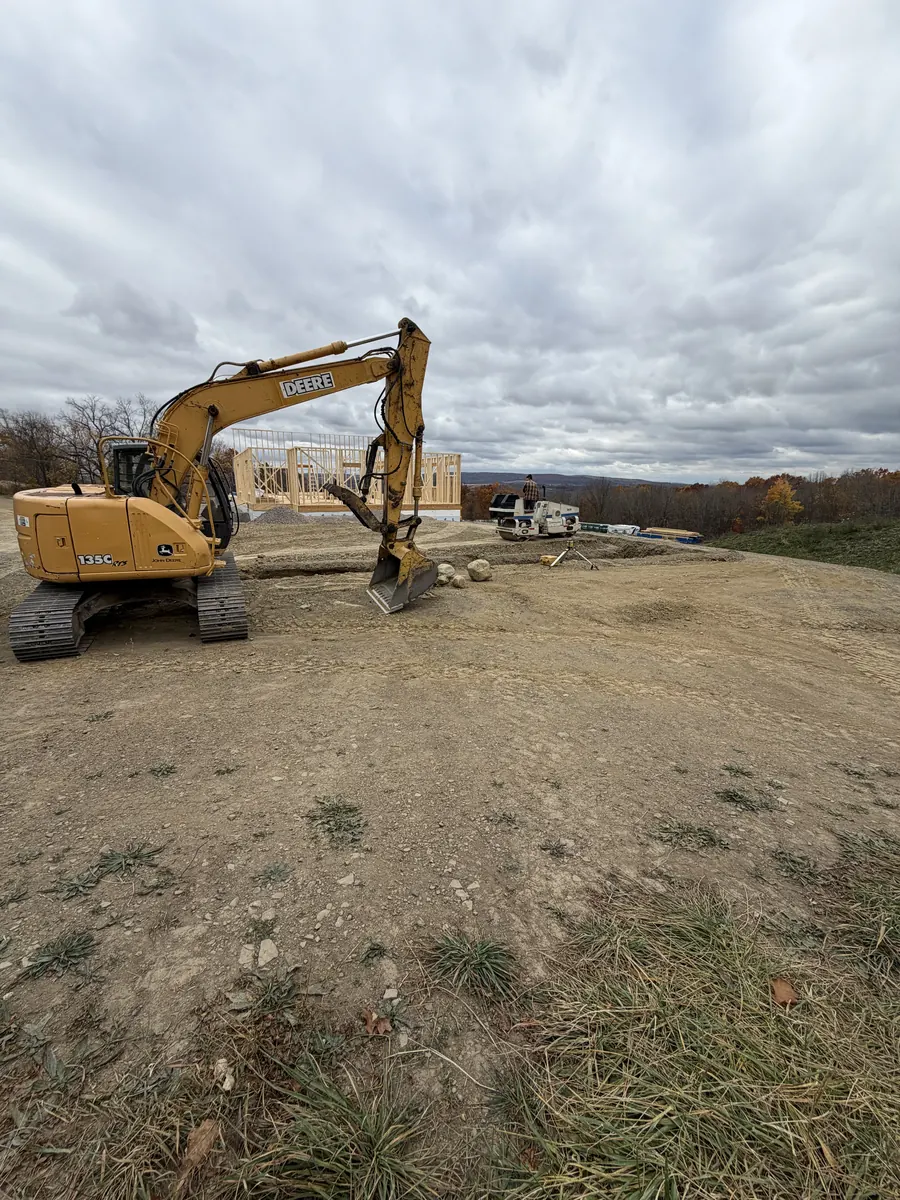
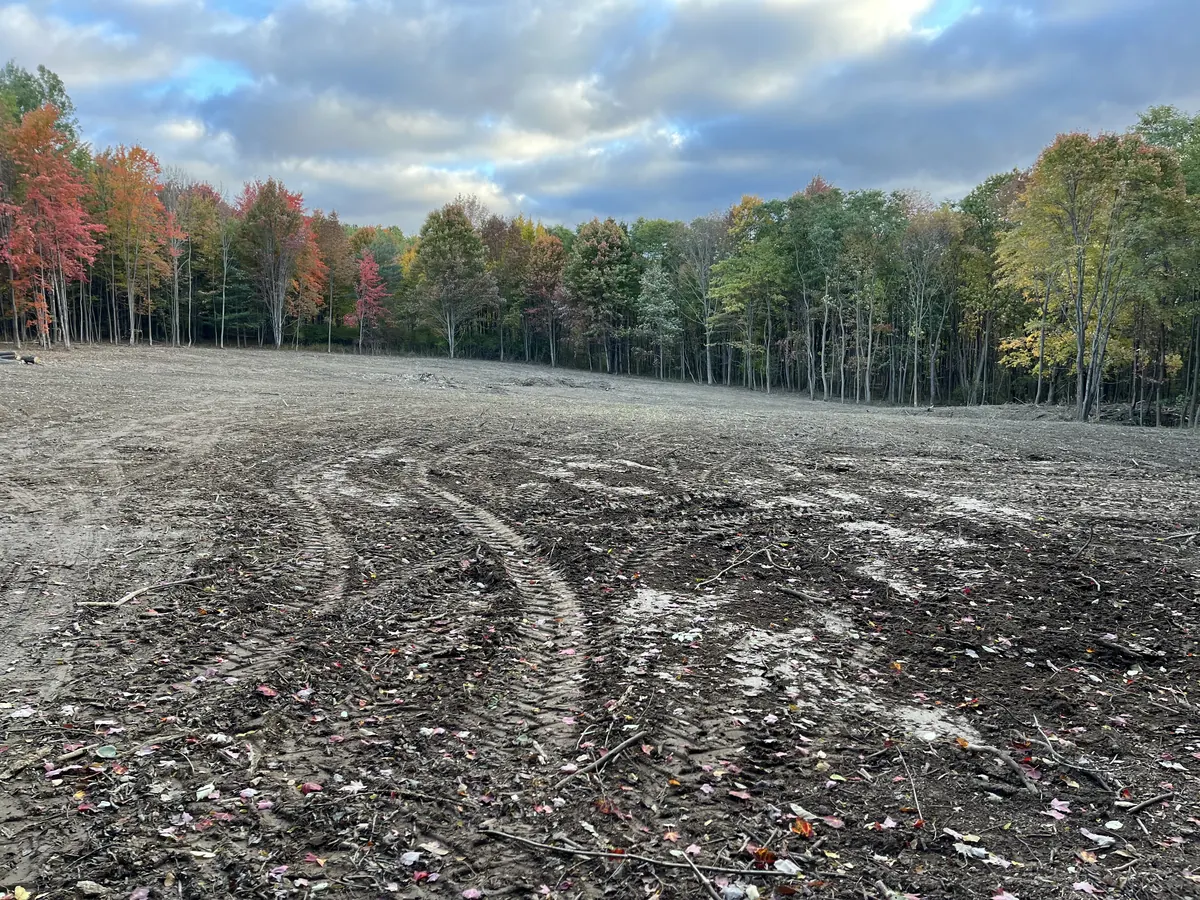
On one of our projects, a wooded lot was cleared, excavated, and shaped into a pond basin. The full photo sequence shows how it went from standing timber to an open basin with shaped banks. You can find more of our work on the projects page.
Frequently Asked Questions
When Is the Best Time to Build a Pond in Rochester?
Often late summer into fall, when the ground tends to be driest and easiest to work. Spring thaw usually leaves sites too wet for heavy equipment.
How Long Does a New Pond Take to Fill?
It depends on the water source, the size, and the weather. A groundwater pond may fill fairly quickly. A runoff pond may take until the next spring melt.
Will My Pond Hold Water?
Soil is the biggest factor. Test holes before digging give a good idea, and clay-rich ground is the best sign.
Thinking About a Pond?
Learn more about our pond construction work, then send us the location, what you want the pond for, and a few photos of the spot. We will take a look and talk through whether the site will work and what it will take.