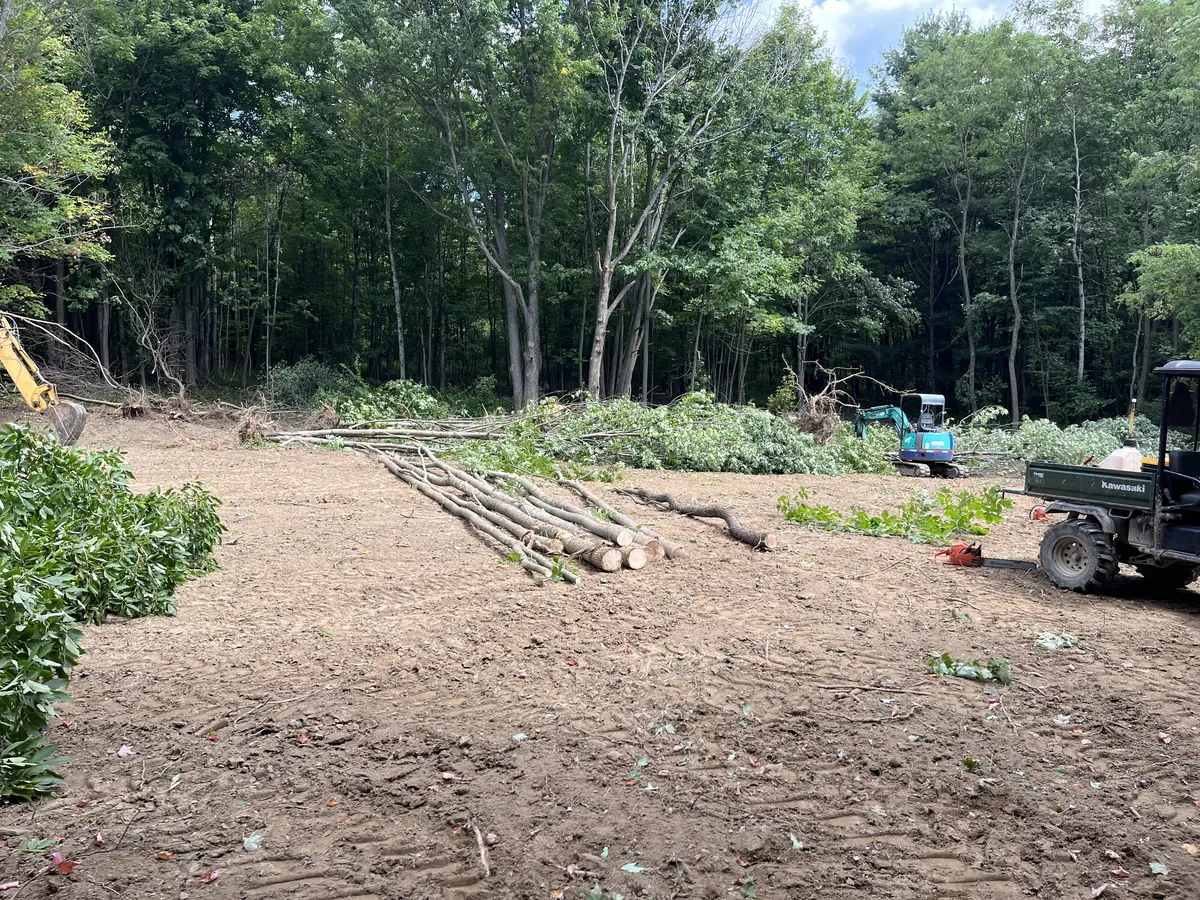
Turning a wooded lot into a buildable site takes more than cutting trees. Here is how land clearing usually unfolds around Rochester, NY, from marking the clearing limits to stump removal and leaving ground that is ready for a foundation.
Buying a wooded lot is often the first step toward building a home in the country. Around Rochester, that might be a few acres of hardwoods in Mendon, a hillside lot in Perinton, an overgrown field in Ogden, or a parcel out toward Victor or Farmington. Before a foundation can go in, though, the house site, the driveway, the utility routes, and anything else you have planned need to be cleared.
Clearing looks simple from the road: trees come down, stumps come out. But the decisions made during clearing affect drainage, the foundation, the driveway, and how the finished property looks for decades. Here is how the process usually works and what to think about before the first tree is cut.
Decide What Stays and What Goes
The most important clearing decisions happen before any equipment shows up. Walk the property, ideally with your builder, and think about:
- Where the house, garage, and driveway will sit
- Room around the house for equipment, grading, a yard, and drainage
- Where the septic system and well will go, if you need them
- The route for the water service, power, and other utilities
- Which trees you want to keep for shade, privacy, wind protection, or looks
- Where logs, brush, and stumps can be piled or processed
Flag the edges of the clearing area and any trees you want saved. Bright flagging tape on the keepers makes it obvious to everyone on site. It is far easier to take another tree down later than to put one back.
Leave Room to Work
People often want to clear as little as possible, which is understandable. But a foundation dig needs room for the excavator, the spoil pile, concrete trucks, and later the framing crew. A common mistake is saving trees so close to the house that the roots get cut during excavation and the tree dies a few years later anyway. Talk with your contractor about a realistic working area.
Check the Rules Before You Cut
Some towns in Monroe County and the surrounding counties have rules about clearing, tree removal, steep slopes, or work near streams and wetlands. Requirements vary, so check with your town building or planning department before work starts.
If any part of your property is wet, low, or near a creek, look into wetland rules as well. The NYS Department of Environmental Conservation regulates certain wetlands and streams, and Region 8 covers the Rochester area. Federal rules can also apply to some wetlands. A site that stays soggy into late spring or has cattails is worth a closer look before any equipment goes in.
Rochester-Area Ground and Timing
Clearing around Rochester comes with a few local factors worth planning for.
Soil Type Changes the Approach
Closer to Lake Ontario, lots often sit on heavy clay and silty lake-plain soils that hold water and drain slowly. Equipment on wet clay leaves deep ruts and can make a mess of the site. In the glacial hills to the south and east, around Mendon, Pittsford, and Victor, ground tends to be stonier, with gravel pockets and boulders that turn up when stumps come out. In some areas bedrock sits close to the surface, which can limit how deep stump holes go and affect the foundation plan.
When to Clear
Timing matters here:
- Spring thaw often leaves wooded lots too soft for heavy equipment. Pushing ahead can cause more damage than it saves in time.
- Late summer and fall are often the driest stretch, which makes for easier clearing and a quicker move into excavation.
- Winter, when the ground is frozen and firm, can be a good time for some clearing work, especially on wet sites. Snow depth and stump removal in frozen ground are the trade-offs.
Some landowners also time tree cutting around seasonal wildlife guidance. If that applies to your property, check current DEC or federal guidance.
Cutting and Handling the Timber
Standing trees are cut and brought down in a controlled direction, away from anything you want protected. The usable logs are then separated from the tops and brush.
What happens to the wood depends on what you want:
- Firewood. Logs can be cut to length and piled for you to split.
- Saw logs. If you have good hardwoods, you may want to look into whether they are worth selling before clearing starts.
- Haul away. The wood leaves the site entirely.
- Leave in place. Logs are piled at the edge of the clearing for you to deal with later.
Talk about this ahead of time so the plan matches what you have in mind. It changes how the work is done and what it costs.
Brush and Stumps
Brush and tops are piled, chipped, or hauled. Some properties have space to leave brush piles at the edge of the woods as wildlife habitat. Open burning is restricted in New York, so check state rules and your town's rules before planning to burn anything.
Stumps need more thought:
- Inside the building area and driveway, stumps need to come out completely, roots and all. Organic material left under a foundation, slab, or driveway will rot and settle over time.
- Outside the building area, some owners choose to leave stumps in place and let them break down, or grind them low.
- Stump holes in the build area need to be filled and compacted properly so they do not settle later.
Stripping Topsoil and Leaving the Site Ready
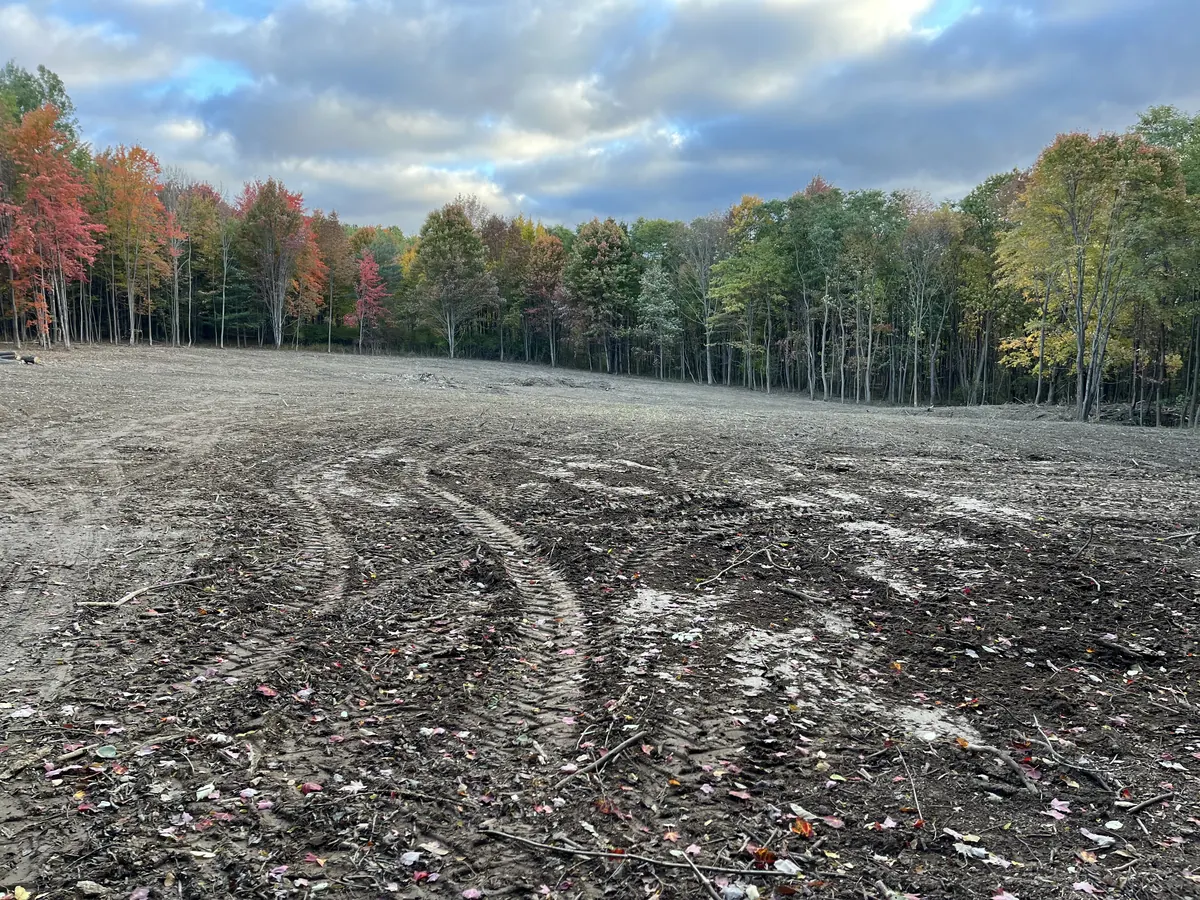
After clearing, the ground is usually rough: rutted, uneven, and full of roots and loose debris. The next step is to clean up the area, strip the topsoil from the building and driveway areas, and stockpile it for reuse during final grading.
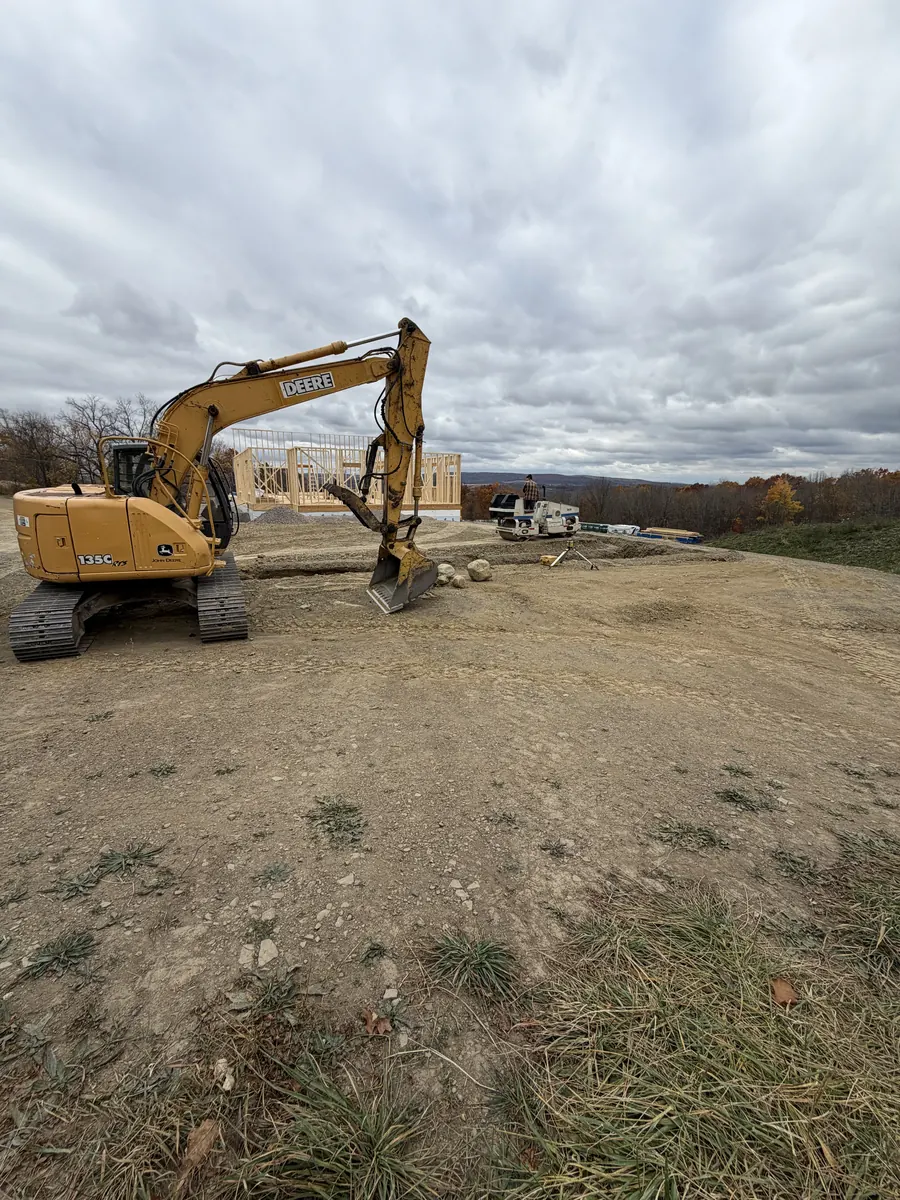
From there, clearing often flows straight into site work and excavation: rough grading, the foundation dig, and trenching for utilities. Doing these back to back keeps the project moving and avoids paying for equipment to travel twice. Our article on site prep before a foundation walks through what happens next. You can also see a finished example on our site and foundation project, a hilltop home with framing on a completed foundation.
Don't Forget the Driveway and Utilities
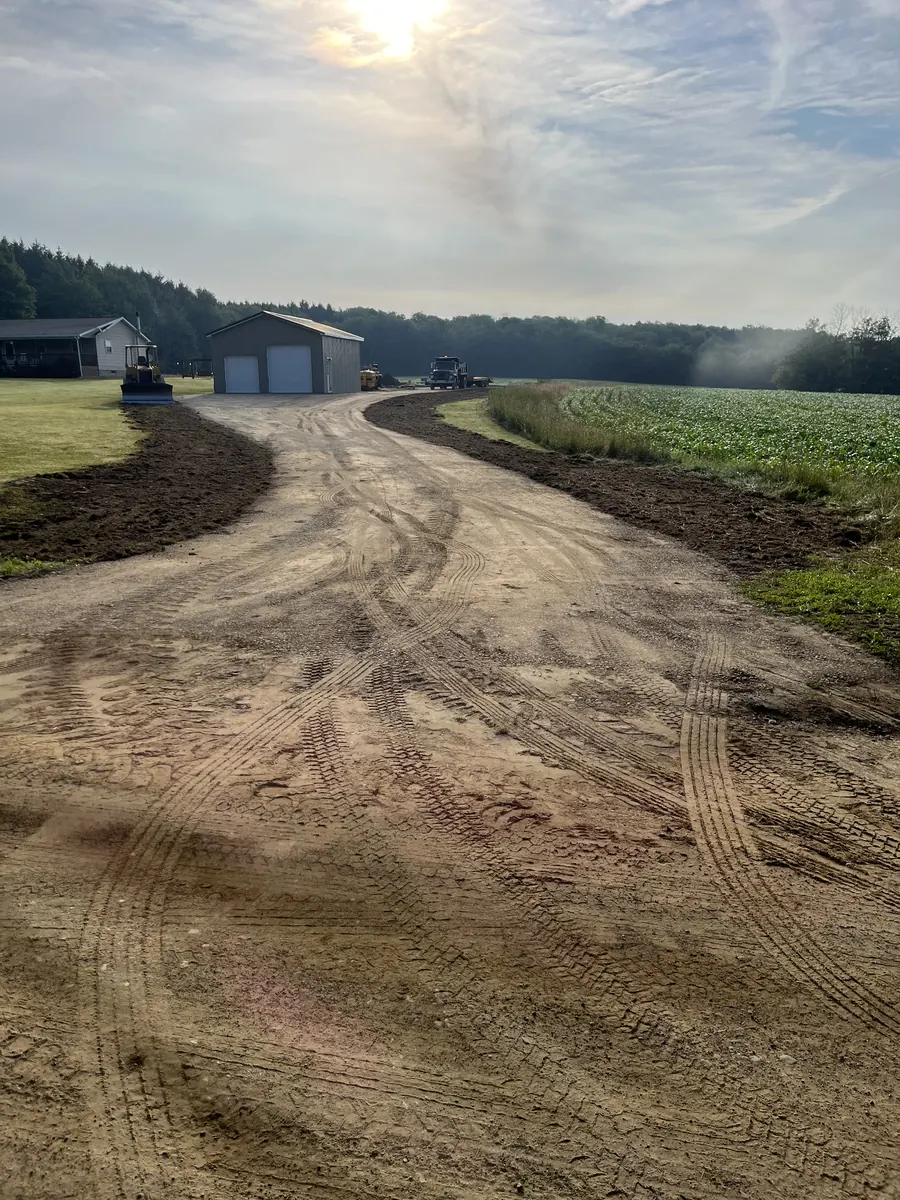
The driveway is usually the first thing cleared, because it is how equipment, concrete trucks, and lumber deliveries get to the house site. A driveway on cleared ground needs organic material removed and a proper stone base, especially on Rochester clay. See how to build a gravel driveway that lasts or our driveways and paving page.
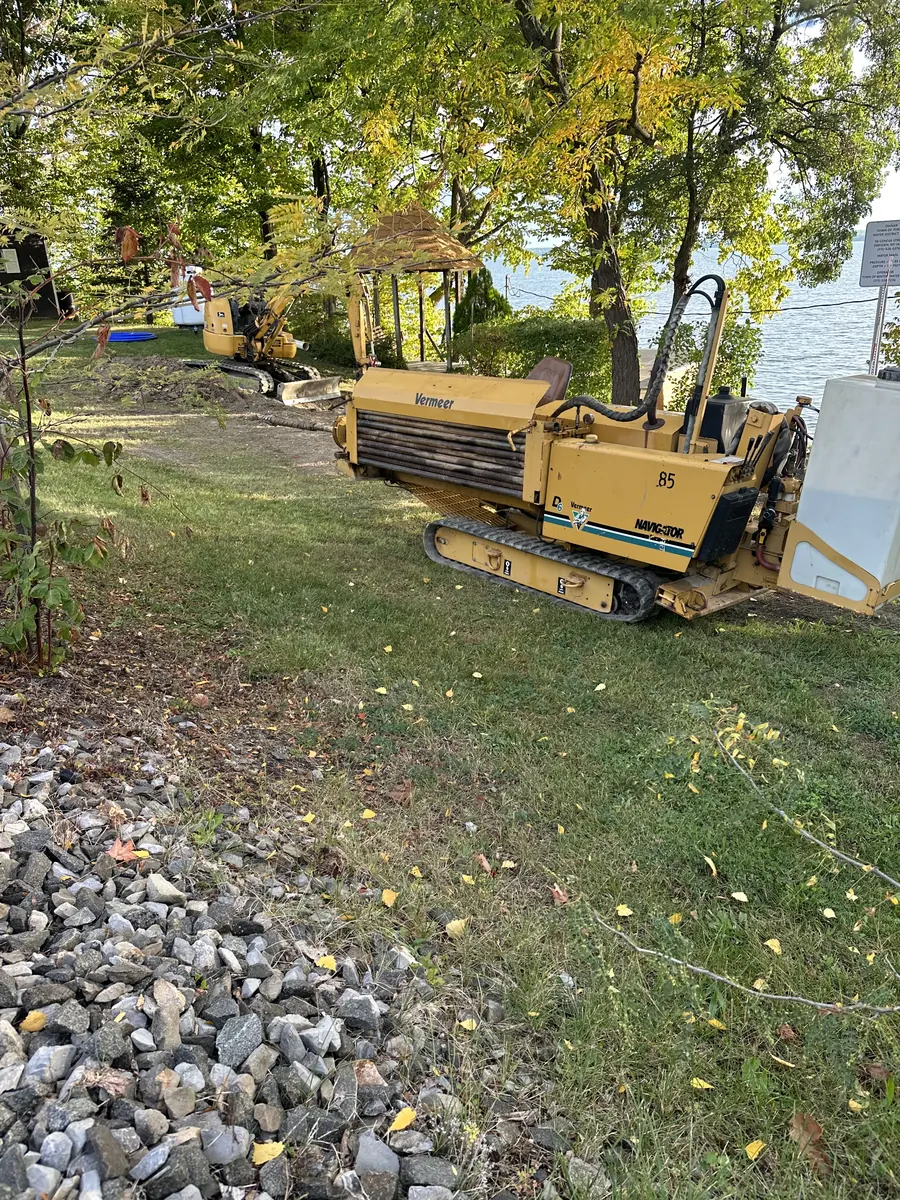
Utility routes should be cleared at the same time. A water service line needs a clear path from the road or well to the house, and it is much easier to plan that route before the woods grow back in around the build.
From Clearing to Something More
Clearing is often the start of a bigger project. On one of our jobs, a wooded parcel was cleared and then excavated and shaped into a pond. You can see the full sequence, from standing trees to an open basin, on our clearing and pond project page. If a pond is part of your plan, read planning a pond before clearing starts so the work can be laid out together.
Frequently Asked Questions
Do I Need a Permit to Clear Land Near Rochester?
It depends on your town and the property. Some towns regulate clearing, grading, or work on steep slopes, and wetlands or streams can bring in the DEC. Call your town building department first.
How Long Does Clearing Take?
It depends on the size of the area, how dense the trees are, what happens to the wood, and ground conditions. A site visit is the best way to get a realistic timeline.
Can I Keep Some of the Trees Close to the House?
Sometimes, but excavation near a tree can damage its roots. We can talk through which trees are realistic to save based on where the foundation and grading will go.
Tell Us About Your Lot
If you have land to clear in the Rochester area, send us the location, a rough idea of the area you want cleared, and a few photos. We will take a look and talk through the plan, from the first tree to a site that is ready to build on.